Arkansas committee advances tougher penalties for drivers who hit workers in highway work zones
March 27, 2023 | JUDICIARY COMMITTEE - SENATE, Senate, Committees, Legislative, Arkansas
This article was created by AI summarizing key points discussed. AI makes mistakes, so for full details and context, please refer to the video of the full meeting. Please report any errors so we can fix them. Report an error »
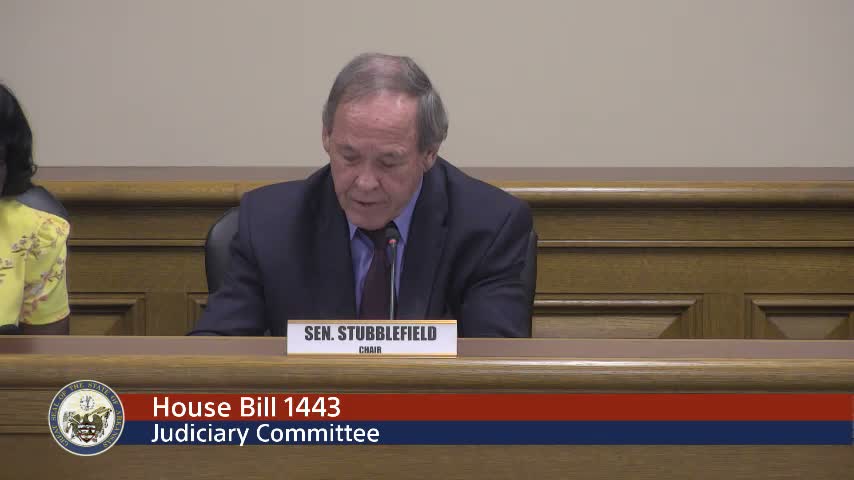
Representative Carol Fike told the Senate Judiciary Committee she brought the highway safety bill after recent deadly incidents and industry requests, saying the measure would increase penalties to make drivers “think twice” before entering work zones unsafely.
Under the bill presented, hitting and injuring a person in a highway work zone would be a class A misdemeanor and striking and killing someone in a work zone would rise to a class C felony, to be charged in addition to any other applicable offenses. Representative Fike framed the proposal as both a deterrent and a complement to existing distracted-driving legislation.
Brian McMillan, a project engineer and chair of the AGC Highway Committee, told senators that contractors have seen rises in incidents and urged the committee to support stronger penalties and publicity. McMillan said the highway department’s reporting showed a “70 percent increase” in work-zone accidents and a “46 percent” increase in fatalities for 2020, figures he attributed to ARDOT data.
Jeff Holmes, chief of the Highway Police Division at the Arkansas Department of Transportation, echoed industry concerns, saying distracted driving, speeding and texting are major contributors to work-zone deaths and injuries. Holmes agreed to provide the committee a more detailed breakdown of causes and locations after several senators requested the specific crash and causation data.
Senator Clark and others pressed for granular statistics—how many incidents were high-speed chases or DWI-related versus distracted-driving crashes—so the committee could weigh whether enhanced penalties or other measures (education, signage, enforcement) would be more effective. ARDOT representatives said the requested data could be produced promptly.
Committee members also discussed public-education steps, citing examples of other states’ signage and fines. Representative Fike said she expects DOT to partner on publicity campaigns if the bill becomes law.
A motion to pass the bill was made, seconded and approved by the committee. ARDOT and the bill sponsor agreed to provide the requested crash-location and cause breakdowns to the committee as follow-up.
Under the bill presented, hitting and injuring a person in a highway work zone would be a class A misdemeanor and striking and killing someone in a work zone would rise to a class C felony, to be charged in addition to any other applicable offenses. Representative Fike framed the proposal as both a deterrent and a complement to existing distracted-driving legislation.
Brian McMillan, a project engineer and chair of the AGC Highway Committee, told senators that contractors have seen rises in incidents and urged the committee to support stronger penalties and publicity. McMillan said the highway department’s reporting showed a “70 percent increase” in work-zone accidents and a “46 percent” increase in fatalities for 2020, figures he attributed to ARDOT data.
Jeff Holmes, chief of the Highway Police Division at the Arkansas Department of Transportation, echoed industry concerns, saying distracted driving, speeding and texting are major contributors to work-zone deaths and injuries. Holmes agreed to provide the committee a more detailed breakdown of causes and locations after several senators requested the specific crash and causation data.
Senator Clark and others pressed for granular statistics—how many incidents were high-speed chases or DWI-related versus distracted-driving crashes—so the committee could weigh whether enhanced penalties or other measures (education, signage, enforcement) would be more effective. ARDOT representatives said the requested data could be produced promptly.
Committee members also discussed public-education steps, citing examples of other states’ signage and fines. Representative Fike said she expects DOT to partner on publicity campaigns if the bill becomes law.
A motion to pass the bill was made, seconded and approved by the committee. ARDOT and the bill sponsor agreed to provide the requested crash-location and cause breakdowns to the committee as follow-up.
View the Full Meeting & All Its Details
This article offers just a summary. Unlock complete video, transcripts, and insights as a Founder Member.
✓
Watch full, unedited meeting videos
✓
Search every word spoken in unlimited transcripts
✓
AI summaries & real-time alerts (all government levels)
✓
Permanent access to expanding government content
30-day money-back guarantee
