Senate committee narrows vaccine-liability language, cites precedent from opioid litigation
March 27, 2023 | JUDICIARY COMMITTEE - SENATE, Senate, Committees, Legislative, Arkansas
This article was created by AI summarizing key points discussed. AI makes mistakes, so for full details and context, please refer to the video of the full meeting. Please report any errors so we can fix them. Report an error »
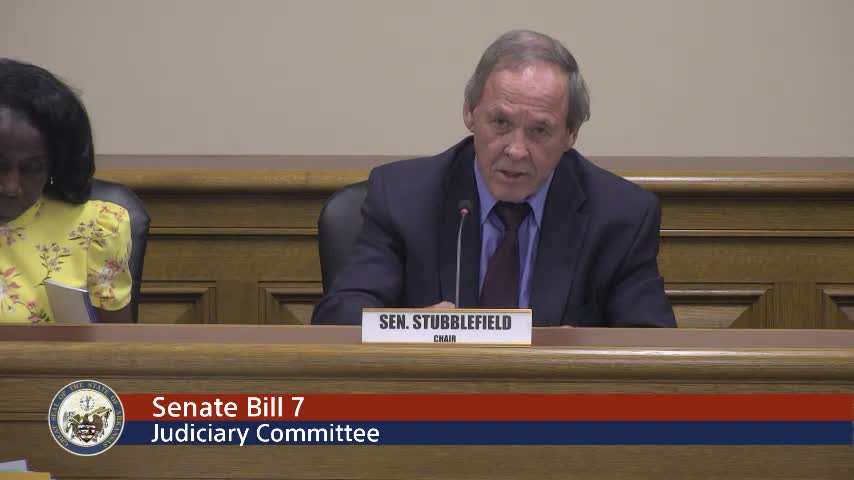
Senate Judiciary committee members approved a revised version of Senate Bill 8 after the sponsor removed a disputed provision and added a four-year sunset clause.
Senator King (sponsor) told the committee he re-referred the bill to remove language tied to opioid settlements after concerns from the attorney general and municipal groups. "All I did was to accommodate them is re refer this back to committee and took that out," he said. He later added, "I put a 4 year sunset clause on this," to limit the measure's duration while leaving an avenue for later claims if misconduct emerged.
Senator Tucker asked a technical and evidentiary question about causation: "how do you prove that a vaccination has caused death or serious physical injury to somebody?" The sponsor and supporters said the bill targets cases where evidence emerges later that a manufacturer knowingly concealed information, pointing to the legal and discovery processes that followed high-profile prescription-drug litigation.
There was no public testimony for or against SB8 during the committee's consideration. After brief committee discussion the committee moved to pass the bill. The measure passed in committee by voice vote; the chair recorded that "The bill passed 6."
Supporters framed the bill as a limited, time-bound remedy to protect individuals if corporate misconduct is proven; no formal opponents appeared at the committee table during the recorded proceedings. The committee did not record an extended debate on implementation details or specific evidentiary standards beyond the sponsors' references to civil and criminal discovery in pharmaceutical litigation.
The committee moved SB8 forward; the next steps will be the Senate floor or subsequent committee assignments as prescribed by chamber rules.
Senator King (sponsor) told the committee he re-referred the bill to remove language tied to opioid settlements after concerns from the attorney general and municipal groups. "All I did was to accommodate them is re refer this back to committee and took that out," he said. He later added, "I put a 4 year sunset clause on this," to limit the measure's duration while leaving an avenue for later claims if misconduct emerged.
Senator Tucker asked a technical and evidentiary question about causation: "how do you prove that a vaccination has caused death or serious physical injury to somebody?" The sponsor and supporters said the bill targets cases where evidence emerges later that a manufacturer knowingly concealed information, pointing to the legal and discovery processes that followed high-profile prescription-drug litigation.
There was no public testimony for or against SB8 during the committee's consideration. After brief committee discussion the committee moved to pass the bill. The measure passed in committee by voice vote; the chair recorded that "The bill passed 6."
Supporters framed the bill as a limited, time-bound remedy to protect individuals if corporate misconduct is proven; no formal opponents appeared at the committee table during the recorded proceedings. The committee did not record an extended debate on implementation details or specific evidentiary standards beyond the sponsors' references to civil and criminal discovery in pharmaceutical litigation.
The committee moved SB8 forward; the next steps will be the Senate floor or subsequent committee assignments as prescribed by chamber rules.
View the Full Meeting & All Its Details
This article offers just a summary. Unlock complete video, transcripts, and insights as a Founder Member.
✓
Watch full, unedited meeting videos
✓
Search every word spoken in unlimited transcripts
✓
AI summaries & real-time alerts (all government levels)
✓
Permanent access to expanding government content
30-day money-back guarantee
