Child-support accounting proposal fails after extended committee debate on burden and courtroom impact
April 03, 2023 | JUDICIARY COMMITTEE - SENATE, Senate, Committees, Legislative, Arkansas
This article was created by AI summarizing key points discussed. AI makes mistakes, so for full details and context, please refer to the video of the full meeting. Please report any errors so we can fix them. Report an error »
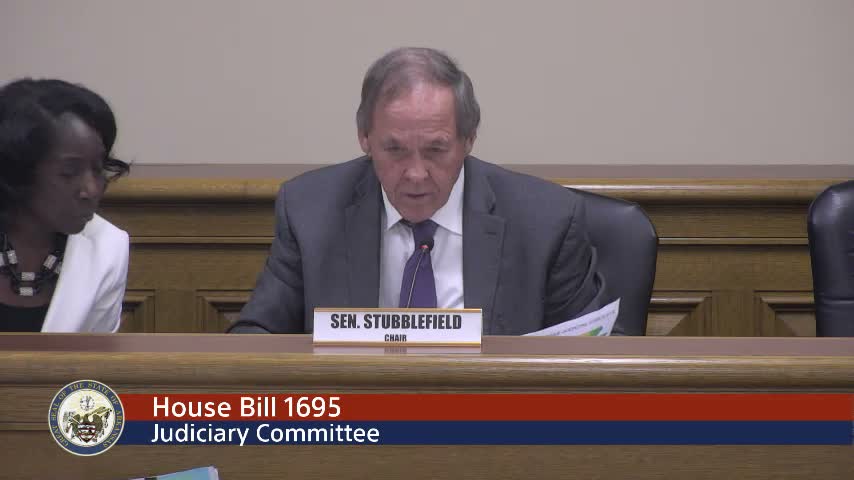
A proposal to allow courts to require a custodial parent or payee to account for how court-ordered child-support payments are spent failed in the Senate Judiciary Committee after extended debate.
Representative Jimmy Gazzaway, the House sponsor, told the committee SB561 would permit a court — on its own motion or on a motion from a payer with a showing of good cause — to order an accounting of how child-support funds were used when there is evidence the child’s needs are unmet. “It should be used for the benefit of the child, not on lottery tickets in the casino and cigarettes and alcohol,” Gazzaway said, arguing for transparency and noting at least ten other states allow similar measures in limited circumstances.
Opponents, including Sen. Flowers and other committee members, warned the proposal risked harassment of custodial parents and increased litigation. “A lot of things are brought willy-nilly before the court,” Sen. Flowers said, arguing existing remedies — modification motions, dependency or custody proceedings and the court’s current contempt powers — address abuses without creating a separate accounting procedure.
Family-law practitioners and a consultant who advised the committee said federal law requires numeric child-support guidelines and that gaps in the support chart for parents with more than 141 overnight stays create inconsistency; however, those comments addressed a separate bill (on the support chart) rather than SB561’s accounting mechanism. Supporters said SB561 would be limited to cases with evidence the child’s needs are not being met and would not require an itemized penny-by-penny accounting, leaving remedy and enforcement to a judge’s discretion.
After extended questioning about administrative burden, potential for frivolous motions and whether dependency-neglect or custody modifications already provide avenues for redress, the committee voted; the motion to pass failed.
What’s next: With the committee vote against SB561, supporters said they may return with narrower, more objective standards or procedural protections to reduce litigation risks.
Representative Jimmy Gazzaway, the House sponsor, told the committee SB561 would permit a court — on its own motion or on a motion from a payer with a showing of good cause — to order an accounting of how child-support funds were used when there is evidence the child’s needs are unmet. “It should be used for the benefit of the child, not on lottery tickets in the casino and cigarettes and alcohol,” Gazzaway said, arguing for transparency and noting at least ten other states allow similar measures in limited circumstances.
Opponents, including Sen. Flowers and other committee members, warned the proposal risked harassment of custodial parents and increased litigation. “A lot of things are brought willy-nilly before the court,” Sen. Flowers said, arguing existing remedies — modification motions, dependency or custody proceedings and the court’s current contempt powers — address abuses without creating a separate accounting procedure.
Family-law practitioners and a consultant who advised the committee said federal law requires numeric child-support guidelines and that gaps in the support chart for parents with more than 141 overnight stays create inconsistency; however, those comments addressed a separate bill (on the support chart) rather than SB561’s accounting mechanism. Supporters said SB561 would be limited to cases with evidence the child’s needs are not being met and would not require an itemized penny-by-penny accounting, leaving remedy and enforcement to a judge’s discretion.
After extended questioning about administrative burden, potential for frivolous motions and whether dependency-neglect or custody modifications already provide avenues for redress, the committee voted; the motion to pass failed.
What’s next: With the committee vote against SB561, supporters said they may return with narrower, more objective standards or procedural protections to reduce litigation risks.
View the Full Meeting & All Its Details
This article offers just a summary. Unlock complete video, transcripts, and insights as a Founder Member.
✓
Watch full, unedited meeting videos
✓
Search every word spoken in unlimited transcripts
✓
AI summaries & real-time alerts (all government levels)
✓
Permanent access to expanding government content
30-day money-back guarantee
