Judges, prosecutors clash with defenders over elevating juvenile handgun possession to felony
March 27, 2023 | JUDICIARY COMMITTEE - SENATE, Senate, Committees, Legislative, Arkansas
This article was created by AI summarizing key points discussed. AI makes mistakes, so for full details and context, please refer to the video of the full meeting. Please report any errors so we can fix them. Report an error »
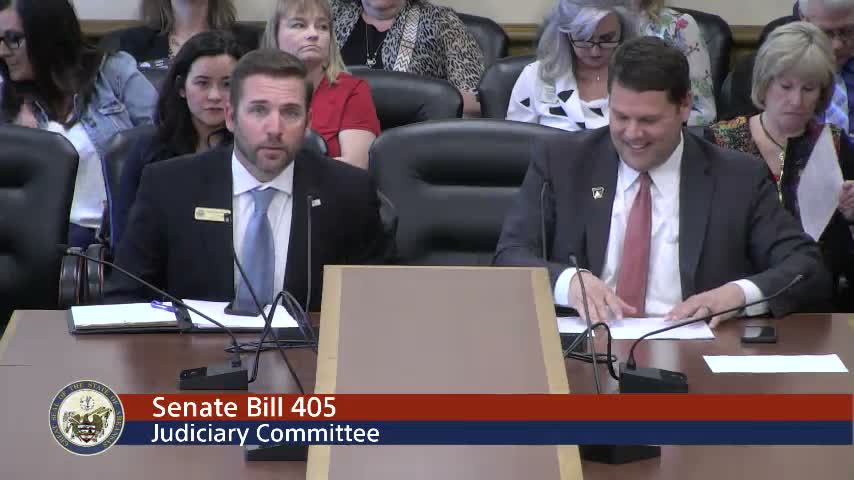
Circuit Judge Troy Braswell told the committee that juvenile handgun possession and gun-related juvenile offenses have climbed in recent years and that judges and prosecutors worry the current misdemeanor classification limits tools for public-safety responses. Braswell said commitments to the Division of Youth Services for the misdemeanor offense rose from 12 in 2018 to 35 in 2022.
The bill’s sponsors argued the legislature should signal seriousness by elevating juvenile handgun possession to a felony in some cases and by aligning penalties to reflect the rising harms. Braswell and juvenile-justice advocates emphasized numerous statutory exceptions would remain—for hunting, parental permissions and similar contexts—and said the change is aimed at unlawful possession that fuels violent offenses.
Several senators, including Senator Tucker and Senator Clark, pressed witnesses for empirical evidence that raising penalties would reduce firearm crime or would not produce unintended punitive outcomes. Defense counsel Jeff Rosenzweig and others warned the package risks removing prosecutorial discretion and sweeping minor possessory offenses—like isolated possession without aggravating conduct—into harsher processes (including EJJ or adult sanctions).
Committee members discussed pairing the possession bill with changes to Extended Juvenile Jurisdiction (EJJ) to preserve options such as treatment and sealed records. Judge Braswell and others said EJJ can provide a middle ground that avoids immediate adult sanctions while allowing for serious responses to violent or repeat behavior. Several members said they would prefer narrower drafting or amendments that preserve prosecutorial and judicial discretion.
The sponsor and judge agreed to work on amendments. The transcript records motions and further procedural votes; later in the session a roll-call sequence produced a tied or otherwise inconclusive result and the chair said, "With 4 4 ayes, 1 no, your bill fails," after which sponsors said they would return with amendments.
The bill’s sponsors argued the legislature should signal seriousness by elevating juvenile handgun possession to a felony in some cases and by aligning penalties to reflect the rising harms. Braswell and juvenile-justice advocates emphasized numerous statutory exceptions would remain—for hunting, parental permissions and similar contexts—and said the change is aimed at unlawful possession that fuels violent offenses.
Several senators, including Senator Tucker and Senator Clark, pressed witnesses for empirical evidence that raising penalties would reduce firearm crime or would not produce unintended punitive outcomes. Defense counsel Jeff Rosenzweig and others warned the package risks removing prosecutorial discretion and sweeping minor possessory offenses—like isolated possession without aggravating conduct—into harsher processes (including EJJ or adult sanctions).
Committee members discussed pairing the possession bill with changes to Extended Juvenile Jurisdiction (EJJ) to preserve options such as treatment and sealed records. Judge Braswell and others said EJJ can provide a middle ground that avoids immediate adult sanctions while allowing for serious responses to violent or repeat behavior. Several members said they would prefer narrower drafting or amendments that preserve prosecutorial and judicial discretion.
The sponsor and judge agreed to work on amendments. The transcript records motions and further procedural votes; later in the session a roll-call sequence produced a tied or otherwise inconclusive result and the chair said, "With 4 4 ayes, 1 no, your bill fails," after which sponsors said they would return with amendments.
Don't Miss a Word: See the Full Meeting!
Go beyond summaries. Unlock every video, transcript, and key insight with a Founder Membership.
✓
Get instant access to full meeting videos
✓
Search and clip any phrase from complete transcripts
✓
Receive AI-powered summaries & custom alerts
✓
Enjoy lifetime, unrestricted access to government data
30-day money-back guarantee
