Committee debates bill to restrict access to election-related data; county clerks warn of operational problems, measure fails
March 27, 2023 | JUDICIARY COMMITTEE - SENATE, Senate, Committees, Legislative, Arkansas
This article was created by AI summarizing key points discussed. AI makes mistakes, so for full details and context, please refer to the video of the full meeting. Please report any errors so we can fix them. Report an error »
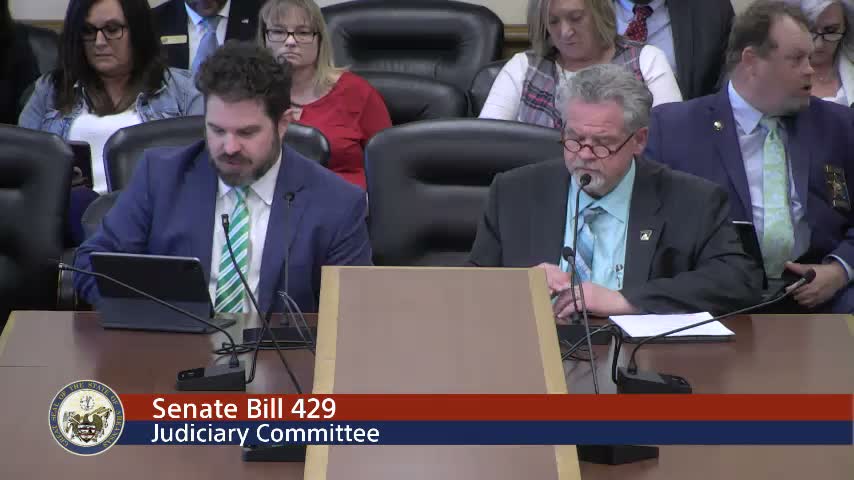
Senate Bill 429 — a proposal to prohibit handling, viewing or possessing certain election-related data for a pre-election period — generated extended debate and public testimony and ultimately failed in committee.
Clint Lancaster, who introduced the bill, summarized its purpose: "Senate bill 4 29 deals with the handling, viewing, and possession of election related data," and said sponsors sought to prevent the data's use in ballot-harvesting and targeted intimidation. He told members the data is sometimes used to create "ballot harvesting applications" and argued the prohibition would be narrowly tailored to people who are not county election officials.
County election officials and coordinators raised operational concerns. Doug Cardus, Saline County clerk, explained that contractors and technicians sometimes must access equipment or data when machines malfunction and said contractors are not county employees. Laura Wiles, a Faulkner County election coordinator, cautioned the bill's definition of "data" could be interpreted to prohibit posting results tapes and could impede poll workers and routine absentee-ballot cure processes involving nursing-home administrators. "I think this is very prohibitive and would prevent poll workers and election coordinators from being able to do their duties," she told the committee.
Lindsay French of the Association of Arkansas Counties said the bill's exclusions may not match on-the-ground employment relationships; she warned the criminal penalties in the bill (which she described as a class A misdemeanor up to class D felony for negligent disclosure in the draft the witnesses discussed) could deter poll workers and hinder election operations.
Sponsors argued the bill does not prevent legitimate administrative functions and pointed to statutory interpretations that would broadly treat someone working on behalf of a county election commission as an employee for purposes of the criminal provision. They also pointed to experiences in other states where voter data has been used for aggressive targeting and said the measure is intended to be preventive.
After extensive questioning, audience testimony and back-and-forth about technical amendments and exemptions, the committee called the motion and the bill failed in committee.
Clint Lancaster, who introduced the bill, summarized its purpose: "Senate bill 4 29 deals with the handling, viewing, and possession of election related data," and said sponsors sought to prevent the data's use in ballot-harvesting and targeted intimidation. He told members the data is sometimes used to create "ballot harvesting applications" and argued the prohibition would be narrowly tailored to people who are not county election officials.
County election officials and coordinators raised operational concerns. Doug Cardus, Saline County clerk, explained that contractors and technicians sometimes must access equipment or data when machines malfunction and said contractors are not county employees. Laura Wiles, a Faulkner County election coordinator, cautioned the bill's definition of "data" could be interpreted to prohibit posting results tapes and could impede poll workers and routine absentee-ballot cure processes involving nursing-home administrators. "I think this is very prohibitive and would prevent poll workers and election coordinators from being able to do their duties," she told the committee.
Lindsay French of the Association of Arkansas Counties said the bill's exclusions may not match on-the-ground employment relationships; she warned the criminal penalties in the bill (which she described as a class A misdemeanor up to class D felony for negligent disclosure in the draft the witnesses discussed) could deter poll workers and hinder election operations.
Sponsors argued the bill does not prevent legitimate administrative functions and pointed to statutory interpretations that would broadly treat someone working on behalf of a county election commission as an employee for purposes of the criminal provision. They also pointed to experiences in other states where voter data has been used for aggressive targeting and said the measure is intended to be preventive.
After extensive questioning, audience testimony and back-and-forth about technical amendments and exemptions, the committee called the motion and the bill failed in committee.
View the Full Meeting & All Its Details
This article offers just a summary. Unlock complete video, transcripts, and insights as a Founder Member.
✓
Watch full, unedited meeting videos
✓
Search every word spoken in unlimited transcripts
✓
AI summaries & real-time alerts (all government levels)
✓
Permanent access to expanding government content
30-day money-back guarantee
