Senate Judiciary Committee advances bill to allow petitions restoring firearm rights to some nonviolent felons
April 05, 2023 | JUDICIARY COMMITTEE - SENATE, Senate, Committees, Legislative, Arkansas
This article was created by AI summarizing key points discussed. AI makes mistakes, so for full details and context, please refer to the video of the full meeting. Please report any errors so we can fix them. Report an error »
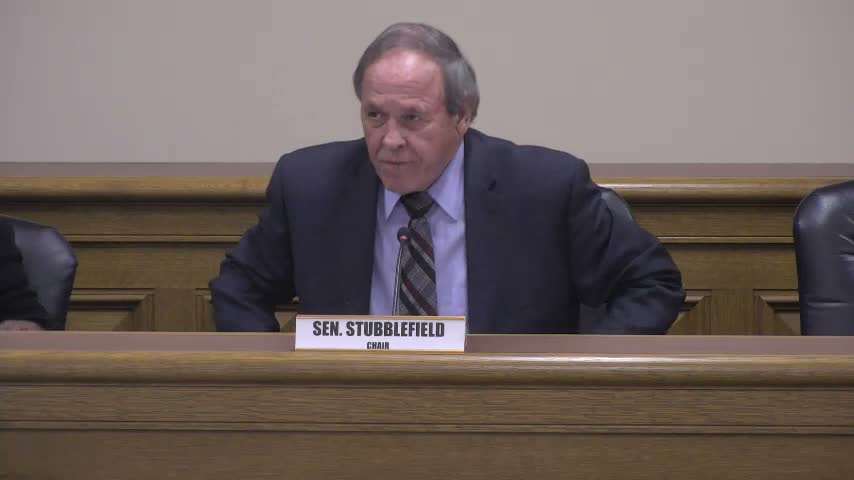
The Senate Judiciary Committee considered House Bill 1013 on the restoration of firearm possession rights to people convicted of certain nonviolent felonies, and a motion to pass the bill was carried by voice vote during the committee meeting.
Representative Vivian Flowers, the bill’s sponsor in the House, told the committee the measure amends the state’s existing comprehensive sealing process so that a person who has completed disposition—prison or jail, fines, probation or parole and restitution—may petition the court that convicted them to restore Second Amendment rights. “I believe in the power of restorative justice,” Flowers said, urging the committee to consider constituents who have rebuilt their lives after nonviolent offenses.
Flowers and other sponsors said the bill is limited to nonviolent felonies and places petitions under the Comprehensive Sealing Act so judges and prosecutors can review cases. Flowers cited Department of Justice longitudinal studies she said showed recidivism falling “to 3 percent” after eight years in a federal sample and to about 20 percent after ten years in a 36‑state study; she used those figures to support a shorter eligibility timeline and the use of prosecutorial and judicial review in the petition process.
Supporters described process safeguards: petitioners must complete all parts of their disposition before applying; prosecutors will be notified and may present information about ongoing charges or historical conduct to the court; and if a petition is denied the applicant may reapply after a year.
Bob McMahon, identified in the hearing as prosecutor coordinator, said prosecutors helped draft the bill’s exclusion list and worked to include offenses the drafters considered violent or serious so those individuals would not be eligible for restoration. McMahon acknowledged the exclusion list is lengthy and said it is possible something could have been overlooked in drafting, advising committee members to consult the bill text for specific code sections and lines.
Not all testimony supported the change. Lieutenant Colonel Jason Aaron of the Arkansas State Police said the agency opposed the bill as written and urged a longer look-back period: “We feel there currently is a process in place for convicted felons. Losing those gun rights is part of a deterrent … We ask that the look back should be instead of 5 years, go back to 10 years,” he said.
Committee members asked whether trafficking and certain drug offenses would be excluded; witnesses said trafficking is listed in the bill (reported in discussion as appearing on page 5, line 13) and that plea deals sometimes obscure violent conduct, which is a reason prosecutors and judges were included in the review process. Sponsors emphasized the change is intended for people who did not use a weapon or commit violence in their crimes and who have otherwise paid their debt to society.
At the close of the hearing a motion “to pass” House Bill 1013 was made and seconded, and the chair called for a voice vote. The transcript records ayes and noes called aloud but does not contain a numerical roll-call; proponents thanked the committee after the vote and the meeting adjourned. The transcript does not record the bill’s next formal calendar step.
The committee debate centered on balancing restoration and public‑safety concerns, with sponsors pointing to restorative‑justice principles and law‑enforcement witnesses urging a longer eligibility period or additional safeguards. Further statutory text and the bill’s exclusion list were discussed repeatedly; committee members were told to consult the bill draft for the specific code sections that list excluded offenses.
Representative Vivian Flowers, the bill’s sponsor in the House, told the committee the measure amends the state’s existing comprehensive sealing process so that a person who has completed disposition—prison or jail, fines, probation or parole and restitution—may petition the court that convicted them to restore Second Amendment rights. “I believe in the power of restorative justice,” Flowers said, urging the committee to consider constituents who have rebuilt their lives after nonviolent offenses.
Flowers and other sponsors said the bill is limited to nonviolent felonies and places petitions under the Comprehensive Sealing Act so judges and prosecutors can review cases. Flowers cited Department of Justice longitudinal studies she said showed recidivism falling “to 3 percent” after eight years in a federal sample and to about 20 percent after ten years in a 36‑state study; she used those figures to support a shorter eligibility timeline and the use of prosecutorial and judicial review in the petition process.
Supporters described process safeguards: petitioners must complete all parts of their disposition before applying; prosecutors will be notified and may present information about ongoing charges or historical conduct to the court; and if a petition is denied the applicant may reapply after a year.
Bob McMahon, identified in the hearing as prosecutor coordinator, said prosecutors helped draft the bill’s exclusion list and worked to include offenses the drafters considered violent or serious so those individuals would not be eligible for restoration. McMahon acknowledged the exclusion list is lengthy and said it is possible something could have been overlooked in drafting, advising committee members to consult the bill text for specific code sections and lines.
Not all testimony supported the change. Lieutenant Colonel Jason Aaron of the Arkansas State Police said the agency opposed the bill as written and urged a longer look-back period: “We feel there currently is a process in place for convicted felons. Losing those gun rights is part of a deterrent … We ask that the look back should be instead of 5 years, go back to 10 years,” he said.
Committee members asked whether trafficking and certain drug offenses would be excluded; witnesses said trafficking is listed in the bill (reported in discussion as appearing on page 5, line 13) and that plea deals sometimes obscure violent conduct, which is a reason prosecutors and judges were included in the review process. Sponsors emphasized the change is intended for people who did not use a weapon or commit violence in their crimes and who have otherwise paid their debt to society.
At the close of the hearing a motion “to pass” House Bill 1013 was made and seconded, and the chair called for a voice vote. The transcript records ayes and noes called aloud but does not contain a numerical roll-call; proponents thanked the committee after the vote and the meeting adjourned. The transcript does not record the bill’s next formal calendar step.
The committee debate centered on balancing restoration and public‑safety concerns, with sponsors pointing to restorative‑justice principles and law‑enforcement witnesses urging a longer eligibility period or additional safeguards. Further statutory text and the bill’s exclusion list were discussed repeatedly; committee members were told to consult the bill draft for the specific code sections that list excluded offenses.
Don't Miss a Word: See the Full Meeting!
Go beyond summaries. Unlock every video, transcript, and key insight with a Founder Membership.
✓
Get instant access to full meeting videos
✓
Search and clip any phrase from complete transcripts
✓
Receive AI-powered summaries & custom alerts
✓
Enjoy lifetime, unrestricted access to government data
30-day money-back guarantee
