House pauses parts of auto-expungement process to clear 312,000-case backlog, advances reform
February 13, 2024 | 2024 Utah Legislature, Utah Legislature, Utah Legislative Branch, Utah
This article was created by AI summarizing key points discussed. AI makes mistakes, so for full details and context, please refer to the video of the full meeting. Please report any errors so we can fix them. Report an error »
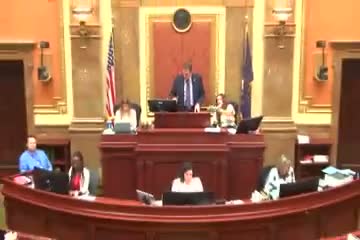
Representative Steve Lisonbee, sponsor of the third substitute to House Bill 352, told the chamber that the measure pauses court batching of auto-expungement cases to the Bureau of Criminal Identification (BCI) while the state clears an estimated backlog of about 312,000 cases and stands up a statewide data task force.
"We have a 312,000 case backlog in our auto expungement," Lisonbee said in floor remarks, describing a process that has left some deceased people and incarcerated individuals in the batch queue while others who sought relief wait. The substitute also creates an online request so individuals can be bumped to the head of the line and transfers certain record-handling responsibilities from local law-enforcement offices to BCI to reduce duplicated manual work.
Supporters said the pause is temporary and aimed at fixing process and data problems that make the automatic system produce incorrect results. Representative Gwen, speaking in favor, said staff are "incapable" of keeping up because of poor data quality and legacy paper records, arguing the pause will let the state prioritize people who requested expungement. Representative King expressed concern about an apparent fiscal note and urged that the body see any updated fiscal estimate before final action.
The bill also standardizes waiver recognition so a court-granted fee waiver could be recognized by BCI for related processing, and requires judges to consider all cases for an individual when granting a waiver. Lisonbee said the change removes the need for local agencies to "take scissors to little paper" and lets BCI handle batches where background checks are produced.
Opponents warned that temporary halts sometimes become de facto rollbacks of prior reform. Representative King asked whether the substitute carried a new fiscal cost; Lisonbee said he had discussed the issue with the fiscal analyst and expected clarifying language to eliminate the disputed cost but acknowledged an updated fiscal note was still pending.
After debate, the House adopted the fourth substitute and passed HB352 by a vote of 67-4. The bill will be transmitted to the Senate for further consideration. The vote record on the House floor reflects the recorded tally (67 yea, 4 nay) reported by the clerk.
Next steps: the bill proceeds to the Utah Senate. Any details about specific implementation timelines or appropriation needs were not finalized on the floor and were described as pending fiscal analysis.
"We have a 312,000 case backlog in our auto expungement," Lisonbee said in floor remarks, describing a process that has left some deceased people and incarcerated individuals in the batch queue while others who sought relief wait. The substitute also creates an online request so individuals can be bumped to the head of the line and transfers certain record-handling responsibilities from local law-enforcement offices to BCI to reduce duplicated manual work.
Supporters said the pause is temporary and aimed at fixing process and data problems that make the automatic system produce incorrect results. Representative Gwen, speaking in favor, said staff are "incapable" of keeping up because of poor data quality and legacy paper records, arguing the pause will let the state prioritize people who requested expungement. Representative King expressed concern about an apparent fiscal note and urged that the body see any updated fiscal estimate before final action.
The bill also standardizes waiver recognition so a court-granted fee waiver could be recognized by BCI for related processing, and requires judges to consider all cases for an individual when granting a waiver. Lisonbee said the change removes the need for local agencies to "take scissors to little paper" and lets BCI handle batches where background checks are produced.
Opponents warned that temporary halts sometimes become de facto rollbacks of prior reform. Representative King asked whether the substitute carried a new fiscal cost; Lisonbee said he had discussed the issue with the fiscal analyst and expected clarifying language to eliminate the disputed cost but acknowledged an updated fiscal note was still pending.
After debate, the House adopted the fourth substitute and passed HB352 by a vote of 67-4. The bill will be transmitted to the Senate for further consideration. The vote record on the House floor reflects the recorded tally (67 yea, 4 nay) reported by the clerk.
Next steps: the bill proceeds to the Utah Senate. Any details about specific implementation timelines or appropriation needs were not finalized on the floor and were described as pending fiscal analysis.
View the Full Meeting & All Its Details
This article offers just a summary. Unlock complete video, transcripts, and insights as a Founder Member.
✓
Watch full, unedited meeting videos
✓
Search every word spoken in unlimited transcripts
✓
AI summaries & real-time alerts (all government levels)
✓
Permanent access to expanding government content
30-day money-back guarantee
