Utah House passes bill requiring youth‑service groups to check supervisors against offender registry after floor debate
February 14, 2024 | 2024 Utah Legislature, Utah Legislature, Utah Legislative Branch, Utah
This article was created by AI summarizing key points discussed. AI makes mistakes, so for full details and context, please refer to the video of the full meeting. Please report any errors so we can fix them. Report an error »
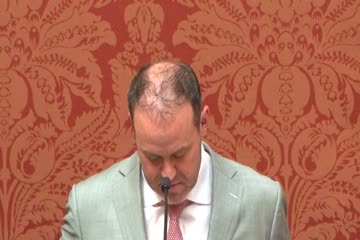
The Utah House of Representatives on Feb. 13 passed Senate Bill 158, a measure that requires youth‑service organizations to check individuals who will have direct supervision or care of children against the state offender registry and to adopt "reasonable" child‑abuse‑prevention policies and training.
Representative Clancy, the bill sponsor, said the measure aims to give volunteer organizations legal guidance and a practical framework for protecting children rather than imposing onerous or expert training requirements. "We're not asking for expert training," Clancy said; the bill asks organizations to put basic policies and training in place to reduce risks to children.
Several lawmakers asked detailed questions about how SB 158 would work in practice. Representative Thurston asked whether the checks would apply to volunteers such as pastors or bishops who occasionally supervise youth programs; Clancy replied the checks apply to any individual with direct supervision or care responsibilities when they first enter that position. Representative Thurston: "So if somebody wasn't trained properly, didn't know it, didn't do a pro didn't know how to do it or just didn't follow through, who is the liable person?" Clancy responded that the bill does not create a new private right of action and that liability would fall on the organization under existing legal frameworks.
Representative Cutler pressed on whether the bill would create new penalties or raise insurance costs for volunteer organizations; Clancy said the bill specifically states it does not alter existing insurance obligations and that it is intended to provide clarity rather than new causes of action. "It does not change any existing cause of action or create a new private right of action," Clancy said, adding that negligence claims would proceed under the current legal framework and the organization's existing burden.
Representative Strong questioned the use of the term "reasonable" in describing training and policies; Clancy said "reasonable" is an established legal standard and would be applied as such in any dispute. Representative Malloy and others asked how often checks must be repeated; Clancy said the checks are conducted at the initial entry into the supervisory position.
The measure drew some concern that implementation could be challenging for small volunteer groups, and whether smaller organizations lacking administrative capacity might face higher costs. Proponents said the bill balances protection with practicality and fills a gap that many organizations have been requesting guidance about.
After floor discussion, the House approved SB 158 by a recorded vote of 70 yes to 2 no. The bill will be signed by the Speaker and transmitted to the Senate for the President's signature.
The House discussion included a mix of technical questions and policy framing; supporters said the bill creates a baseline of protection while avoiding sweeping new legal liabilities for volunteers and organizations. Opponents warned implementation hurdles such as training and insurance costs might disproportionately affect small volunteer groups.
Representative Clancy, the bill sponsor, said the measure aims to give volunteer organizations legal guidance and a practical framework for protecting children rather than imposing onerous or expert training requirements. "We're not asking for expert training," Clancy said; the bill asks organizations to put basic policies and training in place to reduce risks to children.
Several lawmakers asked detailed questions about how SB 158 would work in practice. Representative Thurston asked whether the checks would apply to volunteers such as pastors or bishops who occasionally supervise youth programs; Clancy replied the checks apply to any individual with direct supervision or care responsibilities when they first enter that position. Representative Thurston: "So if somebody wasn't trained properly, didn't know it, didn't do a pro didn't know how to do it or just didn't follow through, who is the liable person?" Clancy responded that the bill does not create a new private right of action and that liability would fall on the organization under existing legal frameworks.
Representative Cutler pressed on whether the bill would create new penalties or raise insurance costs for volunteer organizations; Clancy said the bill specifically states it does not alter existing insurance obligations and that it is intended to provide clarity rather than new causes of action. "It does not change any existing cause of action or create a new private right of action," Clancy said, adding that negligence claims would proceed under the current legal framework and the organization's existing burden.
Representative Strong questioned the use of the term "reasonable" in describing training and policies; Clancy said "reasonable" is an established legal standard and would be applied as such in any dispute. Representative Malloy and others asked how often checks must be repeated; Clancy said the checks are conducted at the initial entry into the supervisory position.
The measure drew some concern that implementation could be challenging for small volunteer groups, and whether smaller organizations lacking administrative capacity might face higher costs. Proponents said the bill balances protection with practicality and fills a gap that many organizations have been requesting guidance about.
After floor discussion, the House approved SB 158 by a recorded vote of 70 yes to 2 no. The bill will be signed by the Speaker and transmitted to the Senate for the President's signature.
The House discussion included a mix of technical questions and policy framing; supporters said the bill creates a baseline of protection while avoiding sweeping new legal liabilities for volunteers and organizations. Opponents warned implementation hurdles such as training and insurance costs might disproportionately affect small volunteer groups.
Don't Miss a Word: See the Full Meeting!
Go beyond summaries. Unlock every video, transcript, and key insight with a Founder Membership.
✓
Get instant access to full meeting videos
✓
Search and clip any phrase from complete transcripts
✓
Receive AI-powered summaries & custom alerts
✓
Enjoy lifetime, unrestricted access to government data
30-day money-back guarantee
