Utah House approves AI disclosure, creates regulatory lab in sweeping bill
February 28, 2024 | 2024 Utah Legislature, Utah Legislature, Utah Legislative Branch, Utah
This article was created by AI summarizing key points discussed. AI makes mistakes, so for full details and context, please refer to the video of the full meeting. Please report any errors so we can fix them. Report an error »
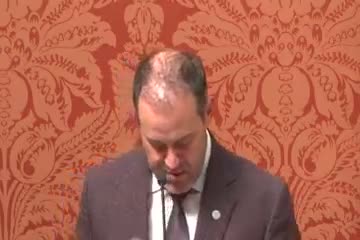
The Utah House on the floor on Feb. 27 passed Senate Bill 149, a bipartisan measure that establishes definitions and limited disclosure requirements for generative artificial intelligence and sets up an AI regulatory lab to address risks and innovation.
Representative Jeff Moss, the House sponsor, told colleagues the bill "strikes a balance between protecting consumers as well as strengthening the artificial intelligence ecosystem in the state." He said the measure defines generative AI, incorporates synthetic data as de‑identified data, and requires basic disclosure when generative AI is used in text messages, chatbots or voice calls.
Representative Cobb asked whether the bill's proposed "AI lab" would allow regulatory mitigation agreements to cover consumer‑protection laws. Representative Moss replied that the mitigation authority tracks entities currently regulated by the Department of Commerce and pointed the body to the statutory list ("section 13.2‑1" in the bill text) for the covered authorities.
Representative Briscoe spoke in support, calling the legislation "forward looking" and urging colleagues to adopt it to position the state to manage AI responsibly.
The bill also clarifies that use of generative AI is not a defense to violating statutes and that a person who prompts an AI to commit a crime would still be guilty of the underlying offense, language sponsors said is intended to preserve criminal accountability.
With summation waived, the House opened voting and passed SB149 by voice/hand vote; the clerk recorded 73 yes, 0 no. Representative Moss then moved a short recess until 10:25 and the body temporarily adjourned.
The measure now goes to the Senate for final signature steps consistent with the legislative process.
Representative Jeff Moss, the House sponsor, told colleagues the bill "strikes a balance between protecting consumers as well as strengthening the artificial intelligence ecosystem in the state." He said the measure defines generative AI, incorporates synthetic data as de‑identified data, and requires basic disclosure when generative AI is used in text messages, chatbots or voice calls.
Representative Cobb asked whether the bill's proposed "AI lab" would allow regulatory mitigation agreements to cover consumer‑protection laws. Representative Moss replied that the mitigation authority tracks entities currently regulated by the Department of Commerce and pointed the body to the statutory list ("section 13.2‑1" in the bill text) for the covered authorities.
Representative Briscoe spoke in support, calling the legislation "forward looking" and urging colleagues to adopt it to position the state to manage AI responsibly.
The bill also clarifies that use of generative AI is not a defense to violating statutes and that a person who prompts an AI to commit a crime would still be guilty of the underlying offense, language sponsors said is intended to preserve criminal accountability.
With summation waived, the House opened voting and passed SB149 by voice/hand vote; the clerk recorded 73 yes, 0 no. Representative Moss then moved a short recess until 10:25 and the body temporarily adjourned.
The measure now goes to the Senate for final signature steps consistent with the legislative process.
Don't Miss a Word: See the Full Meeting!
Go beyond summaries. Unlock every video, transcript, and key insight with a Founder Membership.
✓
Get instant access to full meeting videos
✓
Search and clip any phrase from complete transcripts
✓
Receive AI-powered summaries & custom alerts
✓
Enjoy lifetime, unrestricted access to government data
30-day money-back guarantee
