Utah House adopts judge-discretion paraphernalia amendment tied to treatment participation
February 29, 2024 | 2024 Utah Legislature, Utah Legislature, Utah Legislative Branch, Utah
This article was created by AI summarizing key points discussed. AI makes mistakes, so for full details and context, please refer to the video of the full meeting. Please report any errors so we can fix them. Report an error »
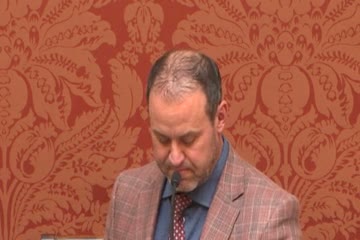
The Utah House on Feb. 29, 2024 approved first substitute Senate Bill 60, a narrowly targeted criminal-justice measure that allows a judge — at the judge’s discretion — to dismiss a class B drug paraphernalia charge for defendants who meet specified requirements tied to treatment participation.
Representative Steve Eliason, the House sponsor, told colleagues the bill is a small component of a broader sequential-intercept model aimed at steering people with substance use disorder into treatment rather than through repeated criminal-processing cycles. "If a individual . . . can prove that they are, have commenced, are continuing or completing a substance use disorder treatment program, the [bill] gives the judge the option to dismiss the charge," Eliason said.
The House adopted Amendment 2, offered by Representative Clancy, which replaced mandatory "shall" language with discretionary "may" language so judges have the option — not the obligation — to dismiss a qualifying charge. Representative Clancy described the change as a way to "thread a needle," keeping accountability while adding an additional tool in the justice system's toolbox: "This amendment changes the shall, to a may dismiss the charge if the person establishes the criteria that the good representative from Sandy has talked about." (Representative Clancy)
Under the enacted text described on the floor, eligibility for judicial dismissal requires multiple elements: participation in an established syringe-exchange program; storage of used syringes in a properly labeled, puncture-resistant medical sharps container; and demonstrable engagement with a substance-use treatment program. Eliason emphasized that the bill does not create an affirmative defense or change underlying paraphernalia law; instead, it provides a one-time judicial waiver option if the court finds the criteria satisfied.
Members pressed sponsors on logistics and scope during extended questioning. Representative Wilcox asked whether officers would already be aware at arrest of a sealed, labeled sharps container; Eliason replied that proper documentation in charging papers would be needed for the judge to consider dismissal. Representative Wilcox also asked why removal of the charge would require a later judicial determination rather than an officer-level decision at the arrest point; Eliason said charging discretion remains with officers and the new provision is an additional judicial option if the case is prosecuted.
Representative Snyder voiced broader concerns about whether the change effectively permits possession of paraphernalia: "Do we want to legalize drug paraphernalia on a person?" Snyder asked, noting that the question of permissible conduct remains before the body. Sponsors and amendment supporters repeatedly said the bill narrows rather than expands protections, and that the amendment's "may" language preserves judicial discretion.
Representative Clancy and other supporters framed the measure as a narrowly tailored mechanism to encourage treatment, hold people accountable for court appearances, and provide a conditional path out of a single paraphernalia charge. Clancy said the amendment "gets back to one of the core principles" of this year's reforms: "We can still be tough on crime . . . and hold people accountable while still making sure that there are effective systems in place for exit ramps for people that do want help." (Representative Clancy)
The House approved first substitute SB 60 on a roll call (56 yes, 16 no). The bill will be sent to the Senate for further consideration under the legislative process.
What happens next: The bill, as amended, proceeds to the Senate for its consideration and any further action. Implementation depends on how prosecutors, courts, and syringe-exchange programs document and verify participation and safe-storage practices in individual cases.
Representative Steve Eliason, the House sponsor, told colleagues the bill is a small component of a broader sequential-intercept model aimed at steering people with substance use disorder into treatment rather than through repeated criminal-processing cycles. "If a individual . . . can prove that they are, have commenced, are continuing or completing a substance use disorder treatment program, the [bill] gives the judge the option to dismiss the charge," Eliason said.
The House adopted Amendment 2, offered by Representative Clancy, which replaced mandatory "shall" language with discretionary "may" language so judges have the option — not the obligation — to dismiss a qualifying charge. Representative Clancy described the change as a way to "thread a needle," keeping accountability while adding an additional tool in the justice system's toolbox: "This amendment changes the shall, to a may dismiss the charge if the person establishes the criteria that the good representative from Sandy has talked about." (Representative Clancy)
Under the enacted text described on the floor, eligibility for judicial dismissal requires multiple elements: participation in an established syringe-exchange program; storage of used syringes in a properly labeled, puncture-resistant medical sharps container; and demonstrable engagement with a substance-use treatment program. Eliason emphasized that the bill does not create an affirmative defense or change underlying paraphernalia law; instead, it provides a one-time judicial waiver option if the court finds the criteria satisfied.
Members pressed sponsors on logistics and scope during extended questioning. Representative Wilcox asked whether officers would already be aware at arrest of a sealed, labeled sharps container; Eliason replied that proper documentation in charging papers would be needed for the judge to consider dismissal. Representative Wilcox also asked why removal of the charge would require a later judicial determination rather than an officer-level decision at the arrest point; Eliason said charging discretion remains with officers and the new provision is an additional judicial option if the case is prosecuted.
Representative Snyder voiced broader concerns about whether the change effectively permits possession of paraphernalia: "Do we want to legalize drug paraphernalia on a person?" Snyder asked, noting that the question of permissible conduct remains before the body. Sponsors and amendment supporters repeatedly said the bill narrows rather than expands protections, and that the amendment's "may" language preserves judicial discretion.
Representative Clancy and other supporters framed the measure as a narrowly tailored mechanism to encourage treatment, hold people accountable for court appearances, and provide a conditional path out of a single paraphernalia charge. Clancy said the amendment "gets back to one of the core principles" of this year's reforms: "We can still be tough on crime . . . and hold people accountable while still making sure that there are effective systems in place for exit ramps for people that do want help." (Representative Clancy)
The House approved first substitute SB 60 on a roll call (56 yes, 16 no). The bill will be sent to the Senate for further consideration under the legislative process.
What happens next: The bill, as amended, proceeds to the Senate for its consideration and any further action. Implementation depends on how prosecutors, courts, and syringe-exchange programs document and verify participation and safe-storage practices in individual cases.
Don't Miss a Word: See the Full Meeting!
Go beyond summaries. Unlock every video, transcript, and key insight with a Founder Membership.
✓
Get instant access to full meeting videos
✓
Search and clip any phrase from complete transcripts
✓
Receive AI-powered summaries & custom alerts
✓
Enjoy lifetime, unrestricted access to government data
30-day money-back guarantee
