Utah House votes 69-0 to move special congressional election dates, align municipal contests
June 14, 2023 | 2023 Utah Legislature, Utah Legislature, Utah Legislative Branch, Utah
This article was created by AI summarizing key points discussed. AI makes mistakes, so for full details and context, please refer to the video of the full meeting. Please report any errors so we can fix them. Report an error »
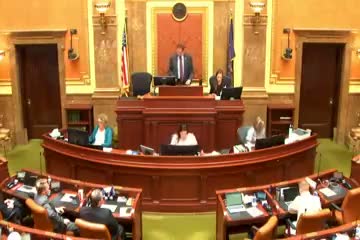
The Utah House of Representatives on the second special session passed House Bill 2001 on a 69-0 vote, moving the special congressional primary to Sept. 5, 2023, and the general special congressional election to Nov. 21, 2023, and shifting municipal primary and general election dates to match. Sponsor Representative Cal Musselman said the changes are intended to reduce the time the Second Congressional District would be unrepresented after U.S. Rep. Chris Stewart’s resignation and to limit voter confusion and fatigue.
Musselman told colleagues the bill would “mirror as much as possible the entire process” voters and candidates normally see — filing deadlines, canvassing procedures and postmark rules — while prioritizing reimbursement to counties that administer the elections and subjecting expenditures to audit. He described the measure as a way to “minimize the time which citizens of Utah and most specifically, the hundreds and thousands of citizens in CD 2 are unrepresented.”
The governor’s proclamation cited the United States Constitution, Article I, Section 2, and Utah Code 20A-1-502.5 as authority for calling a special session to set election dates and appropriate funds. The proclamation, read into the record by the chief clerk, set the primary special congressional election for Sept. 5 and the general special congressional election for Nov. 21; it also moved the municipal primary from Aug. 15 to Sept. 5 and the municipal general from Nov. 7 to Nov. 21, and directed counties within CD2 to conduct both municipal and special congressional elections.
Representative Briscoe asked the sponsor to confirm that shifting administration to counties means county clerks will run ballot collection and initial determinations while mayors and city councils will remain the formal canvassers for city elections; the Speaker Pro Tem confirmed Briscoe’s reading of the bill language. Musselman and other supporters stressed that municipalities are required to reimburse counties for added costs and that county expenses in CD2 will be prioritized for reimbursement.
After brief debate and procedural motions to lift the bill from the rules committee and place it on third reading, the House voted. The clerk announced House Bill 2001 had received 69 "yay" votes and 0 "nay" votes; Speaker Pro Tem said the bill will be transmitted to the Senate for its consideration.
The proclamation and bill text also address administrative details including aligning canvassing deadlines, allowing election officers to accept and count mail ballots postmarked on or before Sept. 5, and establishing a deadline by which voters may change party affiliation for the Sept. 5 primary. The House adjourned after completing its business; the Senate proceeded with advice and consent work and the House appointed committees to notify the Senate and lieutenant governor of its completion.
The bill’s next step is consideration in the Utah Senate; the House vote does not itself change state law until both chambers pass the measure and the governor acts, as applicable.
Musselman told colleagues the bill would “mirror as much as possible the entire process” voters and candidates normally see — filing deadlines, canvassing procedures and postmark rules — while prioritizing reimbursement to counties that administer the elections and subjecting expenditures to audit. He described the measure as a way to “minimize the time which citizens of Utah and most specifically, the hundreds and thousands of citizens in CD 2 are unrepresented.”
The governor’s proclamation cited the United States Constitution, Article I, Section 2, and Utah Code 20A-1-502.5 as authority for calling a special session to set election dates and appropriate funds. The proclamation, read into the record by the chief clerk, set the primary special congressional election for Sept. 5 and the general special congressional election for Nov. 21; it also moved the municipal primary from Aug. 15 to Sept. 5 and the municipal general from Nov. 7 to Nov. 21, and directed counties within CD2 to conduct both municipal and special congressional elections.
Representative Briscoe asked the sponsor to confirm that shifting administration to counties means county clerks will run ballot collection and initial determinations while mayors and city councils will remain the formal canvassers for city elections; the Speaker Pro Tem confirmed Briscoe’s reading of the bill language. Musselman and other supporters stressed that municipalities are required to reimburse counties for added costs and that county expenses in CD2 will be prioritized for reimbursement.
After brief debate and procedural motions to lift the bill from the rules committee and place it on third reading, the House voted. The clerk announced House Bill 2001 had received 69 "yay" votes and 0 "nay" votes; Speaker Pro Tem said the bill will be transmitted to the Senate for its consideration.
The proclamation and bill text also address administrative details including aligning canvassing deadlines, allowing election officers to accept and count mail ballots postmarked on or before Sept. 5, and establishing a deadline by which voters may change party affiliation for the Sept. 5 primary. The House adjourned after completing its business; the Senate proceeded with advice and consent work and the House appointed committees to notify the Senate and lieutenant governor of its completion.
The bill’s next step is consideration in the Utah Senate; the House vote does not itself change state law until both chambers pass the measure and the governor acts, as applicable.
Don't Miss a Word: See the Full Meeting!
Go beyond summaries. Unlock every video, transcript, and key insight with a Founder Membership.
✓
Get instant access to full meeting videos
✓
Search and clip any phrase from complete transcripts
✓
Receive AI-powered summaries & custom alerts
✓
Enjoy lifetime, unrestricted access to government data
30-day money-back guarantee
