House OKs bill letting Commerce keep electronic transaction fees in a restricted account
January 18, 2023 | 2023 Utah Legislature, Utah Legislature, Utah Legislative Branch, Utah
This article was created by AI summarizing key points discussed. AI makes mistakes, so for full details and context, please refer to the video of the full meeting. Please report any errors so we can fix them. Report an error »
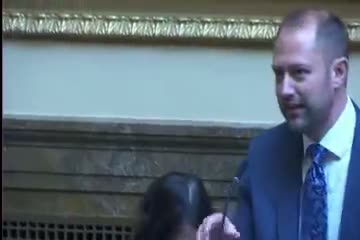
Representative Tusher moved to uncircle and present a substitute for House Bill 12, which changes how the Department of Commerce pays electronic payment processor fees. Under the substitute, those fees would be collected and held in a restricted account to pay transaction costs rather than be included in a fixed static appropriation.
"The fee cost will stay exactly the same regardless of whether this bill passes or not," Representative Tusher said, urging that the bill simply separates the transaction fees into an account that pays for the processor costs.
Representative Kristofferson asked why the legislation was needed rather than agencies accounting for the cost in their fee schedules. The sponsor explained that the Department of Commerce must estimate transaction volumes at the start of each fiscal year; because the appropriation is static, the agency sometimes must return to the Legislature to request adjustments when processing levels differ from estimates.
Representative Judkins asked whether surplus collections would roll over. The sponsor said the restricted account should only contain fees to be spent on processing and "they should never have extra," noting the structure is intended to match revenues to costs.
Concerns about business impacts surfaced; Representative Lyman warned fees charged to businesses have increased and urged vigilance. Representative Tusher replied that the bill does not create new fees and emphasized sub-appropriations oversight to ensure fees are not excessive.
The House voted to adopt the substitute and passed HB 12 with 63 yes votes and 7 no votes. The bill will be transmitted to the Senate for further consideration.
"The fee cost will stay exactly the same regardless of whether this bill passes or not," Representative Tusher said, urging that the bill simply separates the transaction fees into an account that pays for the processor costs.
Representative Kristofferson asked why the legislation was needed rather than agencies accounting for the cost in their fee schedules. The sponsor explained that the Department of Commerce must estimate transaction volumes at the start of each fiscal year; because the appropriation is static, the agency sometimes must return to the Legislature to request adjustments when processing levels differ from estimates.
Representative Judkins asked whether surplus collections would roll over. The sponsor said the restricted account should only contain fees to be spent on processing and "they should never have extra," noting the structure is intended to match revenues to costs.
Concerns about business impacts surfaced; Representative Lyman warned fees charged to businesses have increased and urged vigilance. Representative Tusher replied that the bill does not create new fees and emphasized sub-appropriations oversight to ensure fees are not excessive.
The House voted to adopt the substitute and passed HB 12 with 63 yes votes and 7 no votes. The bill will be transmitted to the Senate for further consideration.
View the Full Meeting & All Its Details
This article offers just a summary. Unlock complete video, transcripts, and insights as a Founder Member.
✓
Watch full, unedited meeting videos
✓
Search every word spoken in unlimited transcripts
✓
AI summaries & real-time alerts (all government levels)
✓
Permanent access to expanding government content
30-day money-back guarantee
