House indexes ballot-signature thresholds to party registration in broad access change
February 01, 2023 | 2023 Utah Legislature, Utah Legislature, Utah Legislative Branch, Utah
This article was created by AI summarizing key points discussed. AI makes mistakes, so for full details and context, please refer to the video of the full meeting. Please report any errors so we can fix them. Report an error »
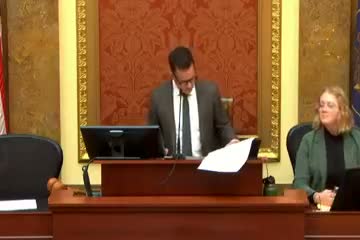
Representative Tuscher, sponsor of House Bill 202, told the House the bill was negotiated to address inconsistent signature requirements across races and districts by creating a signature floor tied to party registration. “For a statewide race, that would be 56,000 signatures,” Tuscher said, and the bill generally sets a floor or 3% of registered party members — whichever is higher.
On the floor Representative Stanquist offered an amendment to replace the word "greater" with "lesser," which proponents argued would reduce onerous thresholds in some districts. The amendment failed after extended debate and a division. Supporters of the bill said indexing to party registration evens the playing field across growing and shrinking districts; critics warned it could advantage candidates with greater resources or distort the role of caucus-convention pathways.
After debate the House passed House Bill 202 by a vote of 52 yes and 20 no. The bill will be transmitted to the Senate for further consideration.
On the floor Representative Stanquist offered an amendment to replace the word "greater" with "lesser," which proponents argued would reduce onerous thresholds in some districts. The amendment failed after extended debate and a division. Supporters of the bill said indexing to party registration evens the playing field across growing and shrinking districts; critics warned it could advantage candidates with greater resources or distort the role of caucus-convention pathways.
After debate the House passed House Bill 202 by a vote of 52 yes and 20 no. The bill will be transmitted to the Senate for further consideration.
Don't Miss a Word: See the Full Meeting!
Go beyond summaries. Unlock every video, transcript, and key insight with a Founder Membership.
✓
Get instant access to full meeting videos
✓
Search and clip any phrase from complete transcripts
✓
Receive AI-powered summaries & custom alerts
✓
Enjoy lifetime, unrestricted access to government data
30-day money-back guarantee
