House adopts substitute to expand in‑state tuition to refugees and permanent‑residency applicants
January 31, 2023 | 2023 Utah Legislature, Utah Legislature, Utah Legislative Branch, Utah
This article was created by AI summarizing key points discussed. AI makes mistakes, so for full details and context, please refer to the video of the full meeting. Please report any errors so we can fix them. Report an error »
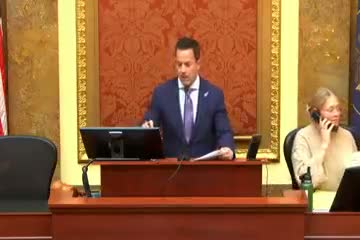
The Utah House adopted a floor substitute and passed House Bill 102 on Jan. 31, extending in‑state tuition eligibility to several categories of newcomers, including refugees, asylees, special immigrant visa recipients, humanitarian parolees, individuals with temporary protected status, and people who have made a good‑faith effort to apply for permanent residency.
Representative Phil Tuscher, sponsor of HB102, said the measure would address a situation in which resettled individuals “do not immediately qualify for in‑state tuition rates” and often face multi‑year waits for permanent‑residency processing. “What this bill does with House Bill 102 is it extends residency‑based in‑state tuition rates to refugees, asylees, special immigrant visa recipients, humanitarian parolees, individuals with temporary protected status, and individuals who can prove that they’ve made an effort in good faith to apply for these statuses,” Tuscher said on the House floor.
Representative Judkins offered and secured a first substitute that clarified eligibility for people who have applied for permanent residency but are awaiting federal adjudication. Judkins noted federal processing delays and argued the amendment would avoid penalizing people for a slow federal system. “There’s a backlog of these cases, and it’s taking up to 2 years to receive this permanent resident status,” Judkins said during debate, adding that the substitute places applicants for permanent residency on the same footing as those with established permanent status.
Supporters said the change has the backing of the Utah System of Higher Education and state institutions and that no significant fiscal impact is expected. Representative Tuscher told colleagues that the measure is intended to allow newcomers to pursue education and “continue to contribute to Utah’s economy.” The House approved the substitute and the bill by voice vote and a recorded tally of 69–0; HB102 will be transmitted to the Senate for consideration.
Next steps: HB102 moves to the Utah Senate. If the Senate passes the bill and the governor signs it, eligible groups would be able to apply for in‑state tuition under the statute specified in the substitute language.
Provenance: The bill was introduced and debated on the House floor (see transcript lines beginning SEG 185 through SEG 453).
Representative Phil Tuscher, sponsor of HB102, said the measure would address a situation in which resettled individuals “do not immediately qualify for in‑state tuition rates” and often face multi‑year waits for permanent‑residency processing. “What this bill does with House Bill 102 is it extends residency‑based in‑state tuition rates to refugees, asylees, special immigrant visa recipients, humanitarian parolees, individuals with temporary protected status, and individuals who can prove that they’ve made an effort in good faith to apply for these statuses,” Tuscher said on the House floor.
Representative Judkins offered and secured a first substitute that clarified eligibility for people who have applied for permanent residency but are awaiting federal adjudication. Judkins noted federal processing delays and argued the amendment would avoid penalizing people for a slow federal system. “There’s a backlog of these cases, and it’s taking up to 2 years to receive this permanent resident status,” Judkins said during debate, adding that the substitute places applicants for permanent residency on the same footing as those with established permanent status.
Supporters said the change has the backing of the Utah System of Higher Education and state institutions and that no significant fiscal impact is expected. Representative Tuscher told colleagues that the measure is intended to allow newcomers to pursue education and “continue to contribute to Utah’s economy.” The House approved the substitute and the bill by voice vote and a recorded tally of 69–0; HB102 will be transmitted to the Senate for consideration.
Next steps: HB102 moves to the Utah Senate. If the Senate passes the bill and the governor signs it, eligible groups would be able to apply for in‑state tuition under the statute specified in the substitute language.
Provenance: The bill was introduced and debated on the House floor (see transcript lines beginning SEG 185 through SEG 453).
View the Full Meeting & All Its Details
This article offers just a summary. Unlock complete video, transcripts, and insights as a Founder Member.
✓
Watch full, unedited meeting videos
✓
Search every word spoken in unlimited transcripts
✓
AI summaries & real-time alerts (all government levels)
✓
Permanent access to expanding government content
30-day money-back guarantee
