House approves voluntary registry for non‑custodial blockchain providers amid questions about oversight
February 06, 2023 | 2023 Utah Legislature, Utah Legislature, Utah Legislative Branch, Utah
This article was created by AI summarizing key points discussed. AI makes mistakes, so for full details and context, please refer to the video of the full meeting. Please report any errors so we can fix them. Report an error »
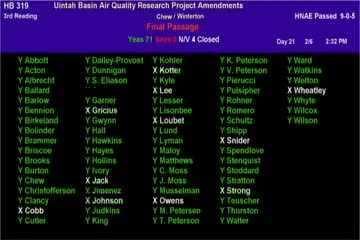
The Utah House voted to pass HB 289 on Feb. 6, a bill establishing a voluntary registry for non‑custodial blockchain‑wallet providers and clarifying oversight through the Regulatory Relief Office and the governor’s regulatory sandbox.
Representative Lee, sponsor on the floor, said the substitute clarifies that the Regulatory Relief Office will determine whether an applicant is a ‘bad actor’ and has the authority to remove companies that commit fraud. Lee said the registry would allow non‑custodial wallet providers to meet state requirements needed to obtain certain money‑transmitter functionality and advertise services that they cannot pursue today.
“Basically, the difference is these are non custodial wallets… And currently, right now, those types of groups that are non custodial wallets cannot be going out in advertising,” Lee said on the floor. He described the registry as voluntary and said registration would include an application and fee; the substitute requires compliance checks as part of the sandbox process.
Several members pressed sponsors on the scope of due diligence, whether non‑blockchain cryptocurrencies would be affected and how the Regulatory Relief Office would determine bad actors. “I wonder if this is the right mechanism… to do that and if it’s creating some unnecessary governmental red tape,” Representative Stenquist said, echoing concerns that the state may not be able to verify solvency or technology for companies in the space.
Representative Lee offered an example in response, naming a company called Giddy that has tried to obtain a money‑transmitter license but been denied; he said the registry creates a pathway for such firms to demonstrate compliance.
Floor debate acknowledged both opportunities to grow a nascent industry in Utah and concerns about consumer protection. After discussion and a roll call, the House passed the substitute 61 yes to 10 no; the bill will be transmitted to the Senate for further consideration.
Representative Lee, sponsor on the floor, said the substitute clarifies that the Regulatory Relief Office will determine whether an applicant is a ‘bad actor’ and has the authority to remove companies that commit fraud. Lee said the registry would allow non‑custodial wallet providers to meet state requirements needed to obtain certain money‑transmitter functionality and advertise services that they cannot pursue today.
“Basically, the difference is these are non custodial wallets… And currently, right now, those types of groups that are non custodial wallets cannot be going out in advertising,” Lee said on the floor. He described the registry as voluntary and said registration would include an application and fee; the substitute requires compliance checks as part of the sandbox process.
Several members pressed sponsors on the scope of due diligence, whether non‑blockchain cryptocurrencies would be affected and how the Regulatory Relief Office would determine bad actors. “I wonder if this is the right mechanism… to do that and if it’s creating some unnecessary governmental red tape,” Representative Stenquist said, echoing concerns that the state may not be able to verify solvency or technology for companies in the space.
Representative Lee offered an example in response, naming a company called Giddy that has tried to obtain a money‑transmitter license but been denied; he said the registry creates a pathway for such firms to demonstrate compliance.
Floor debate acknowledged both opportunities to grow a nascent industry in Utah and concerns about consumer protection. After discussion and a roll call, the House passed the substitute 61 yes to 10 no; the bill will be transmitted to the Senate for further consideration.
View the Full Meeting & All Its Details
This article offers just a summary. Unlock complete video, transcripts, and insights as a Founder Member.
✓
Watch full, unedited meeting videos
✓
Search every word spoken in unlimited transcripts
✓
AI summaries & real-time alerts (all government levels)
✓
Permanent access to expanding government content
30-day money-back guarantee
