House passes amendments widening first‑responder mental‑health coverage and changing eligibility trigger
January 31, 2023 | 2023 Utah Legislature, Utah Legislature, Utah Legislative Branch, Utah
This article was created by AI summarizing key points discussed. AI makes mistakes, so for full details and context, please refer to the video of the full meeting. Please report any errors so we can fix them. Report an error »
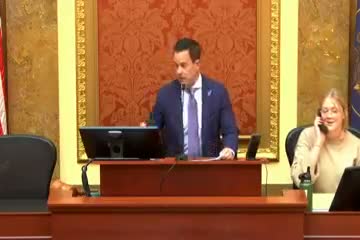
On Jan. 31 the Utah House passed the second substitute to House Bill 59, a follow‑up to prior first‑responder mental‑health legislation. Representative Wilcox, sponsor, said the substitute adds groups inadvertently omitted from last year’s law (including spouses in the retiree portion and forensic interviewers) and clarifies how and when the three‑year eligibility clock begins.
Wilcox explained the change to the eligibility period: the clock will not begin until a retired responder requests services, a change intended to accommodate delayed onset of trauma. “So once they recognize that they need to deal with those issues, that clock … officially request services, then that clock starts for the 3 year period,” Wilcox said on the floor. Members who questioned fiscal implications were told the startup money came from last year’s appropriation and that roughly half of those funds remain available.
Representative Lund expressed support after confirming the clock starts when services are requested. The House approved the second substitute and passed the bill 70–0; sponsors said DPS will administer services and that prior appropriations and a startup fiscal note support current changes.
What it does: HB59 extends program coverage, clarifies administrative responsibilities for DPS and adjusts behavioral-health eligibility timing to begin upon service request rather than a preset post‑retirement date.
Provenance: Debate and vote occurred on the House floor (SEG 624–751).
Wilcox explained the change to the eligibility period: the clock will not begin until a retired responder requests services, a change intended to accommodate delayed onset of trauma. “So once they recognize that they need to deal with those issues, that clock … officially request services, then that clock starts for the 3 year period,” Wilcox said on the floor. Members who questioned fiscal implications were told the startup money came from last year’s appropriation and that roughly half of those funds remain available.
Representative Lund expressed support after confirming the clock starts when services are requested. The House approved the second substitute and passed the bill 70–0; sponsors said DPS will administer services and that prior appropriations and a startup fiscal note support current changes.
What it does: HB59 extends program coverage, clarifies administrative responsibilities for DPS and adjusts behavioral-health eligibility timing to begin upon service request rather than a preset post‑retirement date.
Provenance: Debate and vote occurred on the House floor (SEG 624–751).
Don't Miss a Word: See the Full Meeting!
Go beyond summaries. Unlock every video, transcript, and key insight with a Founder Membership.
✓
Get instant access to full meeting videos
✓
Search and clip any phrase from complete transcripts
✓
Receive AI-powered summaries & custom alerts
✓
Enjoy lifetime, unrestricted access to government data
30-day money-back guarantee
