Utah House rejects substitute then approves expanded postpartum Medicaid coverage
March 01, 2023 | 2023 Utah Legislature, Utah Legislature, Utah Legislative Branch, Utah
This article was created by AI summarizing key points discussed. AI makes mistakes, so for full details and context, please refer to the video of the full meeting. Please report any errors so we can fix them. Report an error »
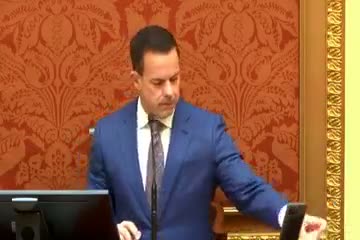
SALT LAKE CITY — The Utah House on March 1 debated and ultimately approved changes to Medicaid coverage for new mothers, passing second-substitute S.B. 133 after narrowly rejecting a third-substitute alternative.
Representative Angela Acton, the House sponsor, told colleagues the measure extends postpartum Medicaid coverage and adds family-planning benefits for new mothers. "The vast majority of these women do have private health insurance, but about 20% of the moms will be using Medicaid at delivery," Acton said, arguing the bill reduces postpartum coverage gaps and supports maternal health.
Representative Jason Thurston proposed a third substitute that would have avoided expanding state-funded Medicaid and instead paid for navigators and outreach to help newly postpartum women enroll in federally subsidized marketplace plans. Thurston warned of future costs if the state assumed long-term responsibility: "This could be a 20 or 30000000 dollar obligation on this vote that we're taking today," he said, urging a lower-cost, targeted approach.
Supporters of the underlying bill, including Representatives James Dunnigan and Jake Judkins, said many mothers fall through the administrative cracks and need continuous care for the first year after birth. "We're not saying that somebody that's not eligible for Medicaid is eligible for Medicaid. All we're saying is for those first 12 months following delivery…we need to go to 12 months to help this mom get a start," Dunnigan said.
Opponents raised budget and policy concerns. Thurston and others argued that many affected women could access equivalent coverage through the federal marketplace and that the state should avoid creating a permanent expense. Representative Thurston noted the bill would add an estimated 6,900 people to Medicaid under current estimates and flagged longer-term fiscal exposure if federal match rates changed.
A recorded roll-call rejected the third substitute: the motion to adopt the third substitute received 35 yea votes and 38 nay votes and failed. The House then voted on the underlying second substitute and approved S.B. 133, with a final tally of 43 yea votes and 29 nay votes; the bill will return to the Senate for further consideration.
The debate featured repeated references to the state's higher-than-average maternal mortality and contrasting views on whether the state or federal programs should carry long-term financial responsibility. Sponsors said they seek to reduce gaps that contribute to poor outcomes for mothers and infants; critics pressed for less costly interventions and more use of existing federal subsidies.
Next steps: S.B. 133, as approved by the House in its second substitute form, will be returned to the Senate for further consideration and any technical steps required for enrollment and reporting would be worked out by state agencies if the bill becomes law.
Representative Angela Acton, the House sponsor, told colleagues the measure extends postpartum Medicaid coverage and adds family-planning benefits for new mothers. "The vast majority of these women do have private health insurance, but about 20% of the moms will be using Medicaid at delivery," Acton said, arguing the bill reduces postpartum coverage gaps and supports maternal health.
Representative Jason Thurston proposed a third substitute that would have avoided expanding state-funded Medicaid and instead paid for navigators and outreach to help newly postpartum women enroll in federally subsidized marketplace plans. Thurston warned of future costs if the state assumed long-term responsibility: "This could be a 20 or 30000000 dollar obligation on this vote that we're taking today," he said, urging a lower-cost, targeted approach.
Supporters of the underlying bill, including Representatives James Dunnigan and Jake Judkins, said many mothers fall through the administrative cracks and need continuous care for the first year after birth. "We're not saying that somebody that's not eligible for Medicaid is eligible for Medicaid. All we're saying is for those first 12 months following delivery…we need to go to 12 months to help this mom get a start," Dunnigan said.
Opponents raised budget and policy concerns. Thurston and others argued that many affected women could access equivalent coverage through the federal marketplace and that the state should avoid creating a permanent expense. Representative Thurston noted the bill would add an estimated 6,900 people to Medicaid under current estimates and flagged longer-term fiscal exposure if federal match rates changed.
A recorded roll-call rejected the third substitute: the motion to adopt the third substitute received 35 yea votes and 38 nay votes and failed. The House then voted on the underlying second substitute and approved S.B. 133, with a final tally of 43 yea votes and 29 nay votes; the bill will return to the Senate for further consideration.
The debate featured repeated references to the state's higher-than-average maternal mortality and contrasting views on whether the state or federal programs should carry long-term financial responsibility. Sponsors said they seek to reduce gaps that contribute to poor outcomes for mothers and infants; critics pressed for less costly interventions and more use of existing federal subsidies.
Next steps: S.B. 133, as approved by the House in its second substitute form, will be returned to the Senate for further consideration and any technical steps required for enrollment and reporting would be worked out by state agencies if the bill becomes law.
View the Full Meeting & All Its Details
This article offers just a summary. Unlock complete video, transcripts, and insights as a Founder Member.
✓
Watch full, unedited meeting videos
✓
Search every word spoken in unlimited transcripts
✓
AI summaries & real-time alerts (all government levels)
✓
Permanent access to expanding government content
30-day money-back guarantee
