House approves optional 'sheriff's node' for some blockchains amid split views on immutability
March 03, 2023 | 2023 Utah Legislature, Utah Legislature, Utah Legislative Branch, Utah
This article was created by AI summarizing key points discussed. AI makes mistakes, so for full details and context, please refer to the video of the full meeting. Please report any errors so we can fix them. Report an error »
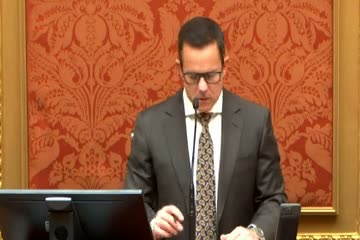
Representative Tusher (moving to uncircle the bill) told the House that first substitute Senate Bill 160 was drafted by the blockchain and digital innovation task force and would let blockchains optionally include a reversible mechanism for fraud or mistake when authorized by a court and exercised by the attorney general.
Tusher said the design — described in floor remarks as a ‘‘sheriff's node’’ — is optional and intended to ‘‘dramatically cut down on fraud and theft’’ for blockchains that choose to adopt the technology. He emphasized the provision does not apply to blockchains that do not opt into the node.
Representative Lyman spoke in opposition, calling the sheriff's node ‘‘contrary’’ and ‘‘antithetical to blockchain technology itself’’ and questioned why Utah would regulate into a decentralized, global system. Other members spoke in favor, saying the bill is a prudent, optional tool to protect consumers while keeping the choice with blockchain designers.
After floor debate, the House approved the first substitute by roll call; the transcript records the passage as 65 yes and 6 no votes. The bill will be returned to the Senate for the president's signature.
Tusher said the design — described in floor remarks as a ‘‘sheriff's node’’ — is optional and intended to ‘‘dramatically cut down on fraud and theft’’ for blockchains that choose to adopt the technology. He emphasized the provision does not apply to blockchains that do not opt into the node.
Representative Lyman spoke in opposition, calling the sheriff's node ‘‘contrary’’ and ‘‘antithetical to blockchain technology itself’’ and questioned why Utah would regulate into a decentralized, global system. Other members spoke in favor, saying the bill is a prudent, optional tool to protect consumers while keeping the choice with blockchain designers.
After floor debate, the House approved the first substitute by roll call; the transcript records the passage as 65 yes and 6 no votes. The bill will be returned to the Senate for the president's signature.
Don't Miss a Word: See the Full Meeting!
Go beyond summaries. Unlock every video, transcript, and key insight with a Founder Membership.
✓
Get instant access to full meeting videos
✓
Search and clip any phrase from complete transcripts
✓
Receive AI-powered summaries & custom alerts
✓
Enjoy lifetime, unrestricted access to government data
30-day money-back guarantee
