House passes bill limiting certain drone‑borne subsurface sensing and permitting court removal of illegally collected data
March 03, 2023 | 2023 Utah Legislature, Utah Legislature, Utah Legislative Branch, Utah
This article was created by AI summarizing key points discussed. AI makes mistakes, so for full details and context, please refer to the video of the full meeting. Please report any errors so we can fix them. Report an error »
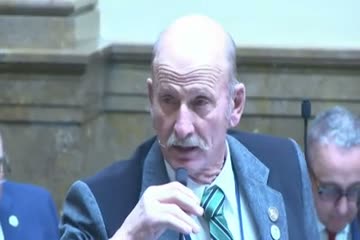
Representative Chu presented third substitute Senate Bill 219, describing the measure as a privacy protection for property owners that prohibits the unmanned use of advanced sensing technology on drones to collect subsurface readings where property owners have a reasonable expectation of privacy.
Chu and other supporters said the bill is targeted at ‘‘bad actors’’ who use technology to gather sensitive subsurface information — examples discussed included data that could expose locations of artifacts or other private structures. The substitute allows courts to order the destruction, deletion and removal of unlawfully collected information.
Representative Gwynn, who helped draft the substitute, said lawmakers took care not to restrict recreational or commercial unmanned aerial‑vehicle pilots and that the bill ‘‘carves those bad actors out.’’ Representative Lund said the bill is intended to protect archaeological resources such as artifacts and burial sites, noting the confidentiality of archeological surveys. Representative Abbott asked about routine authorized activities (for example, utility marking/Blue Stakes); Chu and supporters said the bill was crafted not to interfere with necessary utility or authorized testing activities.
Members voted to adopt the substitute and pass the bill; the transcript records the vote as 68 yes and 0 no. The bill will be returned to the Senate for further consideration.
Chu and other supporters said the bill is targeted at ‘‘bad actors’’ who use technology to gather sensitive subsurface information — examples discussed included data that could expose locations of artifacts or other private structures. The substitute allows courts to order the destruction, deletion and removal of unlawfully collected information.
Representative Gwynn, who helped draft the substitute, said lawmakers took care not to restrict recreational or commercial unmanned aerial‑vehicle pilots and that the bill ‘‘carves those bad actors out.’’ Representative Lund said the bill is intended to protect archaeological resources such as artifacts and burial sites, noting the confidentiality of archeological surveys. Representative Abbott asked about routine authorized activities (for example, utility marking/Blue Stakes); Chu and supporters said the bill was crafted not to interfere with necessary utility or authorized testing activities.
Members voted to adopt the substitute and pass the bill; the transcript records the vote as 68 yes and 0 no. The bill will be returned to the Senate for further consideration.
View the Full Meeting & All Its Details
This article offers just a summary. Unlock complete video, transcripts, and insights as a Founder Member.
✓
Watch full, unedited meeting videos
✓
Search every word spoken in unlimited transcripts
✓
AI summaries & real-time alerts (all government levels)
✓
Permanent access to expanding government content
30-day money-back guarantee
