House approves transient room tax tweaks to help counties manage tourism surges
February 17, 2022 | 2022 Utah Legislature, Utah Legislature, Utah Legislative Branch, Utah
This article was created by AI summarizing key points discussed. AI makes mistakes, so for full details and context, please refer to the video of the full meeting. Please report any errors so we can fix them. Report an error »
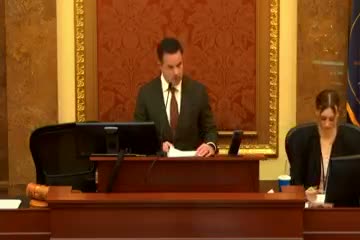
The Utah House on Thursday approved House Bill 323, a measure giving counties that experienced large increases in transient room tax (TRT) revenue limited flexibility to direct a portion of that revenue toward destination development and visitor-management needs. The bill passed the House 74-0 and will be transmitted to the Senate.
Sponsor Representative Last described the bill as a targeted response for counties—particularly those that host national parks—whose TRT collections spiked during the COVID-era. Under the bill, up to 10% of TRT collections may be used for destination development and visitor management, subject to an annual public meeting of the county tourism-tax advisory board (TTAB) to recommend uses. The flexibility applies to large increases in collections between July 1, 2019 and July 1, 2023.
The sponsor said the measure also addresses reporting when a county contracts with an outside entity (for example, a chamber of commerce) to manage tourism dollars, and it temporarily relaxes rules that would otherwise force counties to spend unusually large windfalls in a single year. An amendment offered on the floor (amendment #2) was adopted before final passage.
Representatives from rural counties, including those near national parks and resort areas, spoke in favor, saying the changes help counties manage infrastructure, public safety and services during periods of rapid visitation growth. Lawmakers discussed concerns about the balance between property tax and TRT revenue collection; the sponsor said the bill's reporting requirements are intended to increase public awareness of how TRT funds are used.
Representative Last noted recent visitation statistics for Southern Utah and cited upcoming events such as the World Ironman Championship as reasons for providing flexibility to counties managing safety and service costs for large events.
Sponsor Representative Last described the bill as a targeted response for counties—particularly those that host national parks—whose TRT collections spiked during the COVID-era. Under the bill, up to 10% of TRT collections may be used for destination development and visitor management, subject to an annual public meeting of the county tourism-tax advisory board (TTAB) to recommend uses. The flexibility applies to large increases in collections between July 1, 2019 and July 1, 2023.
The sponsor said the measure also addresses reporting when a county contracts with an outside entity (for example, a chamber of commerce) to manage tourism dollars, and it temporarily relaxes rules that would otherwise force counties to spend unusually large windfalls in a single year. An amendment offered on the floor (amendment #2) was adopted before final passage.
Representatives from rural counties, including those near national parks and resort areas, spoke in favor, saying the changes help counties manage infrastructure, public safety and services during periods of rapid visitation growth. Lawmakers discussed concerns about the balance between property tax and TRT revenue collection; the sponsor said the bill's reporting requirements are intended to increase public awareness of how TRT funds are used.
Representative Last noted recent visitation statistics for Southern Utah and cited upcoming events such as the World Ironman Championship as reasons for providing flexibility to counties managing safety and service costs for large events.
Don't Miss a Word: See the Full Meeting!
Go beyond summaries. Unlock every video, transcript, and key insight with a Founder Membership.
✓
Get instant access to full meeting videos
✓
Search and clip any phrase from complete transcripts
✓
Receive AI-powered summaries & custom alerts
✓
Enjoy lifetime, unrestricted access to government data
30-day money-back guarantee
