Utah House approves a slate of bills on public safety, health and administrative changes
February 17, 2022 | 2022 Utah Legislature, Utah Legislature, Utah Legislative Branch, Utah
This article was created by AI summarizing key points discussed. AI makes mistakes, so for full details and context, please refer to the video of the full meeting. Please report any errors so we can fix them. Report an error »
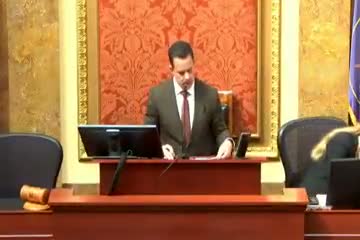
The Utah House on Feb. 16 advanced and approved numerous bills touching public safety, health care, taxation and administrative procedure, with most measures passing by lopsided margins and headed to the Senate for further action.
Lawmakers approved a mix of consent-calendar and debated items. Among items on the consent calendar, House Bill 309 (Process Server Amendments) passed the House with a reported vote of 70–0, clarifying which officers may serve legal process. House Bill 329 (Weapon Possession Penalty Amendments) also passed (71–0) after its sponsor said the change preserves Second Amendment rights for people taking prescribed ADHD medication and clarifies when carrying a dangerous weapon while under the influence is a class B misdemeanor. The House approved first-substitute House Bill 345 to extend personal-data protections to certain correctional staff and dispatchers following stalking incidents (71–0).
On health and workforce issues, the House approved Senate Bill 104 to create a state certificate for community health workers, which supporters described as a credential for outreach workers who do not provide hands-on clinical care but help connect people to services; the bill passed without recorded opposition. Representative Wheatley’s House Bill 201 to create a Kidney Health Task Force passed 63–4 after members discussed coordination with existing groups such as the Utah Kidney Foundation and said the task force would focus on state-specific outreach, transplantation and early detection.
The House passed second-substitute House Bill 301, which allows prescribers in limited circumstances to dispense prepackaged, short-term medications directly to patients under guardrails intended to avoid financial incentives and protect against controlled-substance dispensing (72–0). Lawmakers said the measure results from compromise work between medical and pharmacy stakeholders and includes a physician–pharmacist advisory board.
Votes at a glance:
• HB 309 (Process Server Amendments) — Passed House as announced: 70–0; transmitted to Senate.
• HB 329 (Weapon Possession Penalty Amendments) — Passed: 71–0; transmitted to Senate.
• HB 345 (Public Safety Employee Personal Data Amendments, 1st sub.) — Passed: 71–0; transmitted to Senate.
• SB 90 (Tax Administration Amendments) — Uncircled and passed; transmitted to Senate.
• SB 103 (Special Education Licensing Amendments) — Passed; transmitted to Senate.
• SB 104 (Community Health Worker Certification) — Passed: recorded as 71–0; transmitted to Senate.
• SB 75 (Limit on Municipal Revenue from Citations) — Passed: recorded as 70–2; transmitted to Senate.
• SB 56 (Criminal Stalking Exemption Amendments) — Moved forward; returned to Senate for signature as appropriate.
• SB 98 (Judiciary Amendments) — Passed as reported; transmitted to Senate.
• SB 108 (Indigent Defense Amendments) — Passed as amended after multiple floor amendments; transmitted to Senate.
• HB 201 (Kidney Health Task Force) — Passed: 63–4; transmitted to Senate.
• HB 301 (Medication Dispenser Amendments, 2nd sub.) — Passed: 72–0; transmitted to Senate.
What it means: The House’s action moves a large package of bills to the Senate where those measures may be taken up, amended or combined with companion Senate language. Most measures recorded unanimous or near-unanimous support on the House floor, indicating bipartisan agreement on procedural changes and many health- and safety-related items. The session also included longer debate over indigent defense grant language and a handful of successful floor amendments that changed statutory wording.
Looking ahead: The bills will be returned to the Senate for signature or further action. Lawmakers also adopted a Rules Committee report assigning many newly introduced bills to standing committees for hearings.
Sources: Floor proceedings of the Utah House of Representatives, Feb. 16, 2022.
Lawmakers approved a mix of consent-calendar and debated items. Among items on the consent calendar, House Bill 309 (Process Server Amendments) passed the House with a reported vote of 70–0, clarifying which officers may serve legal process. House Bill 329 (Weapon Possession Penalty Amendments) also passed (71–0) after its sponsor said the change preserves Second Amendment rights for people taking prescribed ADHD medication and clarifies when carrying a dangerous weapon while under the influence is a class B misdemeanor. The House approved first-substitute House Bill 345 to extend personal-data protections to certain correctional staff and dispatchers following stalking incidents (71–0).
On health and workforce issues, the House approved Senate Bill 104 to create a state certificate for community health workers, which supporters described as a credential for outreach workers who do not provide hands-on clinical care but help connect people to services; the bill passed without recorded opposition. Representative Wheatley’s House Bill 201 to create a Kidney Health Task Force passed 63–4 after members discussed coordination with existing groups such as the Utah Kidney Foundation and said the task force would focus on state-specific outreach, transplantation and early detection.
The House passed second-substitute House Bill 301, which allows prescribers in limited circumstances to dispense prepackaged, short-term medications directly to patients under guardrails intended to avoid financial incentives and protect against controlled-substance dispensing (72–0). Lawmakers said the measure results from compromise work between medical and pharmacy stakeholders and includes a physician–pharmacist advisory board.
Votes at a glance:
• HB 309 (Process Server Amendments) — Passed House as announced: 70–0; transmitted to Senate.
• HB 329 (Weapon Possession Penalty Amendments) — Passed: 71–0; transmitted to Senate.
• HB 345 (Public Safety Employee Personal Data Amendments, 1st sub.) — Passed: 71–0; transmitted to Senate.
• SB 90 (Tax Administration Amendments) — Uncircled and passed; transmitted to Senate.
• SB 103 (Special Education Licensing Amendments) — Passed; transmitted to Senate.
• SB 104 (Community Health Worker Certification) — Passed: recorded as 71–0; transmitted to Senate.
• SB 75 (Limit on Municipal Revenue from Citations) — Passed: recorded as 70–2; transmitted to Senate.
• SB 56 (Criminal Stalking Exemption Amendments) — Moved forward; returned to Senate for signature as appropriate.
• SB 98 (Judiciary Amendments) — Passed as reported; transmitted to Senate.
• SB 108 (Indigent Defense Amendments) — Passed as amended after multiple floor amendments; transmitted to Senate.
• HB 201 (Kidney Health Task Force) — Passed: 63–4; transmitted to Senate.
• HB 301 (Medication Dispenser Amendments, 2nd sub.) — Passed: 72–0; transmitted to Senate.
What it means: The House’s action moves a large package of bills to the Senate where those measures may be taken up, amended or combined with companion Senate language. Most measures recorded unanimous or near-unanimous support on the House floor, indicating bipartisan agreement on procedural changes and many health- and safety-related items. The session also included longer debate over indigent defense grant language and a handful of successful floor amendments that changed statutory wording.
Looking ahead: The bills will be returned to the Senate for signature or further action. Lawmakers also adopted a Rules Committee report assigning many newly introduced bills to standing committees for hearings.
Sources: Floor proceedings of the Utah House of Representatives, Feb. 16, 2022.
View the Full Meeting & All Its Details
This article offers just a summary. Unlock complete video, transcripts, and insights as a Founder Member.
✓
Watch full, unedited meeting videos
✓
Search every word spoken in unlimited transcripts
✓
AI summaries & real-time alerts (all government levels)
✓
Permanent access to expanding government content
30-day money-back guarantee
