Utah House approves bill allowing vets to discuss medical cannabis, stops short of authorizing prescriptions
March 04, 2022 | 2022 Utah Legislature, Utah Legislature, Utah Legislative Branch, Utah
This article was created by AI summarizing key points discussed. AI makes mistakes, so for full details and context, please refer to the video of the full meeting. Please report any errors so we can fix them. Report an error »
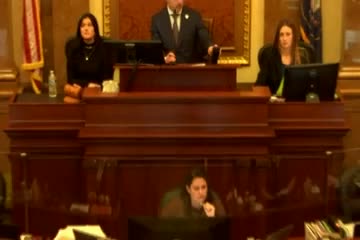
The Utah House on Feb. 20 passed Senate Bill 209, a measure that removes a prohibition on veterinarian conversations about cannabinoid products and allows veterinary professionals to discuss medical cannabis or THC with pet owners, while explicitly not authorizing prescription or administration.
The bill was introduced on the floor as Senate Bill 209 by Senator McKell and identified in the House as sponsored by Representative Ferri; Representative Fairey described the bill’s intent during floor remarks. "This bill does is it allows our veterinarians to discuss the use of medical cannabis and or THC with your pet," Representative Fairey said, emphasizing that the bill addresses what the sponsor called "unprofessional conduct" restrictions that currently bar such conversations.
During floor questioning, Representative Thurston asked whether there is scientific evidence that THC or CBD provides a sedative effect in large animals and raised ethical concerns about allowing discussion of a product that cannot be legally prescribed in Utah. "This gives me a pause because you can't just go down and buy THC," Thurston said, later adding that it is "really a bizarre thing to allow medical practitioners to ethically discuss something that you cannot legally do."
Representative Fairey and other supporters responded that the bill does not change prescribing rules. "So this doesn't allow prescription," the sponsor said on the floor. "It just allows the conversation to happen so that the pet owner is aware of the product." Supporters pointed to CBD and other cannabinoid products that are legally available and argued that informed conversations between veterinarians and owners could help address animal pain and other conditions.
Representative Ferry (summation) urged support, noting that while the subject is serious, there are cannabinoid products other than THC that may be beneficial and that the bill's purpose is to enable informed discussion. The House approved the bill 58-13; the measure will be returned to the Senate for the signature of the president.
The bill’s floor debate centered on the distinction between allowing veterinarians to discuss options and permitting prescriptions or on-site administration. Questions raised by opponents focused on scientific evidence and the ethical implications of discussing substances that remain tightly controlled for humans under state law. Proponents said the change restores veterinarians’ ability to have candid, informational conversations with owners about legal cannabinoid products and their potential uses for animals.
The House record shows the bill passed on second/third-reading procedures and was returned to the Senate after the vote. No amendments changing the prescription or administration authority were adopted on the floor.
The bill was introduced on the floor as Senate Bill 209 by Senator McKell and identified in the House as sponsored by Representative Ferri; Representative Fairey described the bill’s intent during floor remarks. "This bill does is it allows our veterinarians to discuss the use of medical cannabis and or THC with your pet," Representative Fairey said, emphasizing that the bill addresses what the sponsor called "unprofessional conduct" restrictions that currently bar such conversations.
During floor questioning, Representative Thurston asked whether there is scientific evidence that THC or CBD provides a sedative effect in large animals and raised ethical concerns about allowing discussion of a product that cannot be legally prescribed in Utah. "This gives me a pause because you can't just go down and buy THC," Thurston said, later adding that it is "really a bizarre thing to allow medical practitioners to ethically discuss something that you cannot legally do."
Representative Fairey and other supporters responded that the bill does not change prescribing rules. "So this doesn't allow prescription," the sponsor said on the floor. "It just allows the conversation to happen so that the pet owner is aware of the product." Supporters pointed to CBD and other cannabinoid products that are legally available and argued that informed conversations between veterinarians and owners could help address animal pain and other conditions.
Representative Ferry (summation) urged support, noting that while the subject is serious, there are cannabinoid products other than THC that may be beneficial and that the bill's purpose is to enable informed discussion. The House approved the bill 58-13; the measure will be returned to the Senate for the signature of the president.
The bill’s floor debate centered on the distinction between allowing veterinarians to discuss options and permitting prescriptions or on-site administration. Questions raised by opponents focused on scientific evidence and the ethical implications of discussing substances that remain tightly controlled for humans under state law. Proponents said the change restores veterinarians’ ability to have candid, informational conversations with owners about legal cannabinoid products and their potential uses for animals.
The House record shows the bill passed on second/third-reading procedures and was returned to the Senate after the vote. No amendments changing the prescription or administration authority were adopted on the floor.
Don't Miss a Word: See the Full Meeting!
Go beyond summaries. Unlock every video, transcript, and key insight with a Founder Membership.
✓
Get instant access to full meeting videos
✓
Search and clip any phrase from complete transcripts
✓
Receive AI-powered summaries & custom alerts
✓
Enjoy lifetime, unrestricted access to government data
30-day money-back guarantee
