Utah House passes bill limiting employer mandates for COVID rules, adds exemptions and testing-pay requirement
November 10, 2021 | 2021 Utah Legislature, Utah Legislature, Utah Legislative Branch, Utah
This article was created by AI summarizing key points discussed. AI makes mistakes, so for full details and context, please refer to the video of the full meeting. Please report any errors so we can fix them. Report an error »
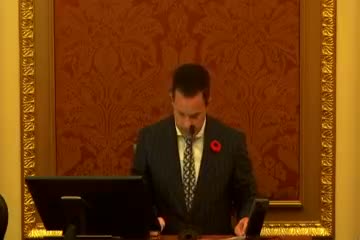
The Utah House passed Second Substitute Senate Bill 2004 on Nov. 10 after hours of debate over where state authority ends and federal law begins. The bill requires that if a private employer mandates COVID-19 vaccination, it must allow medical, religious and personal exemptions, and if a business mandates testing the employer must pay for those tests. The measure passed the House 55–17 and will return to the Senate for further consideration.
Sponsor Representative Schultz, describing the legislation, said the changes “clarify to make sure that the University of Utah's medical center only … is exempted from this bill” and summarized the bill’s core provisions: three exemptions for vaccine mandates and an employer obligation to shoulder testing costs when testing is required. Schultz also noted exemptions for federal contractors, Medicare/Medicaid service providers, and employers with fewer than 15 employees.
Debate centered on practical and legal questions. Representative Stoddard asked how the bill would operate while a federal appellate stay on the Occupational Safety and Health Administration (OSHA) testing rule remains in place; Schultz answered that “due to the supremacy clause … federal law trumps state law,” and that while the stay is in effect the bill’s provisions would apply to employers with 15 or more employees and, if the stay ends, to employers in the 15–99 range as drafted. Representative Matthews voiced concern that the measure could unintentionally invite federal oversight of the state-run OSHA program; Schultz responded that drafters “have taken great care … to make sure that it absolutely does not put our state run OSHA program into violation.”
Opponents warned the bill could amount to a state-imposed mandate in practice. Representative Hawkes argued the “solution to a mandate cannot be a state mandate,” saying the bill “creates more problems than it solves” and would produce confusion for businesses as to which mandate applies. Supporters countered that the bill protects individual choice and provides a legal posture for the state; Representative Robertson said the bill protects “individual liberties” for workers who face federal or employer pressure.
Amendments adopted on the floor narrowed and clarified scope. The House adopted Amendment 3 to limit the University of Utah exemption to the medical center and adopted Amendment 2 to clarify employer definitions and the exemption process for firefighters, law enforcement and EMS personnel; Schultz supported both changes.
The House substituted the Second Substitute and approved the final measure by voice and recorded votes. The sponsor and backers said the bill gives employees additional options and may strengthen the attorney general’s legal position in litigation over federal action. Opponents said the measure is premature while federal litigation remains unresolved and could put employers in conflicting legal positions.
The House returned Second Substitute SB 2004 to the Senate after the 55–17 vote. The bill’s interaction with pending federal court decisions and the precise enforcement consequences in workplaces remain tied to the federal litigation track and to how the Senate and, ultimately, courts interpret overlapping authorities.
Sponsor Representative Schultz, describing the legislation, said the changes “clarify to make sure that the University of Utah's medical center only … is exempted from this bill” and summarized the bill’s core provisions: three exemptions for vaccine mandates and an employer obligation to shoulder testing costs when testing is required. Schultz also noted exemptions for federal contractors, Medicare/Medicaid service providers, and employers with fewer than 15 employees.
Debate centered on practical and legal questions. Representative Stoddard asked how the bill would operate while a federal appellate stay on the Occupational Safety and Health Administration (OSHA) testing rule remains in place; Schultz answered that “due to the supremacy clause … federal law trumps state law,” and that while the stay is in effect the bill’s provisions would apply to employers with 15 or more employees and, if the stay ends, to employers in the 15–99 range as drafted. Representative Matthews voiced concern that the measure could unintentionally invite federal oversight of the state-run OSHA program; Schultz responded that drafters “have taken great care … to make sure that it absolutely does not put our state run OSHA program into violation.”
Opponents warned the bill could amount to a state-imposed mandate in practice. Representative Hawkes argued the “solution to a mandate cannot be a state mandate,” saying the bill “creates more problems than it solves” and would produce confusion for businesses as to which mandate applies. Supporters countered that the bill protects individual choice and provides a legal posture for the state; Representative Robertson said the bill protects “individual liberties” for workers who face federal or employer pressure.
Amendments adopted on the floor narrowed and clarified scope. The House adopted Amendment 3 to limit the University of Utah exemption to the medical center and adopted Amendment 2 to clarify employer definitions and the exemption process for firefighters, law enforcement and EMS personnel; Schultz supported both changes.
The House substituted the Second Substitute and approved the final measure by voice and recorded votes. The sponsor and backers said the bill gives employees additional options and may strengthen the attorney general’s legal position in litigation over federal action. Opponents said the measure is premature while federal litigation remains unresolved and could put employers in conflicting legal positions.
The House returned Second Substitute SB 2004 to the Senate after the 55–17 vote. The bill’s interaction with pending federal court decisions and the precise enforcement consequences in workplaces remain tied to the federal litigation track and to how the Senate and, ultimately, courts interpret overlapping authorities.
Don't Miss a Word: See the Full Meeting!
Go beyond summaries. Unlock every video, transcript, and key insight with a Founder Membership.
✓
Get instant access to full meeting videos
✓
Search and clip any phrase from complete transcripts
✓
Receive AI-powered summaries & custom alerts
✓
Enjoy lifetime, unrestricted access to government data
30-day money-back guarantee
