Utah House approves bill to bar firing employees solely for holding medical cannabis cards
February 02, 2022 | 2022 Utah Legislature, Utah Legislature, Utah Legislative Branch, Utah
This article was created by AI summarizing key points discussed. AI makes mistakes, so for full details and context, please refer to the video of the full meeting. Please report any errors so we can fix them. Report an error »
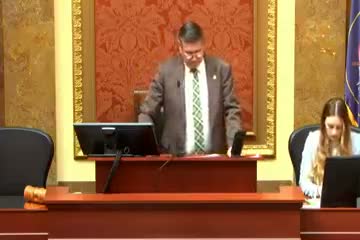
The Utah House on Feb. 1 passed Senate Bill 46, the Medical Cannabis Patient Protection Amendments, 68 yeas to 4 nays, advancing a measure supporters said will prevent public employees from being dismissed solely for holding state-issued medical cannabis cards.
Representative Ferry, the House sponsor, told colleagues the bill “does not change prop 2” and instead clarifies earlier legislative intent so people with medical-cannabis cards are treated the same way as employees with prescriptions for other controlled medications. “We don't fire someone because they hold a card for other drugs,” Ferry said, urging lawmakers to “create that equality and let's make sure we're treating people fairly.”
Debate focused on workplace-safety concerns and the mechanics of Utah's medical-cannabis system. Representative Hawkes and others asked whether cannabis has FDA approval and whether dosing and prescribing are as tightly controlled as for other medicines; Ferry acknowledged that cannabis is not federally approved but said the state’s program uses licensed medical providers and testing to identify dosage forms.
Several members raised specific concerns about public safety occupations. Representative Perucci asked whether the bill contains exemptions for law enforcement or first responders; Ferry replied, “No. There is not.” Perucci said local police departments had expressed “serious concerns,” particularly around the legal and operational implications for officers who carry firearms.
Representative Thurston, who supported the bill, said the legislation does not change existing rules on impairment at work: “All this says is that the simple additional act of seeking a card is not gonna subject you to being fired from your job,” he said, adding that cases at issue involved employees fired for obtaining a card, not for showing up impaired.
Representative Ward, who also supported the measure, described the current medical-provider landscape and said many clinics follow the pathways established by the Legislature; he urged regular medical providers to incorporate cannabis recommendations into normal care rather than relying on specialty clinics.
Representative Hopkins moved to end debate and the House voted to close debate before Ferry delivered a final summation. In the final vote, SB 46 passed 68–4 and was returned to the Senate for consideration.
The bill’s sponsor and several supporters said additional legislation addressing first-responder-specific concerns may follow, but they emphasized SB 46’s narrow purpose: prevent discrimination against card-holders while leaving existing impairment and safety rules in place.
Representative Ferry, the House sponsor, told colleagues the bill “does not change prop 2” and instead clarifies earlier legislative intent so people with medical-cannabis cards are treated the same way as employees with prescriptions for other controlled medications. “We don't fire someone because they hold a card for other drugs,” Ferry said, urging lawmakers to “create that equality and let's make sure we're treating people fairly.”
Debate focused on workplace-safety concerns and the mechanics of Utah's medical-cannabis system. Representative Hawkes and others asked whether cannabis has FDA approval and whether dosing and prescribing are as tightly controlled as for other medicines; Ferry acknowledged that cannabis is not federally approved but said the state’s program uses licensed medical providers and testing to identify dosage forms.
Several members raised specific concerns about public safety occupations. Representative Perucci asked whether the bill contains exemptions for law enforcement or first responders; Ferry replied, “No. There is not.” Perucci said local police departments had expressed “serious concerns,” particularly around the legal and operational implications for officers who carry firearms.
Representative Thurston, who supported the bill, said the legislation does not change existing rules on impairment at work: “All this says is that the simple additional act of seeking a card is not gonna subject you to being fired from your job,” he said, adding that cases at issue involved employees fired for obtaining a card, not for showing up impaired.
Representative Ward, who also supported the measure, described the current medical-provider landscape and said many clinics follow the pathways established by the Legislature; he urged regular medical providers to incorporate cannabis recommendations into normal care rather than relying on specialty clinics.
Representative Hopkins moved to end debate and the House voted to close debate before Ferry delivered a final summation. In the final vote, SB 46 passed 68–4 and was returned to the Senate for consideration.
The bill’s sponsor and several supporters said additional legislation addressing first-responder-specific concerns may follow, but they emphasized SB 46’s narrow purpose: prevent discrimination against card-holders while leaving existing impairment and safety rules in place.
View the Full Meeting & All Its Details
This article offers just a summary. Unlock complete video, transcripts, and insights as a Founder Member.
✓
Watch full, unedited meeting videos
✓
Search every word spoken in unlimited transcripts
✓
AI summaries & real-time alerts (all government levels)
✓
Permanent access to expanding government content
30-day money-back guarantee
