Senate advances 4th substitute HB 261 after extended debate over 'equal opportunity' and campus practices
January 24, 2024 | 2024 Utah Legislature, Utah Legislature, Utah Legislative Branch, Utah
This article was created by AI summarizing key points discussed. AI makes mistakes, so for full details and context, please refer to the video of the full meeting. Please report any errors so we can fix them. Report an error »
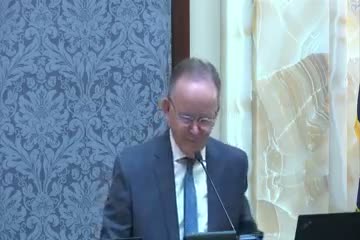
The Utah Senate advanced the 4th substitute of House Bill 261 on second reading after more than an hour of floor debate that focused on definitions, the bill’s scope across higher education and governmental entities, and possible effects on hiring and student services.
Senator Grover, the Senate sponsor, framed the measure as an effort to ensure equal opportunity for all students while eliminating required diversity statements and reinforcing academic freedom. "This bill focuses resources on students that are at risk," Grover said, and he described the bill’s centerpiece as establishing student success centers to continue services now provided through diversity, equity and inclusion (DEI) offices.
Several senators questioned specific language and sought clarifications. Senator Luz Escamilla pressed for clearer definitions of terms such as “diversity,” “equity,” “inclusion,” and asked whether federal Office for Civil Rights titles (including Title VI) should be referenced in the bill’s language; Grover said the issue would be examined and could be addressed before third reading. "While it was our dream to make sure that this fourth substitute was the substitute, the bill is still under ongoing dialogue," Grover said.
Senators raised sector‑specific concerns. Senator Plumb, referencing healthcare hiring, asked whether a clinic treating sickle cell disease could lawfully ask an applicant about experience working with African‑American communities; Grover said relevant professional experience and qualifications would remain acceptable and that sponsors are working on clarifying language. Senator Riebe and others emphasized protecting federal programs, IEP/504 obligations in K–12 schools, and after‑school partnerships with third‑party providers; Grover and supporters repeatedly said federal programs and required special‑education services would not be affected.
Opponents flagged broader concerns. Senator Kwan said certain provisions dismiss the existence of systemic racism and conflict with peer‑reviewed research; he and others said the bill could leave vulnerable students feeling erased. Supporters, including Senator Weiler, argued the bill strengthens campus free speech and opportunity and asked sponsors to refine language to guard against unintended consequences.
At the conclusion of debate, sponsors moved to suspend the constitutional three‑reading requirement and advance the 4th substitute to third reading. The clerk announced the roll‑call result as "23 yea votes, 6 nay votes, 0 absent," and the Senate directed that HB 261 be read a third time.
Next steps: HB 261 will return to the floor for third‑reading consideration where amendments and updated clarifying language may be offered before a final passage vote.
Senator Grover, the Senate sponsor, framed the measure as an effort to ensure equal opportunity for all students while eliminating required diversity statements and reinforcing academic freedom. "This bill focuses resources on students that are at risk," Grover said, and he described the bill’s centerpiece as establishing student success centers to continue services now provided through diversity, equity and inclusion (DEI) offices.
Several senators questioned specific language and sought clarifications. Senator Luz Escamilla pressed for clearer definitions of terms such as “diversity,” “equity,” “inclusion,” and asked whether federal Office for Civil Rights titles (including Title VI) should be referenced in the bill’s language; Grover said the issue would be examined and could be addressed before third reading. "While it was our dream to make sure that this fourth substitute was the substitute, the bill is still under ongoing dialogue," Grover said.
Senators raised sector‑specific concerns. Senator Plumb, referencing healthcare hiring, asked whether a clinic treating sickle cell disease could lawfully ask an applicant about experience working with African‑American communities; Grover said relevant professional experience and qualifications would remain acceptable and that sponsors are working on clarifying language. Senator Riebe and others emphasized protecting federal programs, IEP/504 obligations in K–12 schools, and after‑school partnerships with third‑party providers; Grover and supporters repeatedly said federal programs and required special‑education services would not be affected.
Opponents flagged broader concerns. Senator Kwan said certain provisions dismiss the existence of systemic racism and conflict with peer‑reviewed research; he and others said the bill could leave vulnerable students feeling erased. Supporters, including Senator Weiler, argued the bill strengthens campus free speech and opportunity and asked sponsors to refine language to guard against unintended consequences.
At the conclusion of debate, sponsors moved to suspend the constitutional three‑reading requirement and advance the 4th substitute to third reading. The clerk announced the roll‑call result as "23 yea votes, 6 nay votes, 0 absent," and the Senate directed that HB 261 be read a third time.
Next steps: HB 261 will return to the floor for third‑reading consideration where amendments and updated clarifying language may be offered before a final passage vote.
Don't Miss a Word: See the Full Meeting!
Go beyond summaries. Unlock every video, transcript, and key insight with a Founder Membership.
✓
Get instant access to full meeting videos
✓
Search and clip any phrase from complete transcripts
✓
Receive AI-powered summaries & custom alerts
✓
Enjoy lifetime, unrestricted access to government data
30-day money-back guarantee
