Senate approves substitute for House Bill 257 after hours-long debate on restroom and locker-room policies
January 25, 2024 | 2024 Utah Legislature, Utah Legislature, Utah Legislative Branch, Utah
This article was created by AI summarizing key points discussed. AI makes mistakes, so for full details and context, please refer to the video of the full meeting. Please report any errors so we can fix them. Report an error »
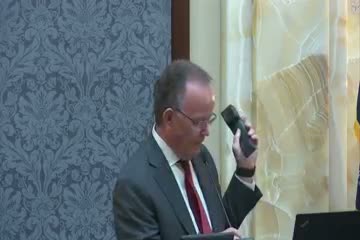
The Utah Senate spent significant floor time on House Bill 257 (privacy designations, anti-bullying, and women's opportunities), considering multiple substitutes and amendments before adopting the third substitute and returning the measure to the House.
Sponsor Senator McKay framed the bill as clarifying privacy spaces and protections, explaining changes to definitions and timelines for compliance by public entities. He described provisions that would require single-occupancy facilities where feasible and would strengthen criminal penalties for specific voyeurism, trespass and lewd behavior in privacy spaces. “It defines men's bathrooms as being designated only for males, and women's bathrooms as being only for females,” McKay said when explaining elements of the substitute.
Several senators sought amendments to refine the bill’s reach. Senator Plumb proposed an amendment to create uniformity between school and other public facilities so children would not be treated differently at school versus other public places; the amendment was debated and then not accepted into the substitute. Senator Thatcher, identifying herself as a survivor, questioned the sponsor about whether the high-profile incidents cited involved transgender perpetrators; the sponsor and others said news reports did not specify gender identity. Senator Repeatedly and others raised constitutional concerns, prompting Senator Thatcher and others to pursue a substitution intended to remove possibly unconstitutional, identity-based penalties and instead focus enforcement on exposure of intimate parts and lewd behaviors regardless of identity.
After debate, the Senate voted to pass the third substitute House Bill 257 by roll call (21 yea, 8 nay). Floor speeches emphasized privacy and safety for K–12 students and the need to fund facility changes; opponents warned the bill risks harming trans students and undermining inclusive supports. The chamber also heard several personal and emotional floor explanations of vote positions.
The bill as passed will be returned to the House for further consideration; the floor record shows multiple follow-up points for rule making and for an implementation role assigned to the state board of education in the substitute.
Sponsor Senator McKay framed the bill as clarifying privacy spaces and protections, explaining changes to definitions and timelines for compliance by public entities. He described provisions that would require single-occupancy facilities where feasible and would strengthen criminal penalties for specific voyeurism, trespass and lewd behavior in privacy spaces. “It defines men's bathrooms as being designated only for males, and women's bathrooms as being only for females,” McKay said when explaining elements of the substitute.
Several senators sought amendments to refine the bill’s reach. Senator Plumb proposed an amendment to create uniformity between school and other public facilities so children would not be treated differently at school versus other public places; the amendment was debated and then not accepted into the substitute. Senator Thatcher, identifying herself as a survivor, questioned the sponsor about whether the high-profile incidents cited involved transgender perpetrators; the sponsor and others said news reports did not specify gender identity. Senator Repeatedly and others raised constitutional concerns, prompting Senator Thatcher and others to pursue a substitution intended to remove possibly unconstitutional, identity-based penalties and instead focus enforcement on exposure of intimate parts and lewd behaviors regardless of identity.
After debate, the Senate voted to pass the third substitute House Bill 257 by roll call (21 yea, 8 nay). Floor speeches emphasized privacy and safety for K–12 students and the need to fund facility changes; opponents warned the bill risks harming trans students and undermining inclusive supports. The chamber also heard several personal and emotional floor explanations of vote positions.
The bill as passed will be returned to the House for further consideration; the floor record shows multiple follow-up points for rule making and for an implementation role assigned to the state board of education in the substitute.
View the Full Meeting & All Its Details
This article offers just a summary. Unlock complete video, transcripts, and insights as a Founder Member.
✓
Watch full, unedited meeting videos
✓
Search every word spoken in unlimited transcripts
✓
AI summaries & real-time alerts (all government levels)
✓
Permanent access to expanding government content
30-day money-back guarantee
