Senate debate over flavored vaping products pits youth‑health advocates against business and fiscal concerns
February 09, 2024 | 2024 Utah Legislature, Utah Legislature, Utah Legislative Branch, Utah
This article was created by AI summarizing key points discussed. AI makes mistakes, so for full details and context, please refer to the video of the full meeting. Please report any errors so we can fix them. Report an error »
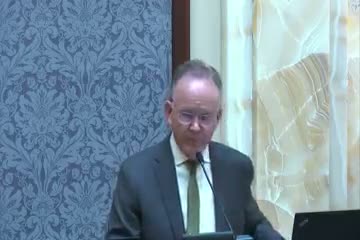
Senate floor debate on Feb. 9 centered for more than an hour on First Substitute Senate Bill 61, a proposal from Sen. Kathleen Plumb to restrict flavored electronic cigarette products that advocates say attract young users.
Sen. Plumb framed the bill as a public‑health measure. “Nicotine means a poisonous nitrogen containing chemical that is made synthetically or comes from tobacco or other plants,” she told colleagues as she urged action to stop youth initiation. Plumb said the bill targets flavored vaping products that research and state surveys show are favored by youth.
Lawmakers pressed the bill’s fiscal and enforcement implications. Sen. Weiler pointed to a fiscal note discussed on the floor, saying the bill’s projected impact totaled about $14,500,000 across several years and asked whether the appropriations committee had prioritized that funding. Sen. Weiler said he opposes the original bill’s economic impact on retail businesses and offered a substitute that would instead require robust security, identification verification, inventory tracking and criminal enforcement provisions tied to specialty retailers’ practices.
Advocates for the underlying ban pushed back on the substitute. Sen. Bramble said retailers had been warned previously and had not done enough to keep flavored products out of minors’ hands: “They were put on notice and they knew that security was an issue,” he said, arguing the Legislature must act because voluntary measures failed.
Other senators expressed concern about unintended consequences and enforcement feasibility. Sen. Wyler argued the substitute would preserve adult access while increasing oversight; he warned that an outright ban could shutter hundreds of specialty retail shops and push sales across state lines. “This is an anti‑business bill,” Wyler said in floor remarks that emphasized the policy’s economic consequences.
Several members noted the bill’s health rationale. Sen. Plumb, a pediatrician and emergency‑medicine physician, described seeing young patients in withdrawal and urged colleagues to prioritize prevention: “We need to stop this pipeline of feeding our kids into a lifetime dependence on nicotine,” she said.
Procedurally, a motion to substitute the bill with a retail‑security focused alternative was considered and failed; the Senate then proceeded with consideration of the underlying bill and moved it toward a third‑reading vote. Sponsors adopted a technical amendment removing lines referencing the lieutenant governor’s office.
What’s next: The bill was advanced toward third reading after floor votes on amendment and substitute motions. Because the measures involve both public‑health goals and contested fiscal and business impacts, the bill’s future depends on further legislative steps and possible amendments in committee or on the floor.
Sen. Plumb framed the bill as a public‑health measure. “Nicotine means a poisonous nitrogen containing chemical that is made synthetically or comes from tobacco or other plants,” she told colleagues as she urged action to stop youth initiation. Plumb said the bill targets flavored vaping products that research and state surveys show are favored by youth.
Lawmakers pressed the bill’s fiscal and enforcement implications. Sen. Weiler pointed to a fiscal note discussed on the floor, saying the bill’s projected impact totaled about $14,500,000 across several years and asked whether the appropriations committee had prioritized that funding. Sen. Weiler said he opposes the original bill’s economic impact on retail businesses and offered a substitute that would instead require robust security, identification verification, inventory tracking and criminal enforcement provisions tied to specialty retailers’ practices.
Advocates for the underlying ban pushed back on the substitute. Sen. Bramble said retailers had been warned previously and had not done enough to keep flavored products out of minors’ hands: “They were put on notice and they knew that security was an issue,” he said, arguing the Legislature must act because voluntary measures failed.
Other senators expressed concern about unintended consequences and enforcement feasibility. Sen. Wyler argued the substitute would preserve adult access while increasing oversight; he warned that an outright ban could shutter hundreds of specialty retail shops and push sales across state lines. “This is an anti‑business bill,” Wyler said in floor remarks that emphasized the policy’s economic consequences.
Several members noted the bill’s health rationale. Sen. Plumb, a pediatrician and emergency‑medicine physician, described seeing young patients in withdrawal and urged colleagues to prioritize prevention: “We need to stop this pipeline of feeding our kids into a lifetime dependence on nicotine,” she said.
Procedurally, a motion to substitute the bill with a retail‑security focused alternative was considered and failed; the Senate then proceeded with consideration of the underlying bill and moved it toward a third‑reading vote. Sponsors adopted a technical amendment removing lines referencing the lieutenant governor’s office.
What’s next: The bill was advanced toward third reading after floor votes on amendment and substitute motions. Because the measures involve both public‑health goals and contested fiscal and business impacts, the bill’s future depends on further legislative steps and possible amendments in committee or on the floor.
Don't Miss a Word: See the Full Meeting!
Go beyond summaries. Unlock every video, transcript, and key insight with a Founder Membership.
✓
Get instant access to full meeting videos
✓
Search and clip any phrase from complete transcripts
✓
Receive AI-powered summaries & custom alerts
✓
Enjoy lifetime, unrestricted access to government data
30-day money-back guarantee
