Utah Senate advances dozens of measures, including veterans parks pilot and water changes
January 31, 2024 | 2024 Utah Legislature, Utah Legislature, Utah Legislative Branch, Utah
This article was created by AI summarizing key points discussed. AI makes mistakes, so for full details and context, please refer to the video of the full meeting. Please report any errors so we can fix them. Report an error »
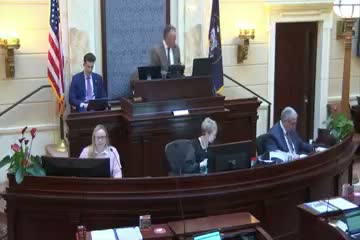
SALT LAKE CITY — The Utah Senate convened Jan. 31 for day 16 of the 2024 session and moved a string of bills and a joint resolution to the House after a series of brief presentations and roll‑call votes.
Lawmakers approved measures on a range of issues, from veterans’ access to state parks to agricultural water‑use changes, and cleared committee reports and multiple first readings for referral to the Rules Committee. Most votes were taken by roll call or unanimous consent on the Senate floor.
Senate Bill 108, a pilot program to expand free access to state parks for qualifying veterans, drew the most extended floor exchange. Senator J. Kwan said the program will use the Utah Department of Military and Veteran Affairs’ honor‑pass process; fiscal estimates ranged widely, from $0 to “over a million dollars,” a fact senators noted when asking how identification and overnight access would be handled. SB108 passed on a recorded vote, 24 yeas to 4 nays, and will go to the House for further consideration.
Water policy also moved. First substitute Senate Bill 18, described by Senator Sandahl as a continuation of prior water‑savings legislation and an update to ag water optimization rules, passed by recorded vote (27 yeas, 0 nays, 2 absent). Other measures that passed on third reading or unanimous consent included Senate Bill 52 (education funding indexing for certain regional resource‑center teachers), Senate Bill 43 (commercial filing amendments), and first substitute Senate Bill 106 (which exempts small cold‑plunge equipment from pool regulations where the unit is 180 gallons or less, supplies water at 60°F or cooler, and provides continuous filtration and sanitation).
Votes at a glance (selected floor actions taken Jan. 31, 2024):
• Senate Bill 108, veteran access to state parks — Passed, 24–4; pilot program using honor pass from Utah Military and Veteran Affairs; fiscal estimate reported as between $0 and over $1,000,000.
• First substitute Senate Bill 18, water modifications — Passed, 27–0 (2 absent); continuation of prior water savings and ag optimization adjustments.
• Senate Bill 52, education indexing/teacher compensation adjustments — Passed, 29–0.
• Senate Bill 43, commercial filing amendments — Passed, 28–0 (1 absent); requires notice to secured parties when a termination statement is filed.
• First substitute Senate Bill 106, public cold bath requirements — Passed, unanimous; exempts devices 180 gallons or less that meet specified temperature and sanitation criteria from pool rules.
• First substitute Senate Bill 116, eviction notice requirements (pets and eviction process) — Passed; stakeholders worked on compromise language to help tenants and landlords.
• Second substitute Senate Bill 63, Board of Pardons and Parole amendments — Passed, 26–0 (3 absent); clarified court sentencing timing and board authority to appoint counsel for hearings.
• Senate Bill 95, domestic relations recodification — Passed, 29–0; recodifies family law sections for clarity and updates.
Several bills were put on hold for further review (moved to 'circle') to allow sponsors and staff to track requested amendments, including Senate Bill 25 (consumer lender notification amendments) and Senate Bill 125 (secondary water amendments). Committee reports from Business & Labor, Education, and Health & Human Services were approved and placed on the second‑reading calendar.
The measures that passed on final or recorded votes were transmitted to the House for consideration. Senate leaders announced a Rules Committee meeting to follow the recess; the Senate recessed until 2 p.m.
Quotes from the floor included Senator J. Kwan’s explanation of the veterans parks pilot and sponsors’ summaries of bills; formal readings and signatures on committee reports and citations were recorded on the Senate floor as part of the session record.
The House will receive the transmitted bills next for its consideration; timelines for hearings or committee action in the House were not specified on the Senate floor during this session.
Lawmakers approved measures on a range of issues, from veterans’ access to state parks to agricultural water‑use changes, and cleared committee reports and multiple first readings for referral to the Rules Committee. Most votes were taken by roll call or unanimous consent on the Senate floor.
Senate Bill 108, a pilot program to expand free access to state parks for qualifying veterans, drew the most extended floor exchange. Senator J. Kwan said the program will use the Utah Department of Military and Veteran Affairs’ honor‑pass process; fiscal estimates ranged widely, from $0 to “over a million dollars,” a fact senators noted when asking how identification and overnight access would be handled. SB108 passed on a recorded vote, 24 yeas to 4 nays, and will go to the House for further consideration.
Water policy also moved. First substitute Senate Bill 18, described by Senator Sandahl as a continuation of prior water‑savings legislation and an update to ag water optimization rules, passed by recorded vote (27 yeas, 0 nays, 2 absent). Other measures that passed on third reading or unanimous consent included Senate Bill 52 (education funding indexing for certain regional resource‑center teachers), Senate Bill 43 (commercial filing amendments), and first substitute Senate Bill 106 (which exempts small cold‑plunge equipment from pool regulations where the unit is 180 gallons or less, supplies water at 60°F or cooler, and provides continuous filtration and sanitation).
Votes at a glance (selected floor actions taken Jan. 31, 2024):
• Senate Bill 108, veteran access to state parks — Passed, 24–4; pilot program using honor pass from Utah Military and Veteran Affairs; fiscal estimate reported as between $0 and over $1,000,000.
• First substitute Senate Bill 18, water modifications — Passed, 27–0 (2 absent); continuation of prior water savings and ag optimization adjustments.
• Senate Bill 52, education indexing/teacher compensation adjustments — Passed, 29–0.
• Senate Bill 43, commercial filing amendments — Passed, 28–0 (1 absent); requires notice to secured parties when a termination statement is filed.
• First substitute Senate Bill 106, public cold bath requirements — Passed, unanimous; exempts devices 180 gallons or less that meet specified temperature and sanitation criteria from pool rules.
• First substitute Senate Bill 116, eviction notice requirements (pets and eviction process) — Passed; stakeholders worked on compromise language to help tenants and landlords.
• Second substitute Senate Bill 63, Board of Pardons and Parole amendments — Passed, 26–0 (3 absent); clarified court sentencing timing and board authority to appoint counsel for hearings.
• Senate Bill 95, domestic relations recodification — Passed, 29–0; recodifies family law sections for clarity and updates.
Several bills were put on hold for further review (moved to 'circle') to allow sponsors and staff to track requested amendments, including Senate Bill 25 (consumer lender notification amendments) and Senate Bill 125 (secondary water amendments). Committee reports from Business & Labor, Education, and Health & Human Services were approved and placed on the second‑reading calendar.
The measures that passed on final or recorded votes were transmitted to the House for consideration. Senate leaders announced a Rules Committee meeting to follow the recess; the Senate recessed until 2 p.m.
Quotes from the floor included Senator J. Kwan’s explanation of the veterans parks pilot and sponsors’ summaries of bills; formal readings and signatures on committee reports and citations were recorded on the Senate floor as part of the session record.
The House will receive the transmitted bills next for its consideration; timelines for hearings or committee action in the House were not specified on the Senate floor during this session.
Don't Miss a Word: See the Full Meeting!
Go beyond summaries. Unlock every video, transcript, and key insight with a Founder Membership.
✓
Get instant access to full meeting videos
✓
Search and clip any phrase from complete transcripts
✓
Receive AI-powered summaries & custom alerts
✓
Enjoy lifetime, unrestricted access to government data
30-day money-back guarantee
