Utah Senate advances wide slate of bills — votes at a glance
February 21, 2024 | 2024 Utah Legislature, Utah Legislature, Utah Legislative Branch, Utah
This article was created by AI summarizing key points discussed. AI makes mistakes, so for full details and context, please refer to the video of the full meeting. Please report any errors so we can fix them. Report an error »
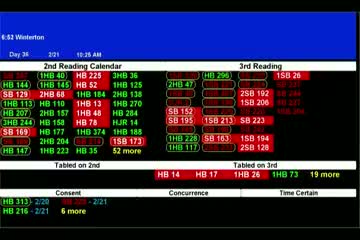
The Utah Senate spent its floor session advancing a broad package of bills on issues ranging from school-district boundaries to social-media rules for minors and energy policy. Lawmakers approved substitutions, carried multiple bills to third reading, and sent several passed measures to the House for concurrence.
On procedural and consent items, the Senate recorded the passage of first substitute House Bill 331 (school/classroom amendments) by voice and recorded vote; the President directed the unanimous vote be cast and the clerk recorded 24 yea, 0 nay, 5 absent and returned the bill to the House for the speaker’s signature. House Joint Resolution 18, which encourages student education on free enterprise and entrepreneurship, also passed and was returned to the House.
Key roll-call outcomes recorded on the floor include: Senate Bill 225 (school district boundary amendments) — 25 yea, 0 nay, 4 absent; third substitute Senate Bill 192 (higher education amendments and performance-funding tweaks) — 27 yea, 0 nay, 2 absent; Senate Bill 230 (purchasing exception for a presidential debate) — 25 yea, 0 nay, 4 absent; first substitute Senate Bill 206 (Young Adult Service Fellowship) — 25 yea, 0 nay, 4 absent; Senate Bill 223 (youth fee waivers for foster care and homelessness populations) — 21 yea, 3 nay, 5 absent; Senate Bill 242 (Utah Lake modifications/repeals) — 22 yea, 0 nay, 7 absent; first substitute Senate Bill 194 (social media regulation amendments) — 21 yea, 1 nay, 7 absent; and first substitute Senate Bill 224 (Energy Independence Amendments, first substitute) — 23 yea, 6 nay, 0 absent.
Other items moved by the chamber included House Bill 411 (local-government drug testing policy amendments), motions to circle and uncircle multiple bills for committee consideration, and routine administrative rule reauthorizations.
The Senate recessed until 2 p.m. at the close of the recorded session.
Votes were recorded on the chamber floor as announced by the clerk and the President and are reflected in the floor transcript. For measures advanced on this calendar, the next procedural step for most passed items is transmission to the House for further consideration, signature or conference committee as noted on the floor.
On procedural and consent items, the Senate recorded the passage of first substitute House Bill 331 (school/classroom amendments) by voice and recorded vote; the President directed the unanimous vote be cast and the clerk recorded 24 yea, 0 nay, 5 absent and returned the bill to the House for the speaker’s signature. House Joint Resolution 18, which encourages student education on free enterprise and entrepreneurship, also passed and was returned to the House.
Key roll-call outcomes recorded on the floor include: Senate Bill 225 (school district boundary amendments) — 25 yea, 0 nay, 4 absent; third substitute Senate Bill 192 (higher education amendments and performance-funding tweaks) — 27 yea, 0 nay, 2 absent; Senate Bill 230 (purchasing exception for a presidential debate) — 25 yea, 0 nay, 4 absent; first substitute Senate Bill 206 (Young Adult Service Fellowship) — 25 yea, 0 nay, 4 absent; Senate Bill 223 (youth fee waivers for foster care and homelessness populations) — 21 yea, 3 nay, 5 absent; Senate Bill 242 (Utah Lake modifications/repeals) — 22 yea, 0 nay, 7 absent; first substitute Senate Bill 194 (social media regulation amendments) — 21 yea, 1 nay, 7 absent; and first substitute Senate Bill 224 (Energy Independence Amendments, first substitute) — 23 yea, 6 nay, 0 absent.
Other items moved by the chamber included House Bill 411 (local-government drug testing policy amendments), motions to circle and uncircle multiple bills for committee consideration, and routine administrative rule reauthorizations.
The Senate recessed until 2 p.m. at the close of the recorded session.
Votes were recorded on the chamber floor as announced by the clerk and the President and are reflected in the floor transcript. For measures advanced on this calendar, the next procedural step for most passed items is transmission to the House for further consideration, signature or conference committee as noted on the floor.
Don't Miss a Word: See the Full Meeting!
Go beyond summaries. Unlock every video, transcript, and key insight with a Founder Membership.
✓
Get instant access to full meeting videos
✓
Search and clip any phrase from complete transcripts
✓
Receive AI-powered summaries & custom alerts
✓
Enjoy lifetime, unrestricted access to government data
30-day money-back guarantee
