Senate advances records‑access bill after debate over whether daily calendars are public records
February 23, 2024 | 2024 Utah Legislature, Utah Legislature, Utah Legislative Branch, Utah
This article was created by AI summarizing key points discussed. AI makes mistakes, so for full details and context, please refer to the video of the full meeting. Please report any errors so we can fix them. Report an error »
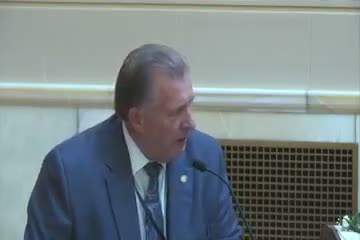
The Utah Senate passed first substitute SB 240, amendments to the Government Records Access and Management Act, after a floor presentation and debate that focused on whether appointment calendars and personal notes should be treated as public records.
Senator Bramble, presenting the substitute, said the bill does two principal things: "it gives a prevailing party the opportunity to recover attorney's fees if records, record request is denied," and it clarifies that a daily calendar is not a record, updating what he described as a long‑standing interpretation. He argued the substitute simply "restat[es] and clarif[ies] what has been longstanding practice." The sponsor also said he had been working with media attorneys and anticipated further tightening of language in a future substitute to prevent inadvertent shielding of emails or texts.
Media coalition concerns were raised in prior committee testimony, the sponsor said, but he added that some members of the media "thanked us for expanding transparency, although they said they didn't really like the calendar piece." On the floor, senators debated the public‑records implications before the chamber took a roll call: first substitute SB 240 received 18 yay votes and 5 nay votes, with six absent, and was read for the third time.
Supporters said the measure strengthens transparency by enabling fee recovery for denied requests while reaffirming what sponsors called nonpublic personal calendars and notes. Critics warned the calendar language could be interpreted too broadly; sponsors pledged to work with stakeholders on tightening the definitions in future substitutes.
Senator Bramble, presenting the substitute, said the bill does two principal things: "it gives a prevailing party the opportunity to recover attorney's fees if records, record request is denied," and it clarifies that a daily calendar is not a record, updating what he described as a long‑standing interpretation. He argued the substitute simply "restat[es] and clarif[ies] what has been longstanding practice." The sponsor also said he had been working with media attorneys and anticipated further tightening of language in a future substitute to prevent inadvertent shielding of emails or texts.
Media coalition concerns were raised in prior committee testimony, the sponsor said, but he added that some members of the media "thanked us for expanding transparency, although they said they didn't really like the calendar piece." On the floor, senators debated the public‑records implications before the chamber took a roll call: first substitute SB 240 received 18 yay votes and 5 nay votes, with six absent, and was read for the third time.
Supporters said the measure strengthens transparency by enabling fee recovery for denied requests while reaffirming what sponsors called nonpublic personal calendars and notes. Critics warned the calendar language could be interpreted too broadly; sponsors pledged to work with stakeholders on tightening the definitions in future substitutes.
Don't Miss a Word: See the Full Meeting!
Go beyond summaries. Unlock every video, transcript, and key insight with a Founder Membership.
✓
Get instant access to full meeting videos
✓
Search and clip any phrase from complete transcripts
✓
Receive AI-powered summaries & custom alerts
✓
Enjoy lifetime, unrestricted access to government data
30-day money-back guarantee
