After heated debate, Senate approves program to train teachers who opt to carry on school grounds
February 28, 2024 | 2024 Utah Legislature, Utah Legislature, Utah Legislative Branch, Utah
This article was created by AI summarizing key points discussed. AI makes mistakes, so for full details and context, please refer to the video of the full meeting. Please report any errors so we can fix them. Report an error »
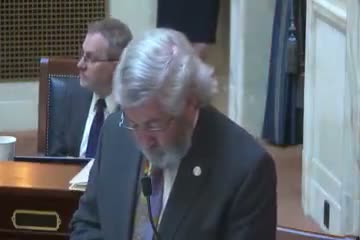
The Utah Senate passed a revised second substitute to House Bill 119, a measure that creates an Education Protection Program offering training, liability protections and modest reimbursements for teachers who choose to carry firearms on school property and complete specified annual training administered by county sheriffs.
Floor sponsor Senator Hinkins described the program as an incentive for teachers who wish to take on a school-safety role: "This bill creates the education protection program to incentivize school teachers to responsibly secure or carry a firearm on school grounds," he said, emphasizing annual training and safe storage requirements. The sponsor and backers said the program is voluntary and the training will be administered by county sheriffs at no cost to teachers.
Opponents raised questions about liability, logistics during active incidents, the presence of guardians programs, and whether the initiative duplicates or conflicts with existing local policies. Senator Eby pressed the floor on civil-liability language and moved an amendment to make local education agencies liable; the motion to amend failed. Senator Reid and others urged clearer liability allocations; some senators and members of the education community asked for additional clarifying language and for the program to be worked through interim if necessary.
The bill contains a fiscal-note reduction during the floor substitution process (sponsors said an earlier fiscal estimate exceeded $1.6 million and the substitute reduced that to roughly $100,000 for the program change). After extended debate and floor amendments to clarify language, the Senate recorded a final roll-call in which the second substitute as amended passed with 19 yeas, 6 nays and 4 absent. The bill will be returned to the House for further consideration.
Floor debate included questions about whether law enforcement would practically rely on photo rosters to identify trained teachers during an incident and whether removing liability protections would change the willingness of teachers to participate. Supporters argued the program elevates training standards for those who choose to carry and provides a framework for coordination between schools and local law enforcement.
Floor sponsor Senator Hinkins described the program as an incentive for teachers who wish to take on a school-safety role: "This bill creates the education protection program to incentivize school teachers to responsibly secure or carry a firearm on school grounds," he said, emphasizing annual training and safe storage requirements. The sponsor and backers said the program is voluntary and the training will be administered by county sheriffs at no cost to teachers.
Opponents raised questions about liability, logistics during active incidents, the presence of guardians programs, and whether the initiative duplicates or conflicts with existing local policies. Senator Eby pressed the floor on civil-liability language and moved an amendment to make local education agencies liable; the motion to amend failed. Senator Reid and others urged clearer liability allocations; some senators and members of the education community asked for additional clarifying language and for the program to be worked through interim if necessary.
The bill contains a fiscal-note reduction during the floor substitution process (sponsors said an earlier fiscal estimate exceeded $1.6 million and the substitute reduced that to roughly $100,000 for the program change). After extended debate and floor amendments to clarify language, the Senate recorded a final roll-call in which the second substitute as amended passed with 19 yeas, 6 nays and 4 absent. The bill will be returned to the House for further consideration.
Floor debate included questions about whether law enforcement would practically rely on photo rosters to identify trained teachers during an incident and whether removing liability protections would change the willingness of teachers to participate. Supporters argued the program elevates training standards for those who choose to carry and provides a framework for coordination between schools and local law enforcement.
View the Full Meeting & All Its Details
This article offers just a summary. Unlock complete video, transcripts, and insights as a Founder Member.
✓
Watch full, unedited meeting videos
✓
Search every word spoken in unlimited transcripts
✓
AI summaries & real-time alerts (all government levels)
✓
Permanent access to expanding government content
30-day money-back guarantee
