Utah Senate, in a brief extraordinary session, consents to judicial and agency appointments
May 15, 2024 | 2024 Utah Legislature, Utah Legislature, Utah Legislative Branch, Utah
This article was created by AI summarizing key points discussed. AI makes mistakes, so for full details and context, please refer to the video of the full meeting. Please report any errors so we can fix them. Report an error »
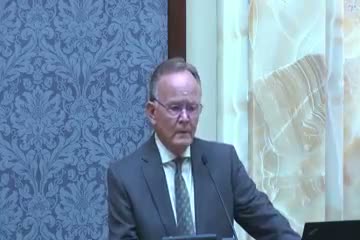
The Utah State Senate convened an eighth extraordinary session on the governor's proclamation to consider and consent to gubernatorial appointments, and it confirmed two Third District Court judges and a slate of board and commission appointees before adjourning.
Governor Spencer J. Cox had issued the proclamation calling the Senate into extraordinary session “for the senate to consent to appointments made by the governor to positions within state government.” The Senate moved quickly through procedural business, adopted the standing rules for the session and observed a moment of silence for Sergeant Bill Hoosier of South Utah County.
On separate roll-call votes the Senate consented to the appointment of Richard Pearson to the Third District Court; Judge Pearson addressed the chamber and pledged to serve with care and discernment, thanking the governor and his family. “I will do the best job that I can,” Pearson said after the confirmation vote.
Later the chamber considered the appointment of Richard Daines (transcribed as Daines/Danes in the record) to the Third District Court. The Senate voted 26–0, with three senators absent, to consent to that appointment. President Adams and other members congratulated Judge Daines following the vote.
The Senate then considered a package of gubernatorial appointments to state boards and commissions read into the record by staff. The list included the reappointment of Tara Thew to the Alcoholic Beverage Services Commission; the appointment of Jeffrey Landward as commissioner of the Utah System of Higher Education; Joan Hammer to the Board of Tourism Development; James Bringhurst to the Real Estate Commission; and Chris B. Folsom to the Real Estate Appraiser Licensing and Certification Board, among others. Committee reports recommending confirmation for Landward, Thew and the others were presented to the chamber.
Senator Hinkins moved that the Senate consent to the appointments as read; the motion passed by roll-call, 25–0 with four senators absent. President Adams asked confirmed appointees who were present to stand so the Senate could congratulate them.
After completing the scheduled business — readministration of rules, judicial confirmations and multiple board and commission appointments — the Senate notified the governor's representative that it had concluded its business and adjourned sine die.
Votes and formal actions recorded in the session were limited to consenting to appointments; no other legislation or policy measures were taken up during the extraordinary session.
Governor Spencer J. Cox had issued the proclamation calling the Senate into extraordinary session “for the senate to consent to appointments made by the governor to positions within state government.” The Senate moved quickly through procedural business, adopted the standing rules for the session and observed a moment of silence for Sergeant Bill Hoosier of South Utah County.
On separate roll-call votes the Senate consented to the appointment of Richard Pearson to the Third District Court; Judge Pearson addressed the chamber and pledged to serve with care and discernment, thanking the governor and his family. “I will do the best job that I can,” Pearson said after the confirmation vote.
Later the chamber considered the appointment of Richard Daines (transcribed as Daines/Danes in the record) to the Third District Court. The Senate voted 26–0, with three senators absent, to consent to that appointment. President Adams and other members congratulated Judge Daines following the vote.
The Senate then considered a package of gubernatorial appointments to state boards and commissions read into the record by staff. The list included the reappointment of Tara Thew to the Alcoholic Beverage Services Commission; the appointment of Jeffrey Landward as commissioner of the Utah System of Higher Education; Joan Hammer to the Board of Tourism Development; James Bringhurst to the Real Estate Commission; and Chris B. Folsom to the Real Estate Appraiser Licensing and Certification Board, among others. Committee reports recommending confirmation for Landward, Thew and the others were presented to the chamber.
Senator Hinkins moved that the Senate consent to the appointments as read; the motion passed by roll-call, 25–0 with four senators absent. President Adams asked confirmed appointees who were present to stand so the Senate could congratulate them.
After completing the scheduled business — readministration of rules, judicial confirmations and multiple board and commission appointments — the Senate notified the governor's representative that it had concluded its business and adjourned sine die.
Votes and formal actions recorded in the session were limited to consenting to appointments; no other legislation or policy measures were taken up during the extraordinary session.
View the Full Meeting & All Its Details
This article offers just a summary. Unlock complete video, transcripts, and insights as a Founder Member.
✓
Watch full, unedited meeting videos
✓
Search every word spoken in unlimited transcripts
✓
AI summaries & real-time alerts (all government levels)
✓
Permanent access to expanding government content
30-day money-back guarantee
