Utah Senate advances SB 16 banning some youth transgender medical procedures to third reading amid heated debate
January 19, 2023 | 2023 Utah Legislature, Utah Legislature, Utah Legislative Branch, Utah
This article was created by AI summarizing key points discussed. AI makes mistakes, so for full details and context, please refer to the video of the full meeting. Please report any errors so we can fix them. Report an error »
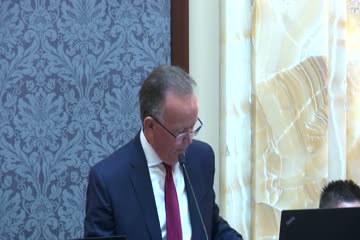
Senator Kennedy, the bill sponsor, presented first substitute Senate Bill 16 as a ban on irreversible surgical procedures for minors, a moratorium on initiating puberty blockers and cross-sex hormones for minors, and an extension of statutes of limitation for negligence claims against providers. Kennedy said the scientific evidence for these treatments in minors is "weak or very weak," cited changes in some European countries that have limited similar care, and said the bill is designed to "hold harmless" those who have already "initiated treatment."
During questions, Senator Plumb sought clarification on what the bill means by "initiate treatment," asking whether the term covers evaluation, counseling or only medication. Kennedy replied that the operative term in the substitute is "initiate treatment," that it can be interpreted several ways, and that the sponsor intends anyone who has "initiated treatment" before the moratorium to be "held harmless."
Senator Escamilla asked whether the bill would prevent doctors from treating precocious puberty; Kennedy answered that treatment for diagnosed precocious puberty is explicitly excluded. Senator Wyler raised hypothetical comparisons to other surgeries such as breast reduction for teens and the sponsor said those procedures are not part of this bill and that the proposal targets more recently adopted practices.
Senator Weiler, who described the issue as personally challenging, said she has studied developments in European countries and would vote in favor of pausing new initiation of care for minors. Senator Thatcher delivered an extended, emotional statement opposing the bill and warned it could prevent life-saving care in some cases; Thatcher said he would vote no. Multiple senators raised legal concerns about potential litigation and equal protection/ADA questions; Senator Kennedy acknowledged litigation is possible and said the substitute was intentionally layered to preserve parts of the bill if other parts are struck down.
After closing remarks from the sponsor, Kennedy moved that the first substitute for SB 16 be placed on the third reading calendar. The Senate conducted a roll-call; the presiding officer announced the motion carried with 21 yeas, 7 nays and 1 senator absent. The bill will next appear on the Senate’s third-reading calendar for a final floor vote.
The hearing record shows the sponsor repeatedly framed the proposal as a moratorium on new initiation of treatment for minors and emphasized review by neutral entities (the University of Utah, a nonprofit, the Department of Professional Licensing and the Department of Health and Human Services) to aggregate evidence. Opponents argued the bill is premature, could be unconstitutional, or could limit access to care they described as essential.
Next steps: SB 16 moves to third reading on the Senate calendar; the transcript records a vote to advance but does not record any final enactment or gubernatorial action in this session.
During questions, Senator Plumb sought clarification on what the bill means by "initiate treatment," asking whether the term covers evaluation, counseling or only medication. Kennedy replied that the operative term in the substitute is "initiate treatment," that it can be interpreted several ways, and that the sponsor intends anyone who has "initiated treatment" before the moratorium to be "held harmless."
Senator Escamilla asked whether the bill would prevent doctors from treating precocious puberty; Kennedy answered that treatment for diagnosed precocious puberty is explicitly excluded. Senator Wyler raised hypothetical comparisons to other surgeries such as breast reduction for teens and the sponsor said those procedures are not part of this bill and that the proposal targets more recently adopted practices.
Senator Weiler, who described the issue as personally challenging, said she has studied developments in European countries and would vote in favor of pausing new initiation of care for minors. Senator Thatcher delivered an extended, emotional statement opposing the bill and warned it could prevent life-saving care in some cases; Thatcher said he would vote no. Multiple senators raised legal concerns about potential litigation and equal protection/ADA questions; Senator Kennedy acknowledged litigation is possible and said the substitute was intentionally layered to preserve parts of the bill if other parts are struck down.
After closing remarks from the sponsor, Kennedy moved that the first substitute for SB 16 be placed on the third reading calendar. The Senate conducted a roll-call; the presiding officer announced the motion carried with 21 yeas, 7 nays and 1 senator absent. The bill will next appear on the Senate’s third-reading calendar for a final floor vote.
The hearing record shows the sponsor repeatedly framed the proposal as a moratorium on new initiation of treatment for minors and emphasized review by neutral entities (the University of Utah, a nonprofit, the Department of Professional Licensing and the Department of Health and Human Services) to aggregate evidence. Opponents argued the bill is premature, could be unconstitutional, or could limit access to care they described as essential.
Next steps: SB 16 moves to third reading on the Senate calendar; the transcript records a vote to advance but does not record any final enactment or gubernatorial action in this session.
Don't Miss a Word: See the Full Meeting!
Go beyond summaries. Unlock every video, transcript, and key insight with a Founder Membership.
✓
Get instant access to full meeting videos
✓
Search and clip any phrase from complete transcripts
✓
Receive AI-powered summaries & custom alerts
✓
Enjoy lifetime, unrestricted access to government data
30-day money-back guarantee
