Utah Senate approves rules report, assigns multiple bills to committees and introduces new measures
January 19, 2023 | 2023 Utah Legislature, Utah Legislature, Utah Legislative Branch, Utah
This article was created by AI summarizing key points discussed. AI makes mistakes, so for full details and context, please refer to the video of the full meeting. Please report any errors so we can fix them. Report an error »
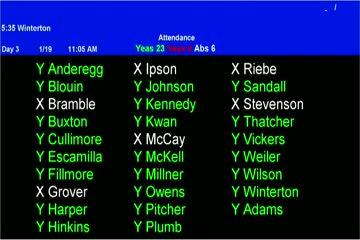
The Senate approved the rules committee report and sent multiple measures to standing committees. The rules committee recommended assignments for bills including SB 96 (Fiduciary Duty Modifications) and SB 97 (Public Contract Requirements) to Government Operations and Political Subdivisions; SBs 104 and 106 (Master Plan for Aging; Caregiver Compensation Amendments) to Health and Human Services; SB 98 (Legal Costs Recovery Amendments) to Judiciary; SB 95 and SB 105 to Transportation; and several business and labor and education bills to their respective committees.
Senate leaders announced these bills would be placed on the second-reading calendar in the order read; Senator Buxton moved to approve the rules committee report and the motion passed by voice vote.
Clerks read communications from the House transmitting substitute House bills including HB 12 (Department of Commerce electronic payment fees), HB 44 (transportation corridor funding amendments), HB 45 (domesticated elk amendments) and HB 72 (medical cannabis governance revisions). Those measures were transmitted to the Senate for consideration and referred to the rules committee for placement.
Senators also introduced a set of new Senate bills for first reading and referral, including SB 109 (Child Welfare Medical Amendments) by Senator Plum; SB 110 (Background Check Modifications) by Senator Grover; SB 111 (Cosmetologist/Barber Licensing Amendments) by Senator Grover; SB 112 (Aquatic Invasive Species Amendments) by Senator Bridal; SB 113 (Local Agricultural Amendments) by Senator Sandel; and SB 114 (County Correctional Facility Contracting Amendments) by Senator Owens. The clerk confirmed these introduced bills will be sent to the rules committee.
Senate leaders announced these bills would be placed on the second-reading calendar in the order read; Senator Buxton moved to approve the rules committee report and the motion passed by voice vote.
Clerks read communications from the House transmitting substitute House bills including HB 12 (Department of Commerce electronic payment fees), HB 44 (transportation corridor funding amendments), HB 45 (domesticated elk amendments) and HB 72 (medical cannabis governance revisions). Those measures were transmitted to the Senate for consideration and referred to the rules committee for placement.
Senators also introduced a set of new Senate bills for first reading and referral, including SB 109 (Child Welfare Medical Amendments) by Senator Plum; SB 110 (Background Check Modifications) by Senator Grover; SB 111 (Cosmetologist/Barber Licensing Amendments) by Senator Grover; SB 112 (Aquatic Invasive Species Amendments) by Senator Bridal; SB 113 (Local Agricultural Amendments) by Senator Sandel; and SB 114 (County Correctional Facility Contracting Amendments) by Senator Owens. The clerk confirmed these introduced bills will be sent to the rules committee.
Don't Miss a Word: See the Full Meeting!
Go beyond summaries. Unlock every video, transcript, and key insight with a Founder Membership.
✓
Get instant access to full meeting videos
✓
Search and clip any phrase from complete transcripts
✓
Receive AI-powered summaries & custom alerts
✓
Enjoy lifetime, unrestricted access to government data
30-day money-back guarantee
