Utah Senate advances a slate of bills, tables several for fiscal review
February 16, 2023 | 2023 Utah Legislature, Utah Legislature, Utah Legislative Branch, Utah
This article was created by AI summarizing key points discussed. AI makes mistakes, so for full details and context, please refer to the video of the full meeting. Please report any errors so we can fix them. Report an error »
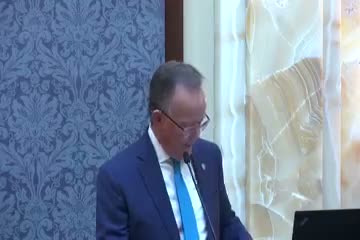
The Utah State Senate spent its floor session moving a large group of bills through committee assignment and calendar actions, approving several measures on third reading and tabling others for fiscal follow-up.
Senators adopted the rules committee report sending dozens of bills to standing committees and then proceeded through the third- and second-reading calendars. Key measures the Senate passed on third reading included a voter-accessibility package and a voluntary firearm-restriction measure that lets individuals place themselves on temporary or indefinite restricted lists to block firearm purchases.
Why it matters: Multiple bills that passed on third reading will go back to the House for concurrence or final processing; bills tabled on third were paused because fiscal or workload notes were incomplete, a frequent procedural step that delays final enactment until costs are confirmed.
Votes at a glance
- House Bill 162 (Voter accessibility amendments): Passed 25–0, 4 absent. Sponsor explained the measure would allow voters with qualifying disabilities to check a checkbox attesting the disability affects consistent signature and permits clerks to request documentation when appropriate.
- House Bill 300 (Voluntary firearm restrictions amendments): Passed 25–0, 4 absent. Sponsor described options including a 180‑day list with automatic removal or indefinite listing with a 90‑day review process.
- House Bill 86 (Firearm reporting requirements): Passed 22–0, 7 absent; bill requires the Bureau of Criminal Identification to collect statistics on sources of firearms recovered from restricted persons.
- Second substitute House Bill 311 (Social media usage amendments): Passed second reading 22–5, 2 absent and was set for third reading; later procedural action moved the measure to be tabled on the third-reading calendar pending fiscal note/substitute coordination.
- Multiple other bills (examples: HB166, HB150, HB154, HB244 and several others) were either read for a third time or circled/uncircled on calendar action; several were lifted and tabled on third due to outstanding fiscal/workload notes.
What the Senate did not decide today: Several bills were moved from third reading and placed on the ‘tabled on third’ calendar because fiscal notes or workload analyses were not finished. Those items will return for final action only after the fiscal details are completed.
Next steps: Passed bills will be returned to the House where required for concurrence or to receive signatures; tabled bills remain pending until fiscal/workload notes are updated and are likely to reappear on a future Senate calendar.
Senators adopted the rules committee report sending dozens of bills to standing committees and then proceeded through the third- and second-reading calendars. Key measures the Senate passed on third reading included a voter-accessibility package and a voluntary firearm-restriction measure that lets individuals place themselves on temporary or indefinite restricted lists to block firearm purchases.
Why it matters: Multiple bills that passed on third reading will go back to the House for concurrence or final processing; bills tabled on third were paused because fiscal or workload notes were incomplete, a frequent procedural step that delays final enactment until costs are confirmed.
Votes at a glance
- House Bill 162 (Voter accessibility amendments): Passed 25–0, 4 absent. Sponsor explained the measure would allow voters with qualifying disabilities to check a checkbox attesting the disability affects consistent signature and permits clerks to request documentation when appropriate.
- House Bill 300 (Voluntary firearm restrictions amendments): Passed 25–0, 4 absent. Sponsor described options including a 180‑day list with automatic removal or indefinite listing with a 90‑day review process.
- House Bill 86 (Firearm reporting requirements): Passed 22–0, 7 absent; bill requires the Bureau of Criminal Identification to collect statistics on sources of firearms recovered from restricted persons.
- Second substitute House Bill 311 (Social media usage amendments): Passed second reading 22–5, 2 absent and was set for third reading; later procedural action moved the measure to be tabled on the third-reading calendar pending fiscal note/substitute coordination.
- Multiple other bills (examples: HB166, HB150, HB154, HB244 and several others) were either read for a third time or circled/uncircled on calendar action; several were lifted and tabled on third due to outstanding fiscal/workload notes.
What the Senate did not decide today: Several bills were moved from third reading and placed on the ‘tabled on third’ calendar because fiscal notes or workload analyses were not finished. Those items will return for final action only after the fiscal details are completed.
Next steps: Passed bills will be returned to the House where required for concurrence or to receive signatures; tabled bills remain pending until fiscal/workload notes are updated and are likely to reappear on a future Senate calendar.
Don't Miss a Word: See the Full Meeting!
Go beyond summaries. Unlock every video, transcript, and key insight with a Founder Membership.
✓
Get instant access to full meeting videos
✓
Search and clip any phrase from complete transcripts
✓
Receive AI-powered summaries & custom alerts
✓
Enjoy lifetime, unrestricted access to government data
30-day money-back guarantee
