Senate approves limits on law‑enforcement use of consumer genetic‑genealogy searches (SB156)
February 21, 2023 | 2023 Utah Legislature, Utah Legislature, Utah Legislative Branch, Utah
This article was created by AI summarizing key points discussed. AI makes mistakes, so for full details and context, please refer to the video of the full meeting. Please report any errors so we can fix them. Report an error »
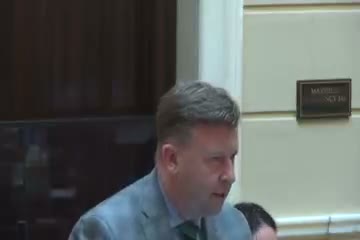
The Utah Senate on Feb. 21 approved the third substitute of Senate Bill 156, a measure that places new limits on law‑enforcement use of consumer genetic‑genealogy databases.
Senator Weiler, the floor sponsor, said the bill is intended to set “guardrails” for DNA searches after the prolonged investigation in the Sherry Black murder, which he used as an example of how genealogy can help solve violent crimes. He told colleagues the third substitute restricts searches to violent felonies or to identify missing or unknown individuals, requires prosecutor approval in most cases, and adds warrant and privacy protections in defined circumstances.
"This bill attempts to actually construct some guardrails on the use of DNA in criminal investigations," Senator Weiler said during floor remarks. He described provisions that would prohibit sale or transfer of generated genealogical data and restrict post‑arrest access to such information.
Members of the Black family — identified in the record as Heidi Miller and Greg Miller — and representatives from the Sherry Black Foundation were in the gallery while the bill was presented.
Supporters framed the bill as balancing investigatory tools with privacy protections; opponents raised concerns about scope in earlier drafts, but the third substitute incorporated additional privacy measures and a prosecutor‑consent requirement. Senators voted to pass the third substitute 24‑2; the measure will be transmitted to the Utah House for further consideration.
What it does
- Limits law‑enforcement access to consumer genealogy databases to violent felonies or missing/unknown persons in most cases.
- Requires prosecutor consent and, in certain cases, a warrant or judicial authorization.
- Prohibits sale or transfer of generated investigative data and restricts access after an arrest.
What happens next: The bill will be transmitted to the House for consideration under standard inter‑chamber procedures.
Attribution: Quotes and descriptions are from Senator Weiler’s floor remarks as recorded in the Senate transcript.
Senator Weiler, the floor sponsor, said the bill is intended to set “guardrails” for DNA searches after the prolonged investigation in the Sherry Black murder, which he used as an example of how genealogy can help solve violent crimes. He told colleagues the third substitute restricts searches to violent felonies or to identify missing or unknown individuals, requires prosecutor approval in most cases, and adds warrant and privacy protections in defined circumstances.
"This bill attempts to actually construct some guardrails on the use of DNA in criminal investigations," Senator Weiler said during floor remarks. He described provisions that would prohibit sale or transfer of generated genealogical data and restrict post‑arrest access to such information.
Members of the Black family — identified in the record as Heidi Miller and Greg Miller — and representatives from the Sherry Black Foundation were in the gallery while the bill was presented.
Supporters framed the bill as balancing investigatory tools with privacy protections; opponents raised concerns about scope in earlier drafts, but the third substitute incorporated additional privacy measures and a prosecutor‑consent requirement. Senators voted to pass the third substitute 24‑2; the measure will be transmitted to the Utah House for further consideration.
What it does
- Limits law‑enforcement access to consumer genealogy databases to violent felonies or missing/unknown persons in most cases.
- Requires prosecutor consent and, in certain cases, a warrant or judicial authorization.
- Prohibits sale or transfer of generated investigative data and restricts access after an arrest.
What happens next: The bill will be transmitted to the House for consideration under standard inter‑chamber procedures.
Attribution: Quotes and descriptions are from Senator Weiler’s floor remarks as recorded in the Senate transcript.
Don't Miss a Word: See the Full Meeting!
Go beyond summaries. Unlock every video, transcript, and key insight with a Founder Membership.
✓
Get instant access to full meeting videos
✓
Search and clip any phrase from complete transcripts
✓
Receive AI-powered summaries & custom alerts
✓
Enjoy lifetime, unrestricted access to government data
30-day money-back guarantee
