Senate advances law to share certain property-transaction data with assessors, excluding sales under condemnation and tax-sales
February 24, 2023 | 2023 Utah Legislature, Utah Legislature, Utah Legislative Branch, Utah
This article was created by AI summarizing key points discussed. AI makes mistakes, so for full details and context, please refer to the video of the full meeting. Please report any errors so we can fix them. Report an error »
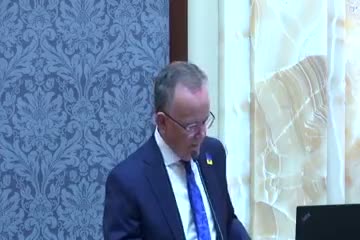
The Utah Senate passed a second substitute to Senate Bill 228, a measure intended to improve assessors' access to timely property-transaction data while protecting against problematic transactions that could distort valuation datasets.
Sponsor Senator McKay told colleagues the change responds to gaps in commercial and land transaction data that left assessors with lagging or noisy sets. "We're capturing the data we do," he said, describing efforts to pair out transactions that do not reflect fair market value and to exclude transactions that occur under threat of condemnation.
During extended floor questioning, Senator Eby asked whether the bill changes the definition or use of eminent domain; McKay replied that it does not alter eminent-domain law, explaining the exclusion is intended to prevent distortion of assessor data where payments above market value were made to avoid litigation. Senator Winterton asked whether the state was moving from a nondisclosure to a disclosure regime for certain transactions; McKay answered that disclosure depends on context and that the bill clarifies how assessors may aggregate transaction data rather than use any single sale as dispositive of value.
The bill also excludes court tax-sale transactions and similarly distressed sales, which the sponsor said generally do not produce market prices and often lack title warranties.
The second substitute passed on a roll call (26–1–2) and will be transmitted to the House for consideration.
Implementation and follow-up: McKay said the measure sets a process to report transactions to assessors and asked members with concerns to meet with drafters. The Senate record indicates the bill will require development of reporting protocols for assessors and may require further administrative guidance.
What it does not do: Sponsor and other senators clarified the bill does not change eminent-domain authority or its substantive definition, and it does not authorize use of an individual sale price alone as conclusive proof of market value.
Next steps: Passed in the Senate and sent to the House for consideration; sponsor offered ongoing meetings with stakeholders to refine details.
Sponsor Senator McKay told colleagues the change responds to gaps in commercial and land transaction data that left assessors with lagging or noisy sets. "We're capturing the data we do," he said, describing efforts to pair out transactions that do not reflect fair market value and to exclude transactions that occur under threat of condemnation.
During extended floor questioning, Senator Eby asked whether the bill changes the definition or use of eminent domain; McKay replied that it does not alter eminent-domain law, explaining the exclusion is intended to prevent distortion of assessor data where payments above market value were made to avoid litigation. Senator Winterton asked whether the state was moving from a nondisclosure to a disclosure regime for certain transactions; McKay answered that disclosure depends on context and that the bill clarifies how assessors may aggregate transaction data rather than use any single sale as dispositive of value.
The bill also excludes court tax-sale transactions and similarly distressed sales, which the sponsor said generally do not produce market prices and often lack title warranties.
The second substitute passed on a roll call (26–1–2) and will be transmitted to the House for consideration.
Implementation and follow-up: McKay said the measure sets a process to report transactions to assessors and asked members with concerns to meet with drafters. The Senate record indicates the bill will require development of reporting protocols for assessors and may require further administrative guidance.
What it does not do: Sponsor and other senators clarified the bill does not change eminent-domain authority or its substantive definition, and it does not authorize use of an individual sale price alone as conclusive proof of market value.
Next steps: Passed in the Senate and sent to the House for consideration; sponsor offered ongoing meetings with stakeholders to refine details.
Don't Miss a Word: See the Full Meeting!
Go beyond summaries. Unlock every video, transcript, and key insight with a Founder Membership.
✓
Get instant access to full meeting videos
✓
Search and clip any phrase from complete transcripts
✓
Receive AI-powered summaries & custom alerts
✓
Enjoy lifetime, unrestricted access to government data
30-day money-back guarantee
