Utah Senate passes forced substitute of HB54 to cut taxes, expand EITC and conditionally remove food tax
March 02, 2023 | 2023 Utah Legislature, Utah Legislature, Utah Legislative Branch, Utah
This article was created by AI summarizing key points discussed. AI makes mistakes, so for full details and context, please refer to the video of the full meeting. Please report any errors so we can fix them. Report an error »
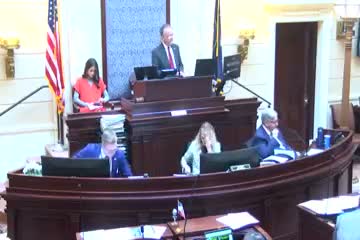
Salt Lake City — The Utah Senate on the morning calendar passed a forced substitute for House Bill 54, a broad tax-and-fee package that contains an income-tax cut, an increased Social Security income exemption and an expansion of the state earned-income tax credit (EITC) to as much as 20 percent.
Senator McKay, sponsor of the conference report, said the substitute includes “the income tax cut,” a higher Social Security exemption and an expanded EITC, and noted the bill also makes food-tax removal contingent upon passage of a constitutional amendment. “I get to cut taxes and get the flag in the same day,” McKay said during floor remarks.
The conference committee reported a forced substitute recommended by a joint committee of senators and representatives; the Senate adopted the committee report and placed the bill on the second-reading calendar before voting. After limited floor discussion and a brief clarification from Senator Vickers, the chamber passed the forced substitute on a roll call recorded as 22 yeas, 6 nays and 1 absent.
The bill’s tax provisions, as described on the floor, include reductions in individual income tax liability, a larger exemption for Social Security income, and an increase in the EITC to a maximum of 20 percent. The floor presentation also noted that a future constitutional amendment is required before removing the food tax entirely; the bill ties the food-tax change to that separate constitutional process.
Procedure and next steps: The Senate returned the bill to the House for further consideration following passage by the Senate. The conference committee membership and actions were announced on the record; the committee’s report was adopted prior to the final Senate vote. Because the forced substitute reflects conference negotiations, the final text will advance to the House for any subsequent action required there.
Vote: Fourth substitute/forced House Bill 54 passed the Senate, recorded as 22 yeas, 6 nays, 1 absent.
What’s next: The bill will proceed to the House following the Senate’s adoption. Any constitutional amendment referenced in the bill would require a separate process and voter approval before the food-tax repeal could take effect.
Senator McKay, sponsor of the conference report, said the substitute includes “the income tax cut,” a higher Social Security exemption and an expanded EITC, and noted the bill also makes food-tax removal contingent upon passage of a constitutional amendment. “I get to cut taxes and get the flag in the same day,” McKay said during floor remarks.
The conference committee reported a forced substitute recommended by a joint committee of senators and representatives; the Senate adopted the committee report and placed the bill on the second-reading calendar before voting. After limited floor discussion and a brief clarification from Senator Vickers, the chamber passed the forced substitute on a roll call recorded as 22 yeas, 6 nays and 1 absent.
The bill’s tax provisions, as described on the floor, include reductions in individual income tax liability, a larger exemption for Social Security income, and an increase in the EITC to a maximum of 20 percent. The floor presentation also noted that a future constitutional amendment is required before removing the food tax entirely; the bill ties the food-tax change to that separate constitutional process.
Procedure and next steps: The Senate returned the bill to the House for further consideration following passage by the Senate. The conference committee membership and actions were announced on the record; the committee’s report was adopted prior to the final Senate vote. Because the forced substitute reflects conference negotiations, the final text will advance to the House for any subsequent action required there.
Vote: Fourth substitute/forced House Bill 54 passed the Senate, recorded as 22 yeas, 6 nays, 1 absent.
What’s next: The bill will proceed to the House following the Senate’s adoption. Any constitutional amendment referenced in the bill would require a separate process and voter approval before the food-tax repeal could take effect.
View the Full Meeting & All Its Details
This article offers just a summary. Unlock complete video, transcripts, and insights as a Founder Member.
✓
Watch full, unedited meeting videos
✓
Search every word spoken in unlimited transcripts
✓
AI summaries & real-time alerts (all government levels)
✓
Permanent access to expanding government content
30-day money-back guarantee
