Utah Senate passes House Bill 183 to update in-person learning and 'test to stay' authority
January 21, 2022 | 2022 Utah Legislature, Utah Legislature, Utah Legislative Branch, Utah
This article was created by AI summarizing key points discussed. AI makes mistakes, so for full details and context, please refer to the video of the full meeting. Please report any errors so we can fix them. Report an error »
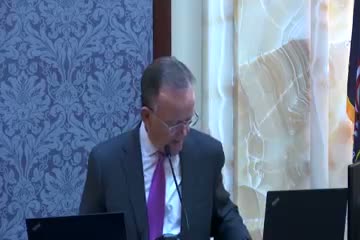
The Utah Senate passed House Bill 183, a measure that updates in-person learning rules and clarifies when state officials may implement or suspend "test to stay" COVID-19 protocols. The chamber approved the bill 22-5, with two senators absent, and the measure will be returned to the House for further action.
Supporters said the bill is intended to give state leaders the ability to respond quickly to shifting public-health conditions. "This bill preserves that authority during very difficult times," Sen. Weiler, the bill sponsor, told the Senate during final remarks.
Lawmakers debated several amendments on the floor. Sen. Escamilla proposed a change to require the Department of Health to follow corresponding CDC guidelines and to allow the state board to set minimum operational staffing thresholds for schools so they remain safe during staff shortages. Escamilla argued the threshold language was needed because "if you cannot function and operate a school in a safe manner, we may be putting kids at danger." The amendment drew support from some members who said staffing shortages — bus drivers or teachers — had already disrupted school operation.
Opponents, including the bill sponsor, said the staffing-threshold language exceeded the scope of the bill and should be introduced in a separate bill to avoid transferring local control without careful drafting. Sen. Weiler and others cautioned that the Legislature must avoid delegating authority in ways that could unintentionally shift decision-making to individual schools or local actors.
Sen. Reid, supporting a different proposed amendment aimed at tightening the "test to stay" approach, said bluntly on the floor: "If you don't want to test to stay, then you shouldn't stay." That amendment — which would have prohibited an opt-out that lets students remain in school without testing during a test-to-stay period — failed on the floor.
The Senate's passage followed roll-call debate about scope and local authority. Under the language discussed on the floor, the bill gives the governor, the presiding officers and the state superintendent tools to implement or suspend test-to-stay and to respond more nimbly to future variants, while preserving the state role in setting minimum instructional requirements.
The bill will return to the House for its next steps.
Supporters said the bill is intended to give state leaders the ability to respond quickly to shifting public-health conditions. "This bill preserves that authority during very difficult times," Sen. Weiler, the bill sponsor, told the Senate during final remarks.
Lawmakers debated several amendments on the floor. Sen. Escamilla proposed a change to require the Department of Health to follow corresponding CDC guidelines and to allow the state board to set minimum operational staffing thresholds for schools so they remain safe during staff shortages. Escamilla argued the threshold language was needed because "if you cannot function and operate a school in a safe manner, we may be putting kids at danger." The amendment drew support from some members who said staffing shortages — bus drivers or teachers — had already disrupted school operation.
Opponents, including the bill sponsor, said the staffing-threshold language exceeded the scope of the bill and should be introduced in a separate bill to avoid transferring local control without careful drafting. Sen. Weiler and others cautioned that the Legislature must avoid delegating authority in ways that could unintentionally shift decision-making to individual schools or local actors.
Sen. Reid, supporting a different proposed amendment aimed at tightening the "test to stay" approach, said bluntly on the floor: "If you don't want to test to stay, then you shouldn't stay." That amendment — which would have prohibited an opt-out that lets students remain in school without testing during a test-to-stay period — failed on the floor.
The Senate's passage followed roll-call debate about scope and local authority. Under the language discussed on the floor, the bill gives the governor, the presiding officers and the state superintendent tools to implement or suspend test-to-stay and to respond more nimbly to future variants, while preserving the state role in setting minimum instructional requirements.
The bill will return to the House for its next steps.
View the Full Meeting & All Its Details
This article offers just a summary. Unlock complete video, transcripts, and insights as a Founder Member.
✓
Watch full, unedited meeting videos
✓
Search every word spoken in unlimited transcripts
✓
AI summaries & real-time alerts (all government levels)
✓
Permanent access to expanding government content
30-day money-back guarantee
