Senate advances property-tax deferral for some seniors; sponsor highlights $10M state bridge fund
February 01, 2022 | 2022 Utah Legislature, Utah Legislature, Utah Legislative Branch, Utah
This article was created by AI summarizing key points discussed. AI makes mistakes, so for full details and context, please refer to the video of the full meeting. Please report any errors so we can fix them. Report an error »
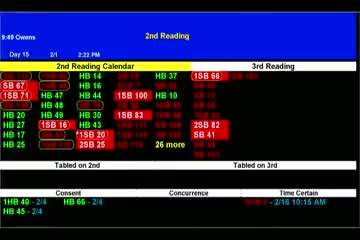
Senators advanced Second Substitute Senate Bill 25 after a floor presentation by Senator Fillmore, who described the measure as a targeted property-tax deferral aimed at seniors with low incomes but substantial home-based net worth.
"Rather than abating tax … this allows the property tax to be deferred with interest," Senator Fillmore said, arguing the approach avoids shifting the cost of abatement to other taxpayers and reduces pressure on seniors to sell or re-mortgage their homes.
Key features explained on the floor:
- The bill creates a property tax deferral program (not an exemption or abatement) that defers taxes for eligible senior homeowners; deferred amounts remain owed by the estate and are payable when the property transfers (by sale or inheritance).
- The bill establishes a one-time $10,000,000 restricted account to provide short-term assistance to counties that may see declines in property-tax revenues during the initial period after implementation. The sponsor described the account as a temporary bridge that will be repaid as deferred taxes are collected on property transfers.
The sponsor said the bill represents a compromise reached with counties and the Utah Taxpayers Association and that it is the third time the Senate has considered a version of this proposal.
Vote and next steps: The roll call on the floor recorded 1 nay and 4 absences; the transcript does not provide an explicit yea tally but the President announced the bill would be read a third time. The bill now advances under normal Senate procedure for enrollment and any further implementation steps would be coordinated with county tax administrators and the state treasurer’s office.
Quotations:
"The major difference from this year's version to last year's version … is the creation of a $10,000,000 fund that this bill sets up," Senator Fillmore said.
Practical implications: The bill would defer tax liability, not erase it; interest would accrue and be collected when property ownership transfers. Senator Fillmore and other floor speakers emphasized that the approach prevents an ongoing subsidy and aims for short-term state support for county cash flow.
Reporters’ note: The transcript announces 1 nay and 4 absences on the roll call; it does not provide an explicit yea count in the floor announcement, so the article does not report a yea number not shown on the record.
"Rather than abating tax … this allows the property tax to be deferred with interest," Senator Fillmore said, arguing the approach avoids shifting the cost of abatement to other taxpayers and reduces pressure on seniors to sell or re-mortgage their homes.
Key features explained on the floor:
- The bill creates a property tax deferral program (not an exemption or abatement) that defers taxes for eligible senior homeowners; deferred amounts remain owed by the estate and are payable when the property transfers (by sale or inheritance).
- The bill establishes a one-time $10,000,000 restricted account to provide short-term assistance to counties that may see declines in property-tax revenues during the initial period after implementation. The sponsor described the account as a temporary bridge that will be repaid as deferred taxes are collected on property transfers.
The sponsor said the bill represents a compromise reached with counties and the Utah Taxpayers Association and that it is the third time the Senate has considered a version of this proposal.
Vote and next steps: The roll call on the floor recorded 1 nay and 4 absences; the transcript does not provide an explicit yea tally but the President announced the bill would be read a third time. The bill now advances under normal Senate procedure for enrollment and any further implementation steps would be coordinated with county tax administrators and the state treasurer’s office.
Quotations:
"The major difference from this year's version to last year's version … is the creation of a $10,000,000 fund that this bill sets up," Senator Fillmore said.
Practical implications: The bill would defer tax liability, not erase it; interest would accrue and be collected when property ownership transfers. Senator Fillmore and other floor speakers emphasized that the approach prevents an ongoing subsidy and aims for short-term state support for county cash flow.
Reporters’ note: The transcript announces 1 nay and 4 absences on the roll call; it does not provide an explicit yea count in the floor announcement, so the article does not report a yea number not shown on the record.
Don't Miss a Word: See the Full Meeting!
Go beyond summaries. Unlock every video, transcript, and key insight with a Founder Membership.
✓
Get instant access to full meeting videos
✓
Search and clip any phrase from complete transcripts
✓
Receive AI-powered summaries & custom alerts
✓
Enjoy lifetime, unrestricted access to government data
30-day money-back guarantee
