Senate passes bill expanding oversight of project entities after debate over tax breaks and power sales
February 09, 2022 | 2022 Utah Legislature, Utah Legislature, Utah Legislative Branch, Utah
This article was created by AI summarizing key points discussed. AI makes mistakes, so for full details and context, please refer to the video of the full meeting. Please report any errors so we can fix them. Report an error »
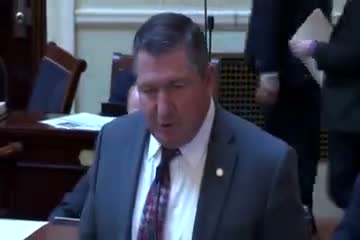
SALT LAKE CITY — The Utah State Senate on Feb. 9 passed second substitute Senate Bill 92 by voice and roll-call after extended debate over oversight of so-called project entities tied to power projects.
Senator Owens, the bill sponsor, told colleagues the substitute clarifies when a project entity may close meetings under the Open and Public Meetings Act and adopts procurement provisions requested by the state’s procurement authority. "The substitute clarifies when a project entity may close its meetings under open and public meetings act," Owens said during floor debate.
Why it matters: Owens argued the bill applies oversight and accountability to a political subdivision that has significant financial capacity and special status — including the ability to issue tax-exempt municipal bonds and to receive tax concessions. He cited figures he said came from stakeholder materials: "Over 35 years, they have paid in their language $520,000,000 in property taxes…they have received $72,000,000 in tax breaks…they plan to put those out in the amount of $2,000,000,000" in tax-exempt municipal bonds, he said, attributing the numbers to stakeholder materials and his meetings with the entity.
On power sales, Owens corrected a prior public remark about in-state use of the plant’s output, saying, "I made an error when I spoke during special session and said that 2% of the power that is created is used by Utah municipalities. ... Only half a percent is used in Utah. So 99.5% of the power is sent to the LA Basin." The percentage was presented by Owens as a correction during floor questioning.
Several senators pressed the sponsor on specifics. Senator Wyler asked whether the substitute would allow a project entity to close a meeting when discussing confidential business; Owens said the bill preserves an ability to close meetings when discussion involves sensitive or confidential information. Senator Vickers, who asked the sponsor to yield for questions, praised Owens for working with stakeholders and for the process of negotiation. Senator Anderegg asked about the share of in-state power; Owens provided the corrected percentage and reiterated the bill’s intent to ensure accountability.
Supporters said the measure levels the regulatory playing field so that project entities are subject to the same procurement and transparency standards as municipalities and other political subdivisions. Opponents raised concerns in debate about potential unintended consequences for procurement and the timing of late language changes; Owens said legislative staff and counsel reviewed the language and that changes were made in consultation with the executive branch and stakeholders.
The result: Roll-call votes recorded 27 yes, 0 no, and 2 absent; the bill passed the Senate and was transmitted to the House for consideration.
The next step: The House will consider Senate Bill 92; its further amendment or concurrence there will determine whether the measure becomes law.
Senator Owens, the bill sponsor, told colleagues the substitute clarifies when a project entity may close meetings under the Open and Public Meetings Act and adopts procurement provisions requested by the state’s procurement authority. "The substitute clarifies when a project entity may close its meetings under open and public meetings act," Owens said during floor debate.
Why it matters: Owens argued the bill applies oversight and accountability to a political subdivision that has significant financial capacity and special status — including the ability to issue tax-exempt municipal bonds and to receive tax concessions. He cited figures he said came from stakeholder materials: "Over 35 years, they have paid in their language $520,000,000 in property taxes…they have received $72,000,000 in tax breaks…they plan to put those out in the amount of $2,000,000,000" in tax-exempt municipal bonds, he said, attributing the numbers to stakeholder materials and his meetings with the entity.
On power sales, Owens corrected a prior public remark about in-state use of the plant’s output, saying, "I made an error when I spoke during special session and said that 2% of the power that is created is used by Utah municipalities. ... Only half a percent is used in Utah. So 99.5% of the power is sent to the LA Basin." The percentage was presented by Owens as a correction during floor questioning.
Several senators pressed the sponsor on specifics. Senator Wyler asked whether the substitute would allow a project entity to close a meeting when discussing confidential business; Owens said the bill preserves an ability to close meetings when discussion involves sensitive or confidential information. Senator Vickers, who asked the sponsor to yield for questions, praised Owens for working with stakeholders and for the process of negotiation. Senator Anderegg asked about the share of in-state power; Owens provided the corrected percentage and reiterated the bill’s intent to ensure accountability.
Supporters said the measure levels the regulatory playing field so that project entities are subject to the same procurement and transparency standards as municipalities and other political subdivisions. Opponents raised concerns in debate about potential unintended consequences for procurement and the timing of late language changes; Owens said legislative staff and counsel reviewed the language and that changes were made in consultation with the executive branch and stakeholders.
The result: Roll-call votes recorded 27 yes, 0 no, and 2 absent; the bill passed the Senate and was transmitted to the House for consideration.
The next step: The House will consider Senate Bill 92; its further amendment or concurrence there will determine whether the measure becomes law.
View the Full Meeting & All Its Details
This article offers just a summary. Unlock complete video, transcripts, and insights as a Founder Member.
✓
Watch full, unedited meeting videos
✓
Search every word spoken in unlimited transcripts
✓
AI summaries & real-time alerts (all government levels)
✓
Permanent access to expanding government content
30-day money-back guarantee
