Senate approves special-education funding language after heated debate over resource dilution
February 11, 2022 | 2022 Utah Legislature, Utah Legislature, Utah Legislative Branch, Utah
This article was created by AI summarizing key points discussed. AI makes mistakes, so for full details and context, please refer to the video of the full meeting. Please report any errors so we can fix them. Report an error »
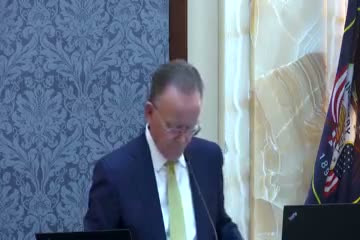
The Utah Senate narrowly passed Second Substitute Senate Bill 134 on Feb. 11, 2022, a measure the sponsor said aligns state practice with federal guidance about educating students with disabilities in the least restrictive environment.
Senator Bramble, the bill sponsor, told colleagues the measure "doesn't take a dime out of serving the special needs of the children" and said it clarifies that incidental benefits to other students do not render an expenditure prohibited. He said the Disability Law Center and several special-education stakeholders had endorsed the bill and that remaining implementation is a matter for school administrators and the State Board of Education.
Senator Reby, who identified extensive classroom experience, urged colleagues to oppose the measure, arguing it would dilute targeted services for students with disabilities. Reby criticized the bill’s practical effect with a classroom analogy: "There's no more french fries, that person has to share it... That kid now has to give all of our french fries away because now we are sharing all of that resource," she said, noting that teachers repeatedly redirect support when a student needs help.
Bramble responded that the bill does not remove funding and that careful administration and oversight should ensure funds reach students with IEPs; he also noted continuing conversations with the State Office of Education and the state board about precise language. After floor debate and summation, the Senate voted to pass the bill. The chair announced the bill passed with 20 yea votes, 5 nay votes and 4 senators absent; the measure will be sent to the House for consideration.
Supporters emphasized statutory alignment with federal special-education principles and endorsements by disability advocates; opponents said the bill lacks explicit provisions to create new inclusion funding or guardrails preventing incidental diversion of resources. The floor remarks indicate follow-up with education administrators and stakeholders will be needed to clarify implementation, oversight and any guidance the State Board of Education will provide.
The next procedural step is transmission of the bill back to the House; sponsors and opponents may seek further amendments in House committees.
Senator Bramble, the bill sponsor, told colleagues the measure "doesn't take a dime out of serving the special needs of the children" and said it clarifies that incidental benefits to other students do not render an expenditure prohibited. He said the Disability Law Center and several special-education stakeholders had endorsed the bill and that remaining implementation is a matter for school administrators and the State Board of Education.
Senator Reby, who identified extensive classroom experience, urged colleagues to oppose the measure, arguing it would dilute targeted services for students with disabilities. Reby criticized the bill’s practical effect with a classroom analogy: "There's no more french fries, that person has to share it... That kid now has to give all of our french fries away because now we are sharing all of that resource," she said, noting that teachers repeatedly redirect support when a student needs help.
Bramble responded that the bill does not remove funding and that careful administration and oversight should ensure funds reach students with IEPs; he also noted continuing conversations with the State Office of Education and the state board about precise language. After floor debate and summation, the Senate voted to pass the bill. The chair announced the bill passed with 20 yea votes, 5 nay votes and 4 senators absent; the measure will be sent to the House for consideration.
Supporters emphasized statutory alignment with federal special-education principles and endorsements by disability advocates; opponents said the bill lacks explicit provisions to create new inclusion funding or guardrails preventing incidental diversion of resources. The floor remarks indicate follow-up with education administrators and stakeholders will be needed to clarify implementation, oversight and any guidance the State Board of Education will provide.
The next procedural step is transmission of the bill back to the House; sponsors and opponents may seek further amendments in House committees.
View the Full Meeting & All Its Details
This article offers just a summary. Unlock complete video, transcripts, and insights as a Founder Member.
✓
Watch full, unedited meeting videos
✓
Search every word spoken in unlimited transcripts
✓
AI summaries & real-time alerts (all government levels)
✓
Permanent access to expanding government content
30-day money-back guarantee
