Senate approves zipper-merge bill after debate over criminalizing driving behavior
February 17, 2022 | 2022 Utah Legislature, Utah Legislature, Utah Legislative Branch, Utah
This article was created by AI summarizing key points discussed. AI makes mistakes, so for full details and context, please refer to the video of the full meeting. Please report any errors so we can fix them. Report an error »
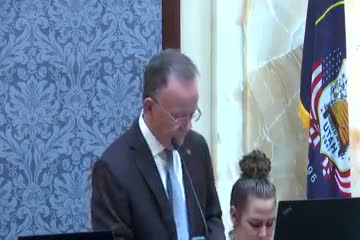
Senator McKay, sponsor of First Substitute House Bill 76, told the Senate the measure aims to put zipper-merge guidance into statute and add an educational component, citing research that the zipper merge can be about 40% more efficient than early merging. "The zipper merge is 40% more efficient than the get-in-line approach," McKay said while presenting the bill.
The bill prompted an extended exchange on whether the state should treat failure to zipper-merge as an enforceable infraction. "Is this really something we want to criminalize?" asked Senator Thatcher, who said criminalization risks detaining and citing ordinary drivers and questioned whether law enforcement should enforce such a rule without a major education campaign. "Do we really want people criminalized if they fail to use the zipper merge?" Thatcher said.
Senator McKay responded that education is central to the proposal and emphasized long-term efficiency gains for traffic patterns. "Helping by educating and showing people — by the time you get to 40% (efficiency), it makes you question why would we allow anybody to do it any other way?" he said.
After debate, the Senate recorded a roll-call vote. First Substitute House Bill 76 passed the Senate with 21 yea votes, 3 nay votes and 5 senators absent. The bill will be returned to the House for its concurrence and any further action.
Why it matters: The measure changes how merging behavior is addressed in state code and pairs that change with an educational approach, according to supporters. Opponents warned the statutory language could create penalties before adequate public outreach and training are in place.
What’s next: The bill will be transmitted back to the House for their consideration and any necessary follow-up. No implementation date or enforcement details were specified on the floor during the debate.
The bill prompted an extended exchange on whether the state should treat failure to zipper-merge as an enforceable infraction. "Is this really something we want to criminalize?" asked Senator Thatcher, who said criminalization risks detaining and citing ordinary drivers and questioned whether law enforcement should enforce such a rule without a major education campaign. "Do we really want people criminalized if they fail to use the zipper merge?" Thatcher said.
Senator McKay responded that education is central to the proposal and emphasized long-term efficiency gains for traffic patterns. "Helping by educating and showing people — by the time you get to 40% (efficiency), it makes you question why would we allow anybody to do it any other way?" he said.
After debate, the Senate recorded a roll-call vote. First Substitute House Bill 76 passed the Senate with 21 yea votes, 3 nay votes and 5 senators absent. The bill will be returned to the House for its concurrence and any further action.
Why it matters: The measure changes how merging behavior is addressed in state code and pairs that change with an educational approach, according to supporters. Opponents warned the statutory language could create penalties before adequate public outreach and training are in place.
What’s next: The bill will be transmitted back to the House for their consideration and any necessary follow-up. No implementation date or enforcement details were specified on the floor during the debate.
View the Full Meeting & All Its Details
This article offers just a summary. Unlock complete video, transcripts, and insights as a Founder Member.
✓
Watch full, unedited meeting videos
✓
Search every word spoken in unlimited transcripts
✓
AI summaries & real-time alerts (all government levels)
✓
Permanent access to expanding government content
30-day money-back guarantee
