Utah Senate advances wide slate of bills Feb. 14; property-tax and HOA reforms among measures sent to House
February 14, 2022 | 2022 Utah Legislature, Utah Legislature, Utah Legislative Branch, Utah
This article was created by AI summarizing key points discussed. AI makes mistakes, so for full details and context, please refer to the video of the full meeting. Please report any errors so we can fix them. Report an error »
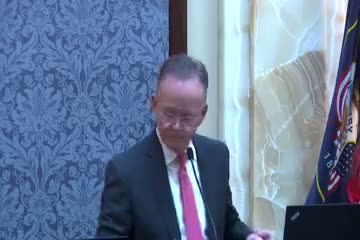
The Utah State Senate met Feb. 14 at the State Capitol and moved a large number of bills through the floor calendars, approving several measures and placing others for later consideration.
Opening formalities and routine business gave way to a lengthy floor session in which senators introduced and assigned dozens of bills to committees, approved standing committee reports and advanced multiple items by substitution and roll call. The Senate accepted messages from the House and approved the Rules Committee report sending first-read bills to standing committees.
On the third- and second-reading calendars, senators voted to advance or pass several items. Second substitute Senate Bill 20, a package of property-tax amendments that included a pro rata municipal power-production exemption tied to in-state consumption and a change to how certain telecommunications property is assessed, passed the Senate by a recorded vote of 25–0 with four absent and was sent to the House for concurrence.
The chamber approved a second substitute to Senate Bill 152, which clarifies community association (HOA) records and expands required publicly available documents, addresses rules for signs, landscaping and rooftop solar and adds provisions for electric-vehicle charging stations; that bill passed 24–1 with four absent and will go to the House.
Several other bills were passed or advanced. House Bill 184 (Teacher Professional Development Amendment) passed the Senate 25–0 (four absent). The Senate also advanced criminal-justice-related measures, including a multi-part substitute for Senate Bill 179 addressing implementation of Justice Reinvestment Initiative (JRI) components and data collection; the Senate progressed the measure toward third reading after sponsor amendments.
Other floor actions included passage-to-third or passage votes on bills covering criminal penalties (Senate Bill 156 addressing extortion via intimate images), transportation and public-safety proposals (a revised Senate Bill 53 tightening penalties for extreme speeding and illegal street racing), and tax-related bills (first substitute Senate Bill 93 addressing taxation of business inputs). The Senate also debated a bill aimed at rural film production incentives and advanced it to third reading after discussion and recorded opposition.
Several items were circled for additional technical work or fiscal-note corrections, including Senate Bill 150 and other bills the sponsors requested be returned to committee work. At the close of business senators announced committee meetings and recessed the floor until 2 p.m.
The session record shows numerous roll-call results and the sponsors’ summary statements on the floor; where the Senate recorded formal votes, the clerk’s tallies were entered on the record and bills were transmitted or prepared for transmittal to the House or held for additional committee work.
Opening formalities and routine business gave way to a lengthy floor session in which senators introduced and assigned dozens of bills to committees, approved standing committee reports and advanced multiple items by substitution and roll call. The Senate accepted messages from the House and approved the Rules Committee report sending first-read bills to standing committees.
On the third- and second-reading calendars, senators voted to advance or pass several items. Second substitute Senate Bill 20, a package of property-tax amendments that included a pro rata municipal power-production exemption tied to in-state consumption and a change to how certain telecommunications property is assessed, passed the Senate by a recorded vote of 25–0 with four absent and was sent to the House for concurrence.
The chamber approved a second substitute to Senate Bill 152, which clarifies community association (HOA) records and expands required publicly available documents, addresses rules for signs, landscaping and rooftop solar and adds provisions for electric-vehicle charging stations; that bill passed 24–1 with four absent and will go to the House.
Several other bills were passed or advanced. House Bill 184 (Teacher Professional Development Amendment) passed the Senate 25–0 (four absent). The Senate also advanced criminal-justice-related measures, including a multi-part substitute for Senate Bill 179 addressing implementation of Justice Reinvestment Initiative (JRI) components and data collection; the Senate progressed the measure toward third reading after sponsor amendments.
Other floor actions included passage-to-third or passage votes on bills covering criminal penalties (Senate Bill 156 addressing extortion via intimate images), transportation and public-safety proposals (a revised Senate Bill 53 tightening penalties for extreme speeding and illegal street racing), and tax-related bills (first substitute Senate Bill 93 addressing taxation of business inputs). The Senate also debated a bill aimed at rural film production incentives and advanced it to third reading after discussion and recorded opposition.
Several items were circled for additional technical work or fiscal-note corrections, including Senate Bill 150 and other bills the sponsors requested be returned to committee work. At the close of business senators announced committee meetings and recessed the floor until 2 p.m.
The session record shows numerous roll-call results and the sponsors’ summary statements on the floor; where the Senate recorded formal votes, the clerk’s tallies were entered on the record and bills were transmitted or prepared for transmittal to the House or held for additional committee work.
View the Full Meeting & All Its Details
This article offers just a summary. Unlock complete video, transcripts, and insights as a Founder Member.
✓
Watch full, unedited meeting videos
✓
Search every word spoken in unlimited transcripts
✓
AI summaries & real-time alerts (all government levels)
✓
Permanent access to expanding government content
30-day money-back guarantee
