Senate debates school and childcare water-testing bill; sponsors cite ARPA funds and base budget allocation
February 17, 2022 | 2022 Utah Legislature, Utah Legislature, Utah Legislative Branch, Utah
This article was created by AI summarizing key points discussed. AI makes mistakes, so for full details and context, please refer to the video of the full meeting. Please report any errors so we can fix them. Report an error »
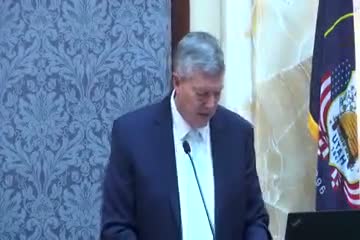
Senator Iwamoto introduced First Substitute House Bill 21, which would authorize testing of water for lead/copper in schools and licensed childcare facilities ahead of an expected federal mandate. He told the Senate that $25 million is already in the base budget and that an additional $3,500,000 in ARPA funds had been identified to support implementation. "The 25,000,000 that's already been set in the base budget... we have 3,500,000 that they believe is enough for this initiative to get it done," he said.
Several senators raised technical and policy questions about scope, funding, and whether the bill created a mandatory testing requirement. Senator Bramble said his concern centers on the word "shall" in the bill's language: "The shall test means that anyone that has a childcare license has to go through this testing... Regardless if it's a brand new home. Regardless if they've already mitigated the possibility of lead." He said he supported the objective but opposed an unamended mandate.
Senator Andreeg and others asked whether the funding represented ARPA dollars being directed to this work; Iwamoto confirmed ARPA is the source for the $3.5 million referenced on the floor. Senator Escamilla clarified that the bill applies to licensed childcare centers (facilities), not licensed home daycare providers.
Following discussion and requests for clarification (including the statutory definition referenced in section 26-39-102), the Senate voted to circle the bill for further consideration so staff and sponsors could address concerns about scope, mandate language and fiscal details.
Why it matters: The bill would expand or clarify state authority to test and remediate lead in water at places where children are present; senators emphasized child health protections but differed on whether the measure's language creates an unfunded mandate for some providers.
What’s next: The Senate circled HB21 to allow further staff review and possible amendment addressing the "shall test" language, funding sources (ARPA use), and the class of facilities covered.
Several senators raised technical and policy questions about scope, funding, and whether the bill created a mandatory testing requirement. Senator Bramble said his concern centers on the word "shall" in the bill's language: "The shall test means that anyone that has a childcare license has to go through this testing... Regardless if it's a brand new home. Regardless if they've already mitigated the possibility of lead." He said he supported the objective but opposed an unamended mandate.
Senator Andreeg and others asked whether the funding represented ARPA dollars being directed to this work; Iwamoto confirmed ARPA is the source for the $3.5 million referenced on the floor. Senator Escamilla clarified that the bill applies to licensed childcare centers (facilities), not licensed home daycare providers.
Following discussion and requests for clarification (including the statutory definition referenced in section 26-39-102), the Senate voted to circle the bill for further consideration so staff and sponsors could address concerns about scope, mandate language and fiscal details.
Why it matters: The bill would expand or clarify state authority to test and remediate lead in water at places where children are present; senators emphasized child health protections but differed on whether the measure's language creates an unfunded mandate for some providers.
What’s next: The Senate circled HB21 to allow further staff review and possible amendment addressing the "shall test" language, funding sources (ARPA use), and the class of facilities covered.
Don't Miss a Word: See the Full Meeting!
Go beyond summaries. Unlock every video, transcript, and key insight with a Founder Membership.
✓
Get instant access to full meeting videos
✓
Search and clip any phrase from complete transcripts
✓
Receive AI-powered summaries & custom alerts
✓
Enjoy lifetime, unrestricted access to government data
30-day money-back guarantee
