Senate advances JRI-focused bill tightening data reporting, with funding consequences for noncompliance
February 14, 2022 | 2022 Utah Legislature, Utah Legislature, Utah Legislative Branch, Utah
This article was created by AI summarizing key points discussed. AI makes mistakes, so for full details and context, please refer to the video of the full meeting. Please report any errors so we can fix them. Report an error »
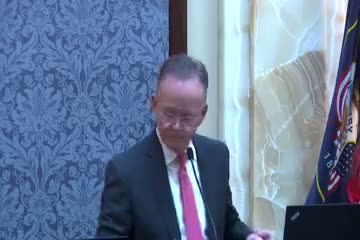
Senator Wyler told the Utah Senate Feb. 14 that the second substitute of Senate Bill 179 is aimed at rescuing the state’s Justice Reinvestment Initiative (JRI) by improving oversight and data collection. The measure requires more complete reporting from counties and the Division of Substance Abuse and Mental Health, creates or requires county criminal-justice coordinating councils and contains provisions intended to strengthen supervision and treatment for offenders.
Wyler said the bill includes enforcement: "we actually, shut off CCJJ funding for organizations that are not in compliance with the data reporting laws," a floor summary of the enforcement mechanism that would restrict grant funding for noncompliant entities. He also described a sponsor correction to the fiscal estimate on the floor: the fiscal note previously cited at $1.7 million was corrected to $1,300,000.
Supporters on the floor framed the bill as a course correction to earlier JRI work that had limited success due to uneven funding and insufficient data, with Senator Andreegg and others urging continued investment in diversion and treatment rather than re-criminalization. Opponents and some county representatives expressed concern that the bill could shift costs to counties; Wyler said the bill was not intended as an unfunded mandate but acknowledged counties that fail to report could lose CCJJ grants.
On the floor Wyler moved to delete the first substitute and adopt the second substitute, including an amendment extending a referenced time period from 30 to 60 days; the Senate advanced the second substitute toward third reading by roll-call (23 yay, 0 nay, 6 absent as recorded for the advance). The bill includes a $1.3 million sponsor-cited fiscal note for portions of the implementation and a $1,000,000 appropriation in sponsor remarks for rural receiving centers.
The measure would affect counties, the state Division of Substance Abuse and Mental Health and organizations that currently receive CCJJ funding. Sponsors said more complete data will allow policymakers to measure recidivism and program effects and better align resources.
Next steps: the Senate advanced the substitute to third reading; additional drafting and review of fiscal implications were discussed and may continue as the bill moves through the process.
Wyler said the bill includes enforcement: "we actually, shut off CCJJ funding for organizations that are not in compliance with the data reporting laws," a floor summary of the enforcement mechanism that would restrict grant funding for noncompliant entities. He also described a sponsor correction to the fiscal estimate on the floor: the fiscal note previously cited at $1.7 million was corrected to $1,300,000.
Supporters on the floor framed the bill as a course correction to earlier JRI work that had limited success due to uneven funding and insufficient data, with Senator Andreegg and others urging continued investment in diversion and treatment rather than re-criminalization. Opponents and some county representatives expressed concern that the bill could shift costs to counties; Wyler said the bill was not intended as an unfunded mandate but acknowledged counties that fail to report could lose CCJJ grants.
On the floor Wyler moved to delete the first substitute and adopt the second substitute, including an amendment extending a referenced time period from 30 to 60 days; the Senate advanced the second substitute toward third reading by roll-call (23 yay, 0 nay, 6 absent as recorded for the advance). The bill includes a $1.3 million sponsor-cited fiscal note for portions of the implementation and a $1,000,000 appropriation in sponsor remarks for rural receiving centers.
The measure would affect counties, the state Division of Substance Abuse and Mental Health and organizations that currently receive CCJJ funding. Sponsors said more complete data will allow policymakers to measure recidivism and program effects and better align resources.
Next steps: the Senate advanced the substitute to third reading; additional drafting and review of fiscal implications were discussed and may continue as the bill moves through the process.
View the Full Meeting & All Its Details
This article offers just a summary. Unlock complete video, transcripts, and insights as a Founder Member.
✓
Watch full, unedited meeting videos
✓
Search every word spoken in unlimited transcripts
✓
AI summaries & real-time alerts (all government levels)
✓
Permanent access to expanding government content
30-day money-back guarantee
