Senate advances revised Special Needs Scholarship but rejects some proposals to extend sibling preference
February 24, 2022 | 2022 Utah Legislature, Utah Legislature, Utah Legislative Branch, Utah
This article was created by AI summarizing key points discussed. AI makes mistakes, so for full details and context, please refer to the video of the full meeting. Please report any errors so we can fix them. Report an error »
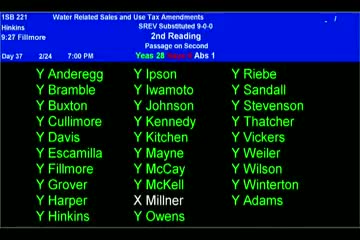
Third substitute Senate Bill 62 — changes to the Special Needs Opportunity Scholarship program — drew the chamber’s longest debate of the evening before the Senate advanced the measure under suspension of the rules.
Senator Fillmore, the bill’s floor sponsor, described technical amendments that he said tighten program operations (including a tax carry‑back to help donors calculate liability, clarifications about how private schools make determinations and definitions around eligibility). He also proposed expanding the program to allow a sibling preference in some cases while ensuring that any sibling would not "jump the line" ahead of a student with a qualifying disability, a change he said would keep families together while preserving priority for students with disabilities.
The proposal prompted sustained objections from several colleagues. Senator Escamilla said he supported the original scholarship for students with individualized education plans but opposed adding siblings, arguing the program was intended to benefit children with disabilities. In explaining his vote, Escamilla said he supported the program "but not to add the siblings," noting that the addition would change the program’s intent and could reduce funds available to qualifying students.
Other senators spoke on both sides. Senator Thatcher described personal experience as the sibling of a special‑needs student and supported sibling preference on family‑care grounds; Senator Davis warned that expanding sibling preference could shift finite scholarship dollars away from children who require specialized services. Senator Filmore (the sponsor) emphasized an administrative fix in the adopted substitute: the scholarship‑granting organization would be prohibited from awarding a sibling without a disability a scholarship if any student with a disability who applied remained unfunded.
Under suspension of the rules and after several substitute motions, the Senate approved third substitute SB 62 by a vote of 16 yay, 12 nay, 1 absent. The sponsor used suspension procedures to waive the three‑reading requirement because the bill had a committee name change and to move it to third reading during the same floor session.
What the bill changes and what remains uncertain
Supporters noted the substitute keeps intact technical corrections to administration and donor tax mechanics while adding language they said protects priority for qualifying students. Opponents pointed to the program’s finite funding pool and argued sibling preference could reduce access for children with IEPs and 504 plans. Testimony and floor debate did not identify a new funding source or expand the scholarship pool; senators opposing the sibling preference repeatedly framed the substitution as a reallocation risk rather than a budget increase.
Next steps
With the Senate’s third‑reading approval under suspension of the rules, SB 62 moves along the legislative process for any necessary enrollment in the other chamber and subsequent enrollee administration steps. The bill text, as debated on the floor, contains the limits placed on sibling awards by the scholarship‑granting organization; officials and stakeholders will monitor implementation details once the bill becomes law or is reconciled with the House.
Senator Fillmore, the bill’s floor sponsor, described technical amendments that he said tighten program operations (including a tax carry‑back to help donors calculate liability, clarifications about how private schools make determinations and definitions around eligibility). He also proposed expanding the program to allow a sibling preference in some cases while ensuring that any sibling would not "jump the line" ahead of a student with a qualifying disability, a change he said would keep families together while preserving priority for students with disabilities.
The proposal prompted sustained objections from several colleagues. Senator Escamilla said he supported the original scholarship for students with individualized education plans but opposed adding siblings, arguing the program was intended to benefit children with disabilities. In explaining his vote, Escamilla said he supported the program "but not to add the siblings," noting that the addition would change the program’s intent and could reduce funds available to qualifying students.
Other senators spoke on both sides. Senator Thatcher described personal experience as the sibling of a special‑needs student and supported sibling preference on family‑care grounds; Senator Davis warned that expanding sibling preference could shift finite scholarship dollars away from children who require specialized services. Senator Filmore (the sponsor) emphasized an administrative fix in the adopted substitute: the scholarship‑granting organization would be prohibited from awarding a sibling without a disability a scholarship if any student with a disability who applied remained unfunded.
Under suspension of the rules and after several substitute motions, the Senate approved third substitute SB 62 by a vote of 16 yay, 12 nay, 1 absent. The sponsor used suspension procedures to waive the three‑reading requirement because the bill had a committee name change and to move it to third reading during the same floor session.
What the bill changes and what remains uncertain
Supporters noted the substitute keeps intact technical corrections to administration and donor tax mechanics while adding language they said protects priority for qualifying students. Opponents pointed to the program’s finite funding pool and argued sibling preference could reduce access for children with IEPs and 504 plans. Testimony and floor debate did not identify a new funding source or expand the scholarship pool; senators opposing the sibling preference repeatedly framed the substitution as a reallocation risk rather than a budget increase.
Next steps
With the Senate’s third‑reading approval under suspension of the rules, SB 62 moves along the legislative process for any necessary enrollment in the other chamber and subsequent enrollee administration steps. The bill text, as debated on the floor, contains the limits placed on sibling awards by the scholarship‑granting organization; officials and stakeholders will monitor implementation details once the bill becomes law or is reconciled with the House.
Don't Miss a Word: See the Full Meeting!
Go beyond summaries. Unlock every video, transcript, and key insight with a Founder Membership.
✓
Get instant access to full meeting videos
✓
Search and clip any phrase from complete transcripts
✓
Receive AI-powered summaries & custom alerts
✓
Enjoy lifetime, unrestricted access to government data
30-day money-back guarantee
