Utah Senate advances wide package of bills as session enters final week
February 25, 2022 | 2022 Utah Legislature, Utah Legislature, Utah Legislative Branch, Utah
This article was created by AI summarizing key points discussed. AI makes mistakes, so for full details and context, please refer to the video of the full meeting. Please report any errors so we can fix them. Report an error »
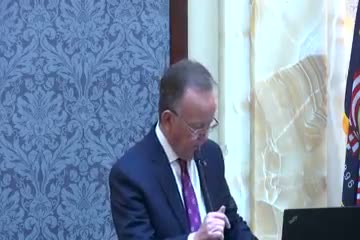
The Utah Senate convened for a busy floor day as lawmakers pressed through a long concurrence calendar and a third-reading calendar, moving a wide package of bills toward final approval as the Legislature entered its last week.
Presiding remarks opened the session with an invocation and a pledge; an unidentified presiding speaker told colleagues, "If anybody's paying attention we have one week left," noting the compressed schedule. The chamber then took up a sequence of concurrence items and third-reading bills ranging from protective-order and stalking injunction expungement to child-welfare recodification, school nursing services and energy-efficiency grants.
Major floor actions and outcomes included the Senate’s concurrence and passage of fifth substitute Senate Bill 85, a measure on protective orders and stalking-injunction expungement. Senator Wyler moved concurrence and later the motion to pass; the bill passed the Senate on a roll call recorded on the floor with 23 yay votes, 0 nays and 6 absent and will be returned to the House for the Speaker’s signature.
The chamber also approved third substitute Senate Bill 51 (transportation amendments), which the sponsor said clarifies vintage vehicle license-plate exemptions and removes a House amendment related to a throughput infrastructure fund; the bill passed with 24 yay votes and will be sent back to the House. Fourth substitute Senate Bill 92 (project-entity oversight modifications) and third substitute Senate Bill 95 (limitations on employer liability) passed with unanimous or near-unanimous roll-call tallies, as did Senate Bill 132 (child welfare amendments).
On education and health topics, the Senate passed second substitute House Bill 114, described by its sponsor as encouraging local education agencies to reduce nurse-to-student ratios for students with chronic conditions (the sponsor said the measure seeks improved access to nurses, aiming to move from ratios near 1:5,000 toward about 1:2,000). The bill passed on roll call. The body also turned a successful pilot into an ongoing program when House Bill 103 (Student Intervention Early Warning Program) passed.
A more contested exchange occurred on House Bill 261, civil-commitment revisions. A senator relayed concerns from a grassroots organization that the bill could make it easier to remove civil liberties; sponsor Senator Bramble responded directly on the floor, saying, "Actually, this doesn't change the law regarding civil liberties. What it does ... expands access to health care" in rural areas by allowing physician assistants and nurse practitioners to complete certain sections of the civil-commitment process where other professionals are not available. The bill passed on a roll call where the tally reported on the floor was 19 yea, 5 nay, 5 absent.
Energy and environment measures also moved. Senators replaced and passed a second substitute to Senate Bill 188 to expand programs addressing energy efficiency and air quality, including a ratepayer-style program to help low-income households replace high-polluting appliances and broadened grant language; the substituted measure passed on a recorded vote. Sponsors said the changes include adjusted definitions (moving from narrowly worded electric/hybrid vehicle language to broader "clean vehicles") and expanded grant eligibility for efficiency improvements.
Other notable actions: first substitute House Bill 167 (creating a task force to study the therapeutic use of psychedelics) passed, as did bills addressing pharmacy practice amendments, juvenile code recodification, and creation of a domestic-violence offender treatment board. The Senate also approved a joint rules resolution tightening notice and excuse language for electronic meetings and recorded several committee reports recommending favorable action on additional bills.
The Senate recognized multiple visiting groups during the day — including elementary and 4-H students — and approved a motion to recess until 2 p.m. for caucus meetings. Many bills were "circled" by sponsors when floor amendments were expected; those items were set aside for later amendment or substitution before final transmittal.
What’s next: Bills the Senate passed on roll call will be returned to the House for concurrence or the Speaker’s signature as required; circled items will be revisited on the floor after planned amendments. Committee reports placed other measures on the second-reading calendar or on consent for later consideration.
Quotes on the floor included the sponsor’s defense of civil-commitment revisions: "This doesn't change the law regarding civil liberties," and an acknowledgment of the compressed schedule: "we have one week left," underscoring the pace of the remaining session.
A full set of roll-call tallies, committee recommendations and which substitute versions passed appear in the Senate journal and will be available through the legislative clerks and the Legislative website. The Senate recessed for caucus and planned to return at 2 p.m.
Presiding remarks opened the session with an invocation and a pledge; an unidentified presiding speaker told colleagues, "If anybody's paying attention we have one week left," noting the compressed schedule. The chamber then took up a sequence of concurrence items and third-reading bills ranging from protective-order and stalking injunction expungement to child-welfare recodification, school nursing services and energy-efficiency grants.
Major floor actions and outcomes included the Senate’s concurrence and passage of fifth substitute Senate Bill 85, a measure on protective orders and stalking-injunction expungement. Senator Wyler moved concurrence and later the motion to pass; the bill passed the Senate on a roll call recorded on the floor with 23 yay votes, 0 nays and 6 absent and will be returned to the House for the Speaker’s signature.
The chamber also approved third substitute Senate Bill 51 (transportation amendments), which the sponsor said clarifies vintage vehicle license-plate exemptions and removes a House amendment related to a throughput infrastructure fund; the bill passed with 24 yay votes and will be sent back to the House. Fourth substitute Senate Bill 92 (project-entity oversight modifications) and third substitute Senate Bill 95 (limitations on employer liability) passed with unanimous or near-unanimous roll-call tallies, as did Senate Bill 132 (child welfare amendments).
On education and health topics, the Senate passed second substitute House Bill 114, described by its sponsor as encouraging local education agencies to reduce nurse-to-student ratios for students with chronic conditions (the sponsor said the measure seeks improved access to nurses, aiming to move from ratios near 1:5,000 toward about 1:2,000). The bill passed on roll call. The body also turned a successful pilot into an ongoing program when House Bill 103 (Student Intervention Early Warning Program) passed.
A more contested exchange occurred on House Bill 261, civil-commitment revisions. A senator relayed concerns from a grassroots organization that the bill could make it easier to remove civil liberties; sponsor Senator Bramble responded directly on the floor, saying, "Actually, this doesn't change the law regarding civil liberties. What it does ... expands access to health care" in rural areas by allowing physician assistants and nurse practitioners to complete certain sections of the civil-commitment process where other professionals are not available. The bill passed on a roll call where the tally reported on the floor was 19 yea, 5 nay, 5 absent.
Energy and environment measures also moved. Senators replaced and passed a second substitute to Senate Bill 188 to expand programs addressing energy efficiency and air quality, including a ratepayer-style program to help low-income households replace high-polluting appliances and broadened grant language; the substituted measure passed on a recorded vote. Sponsors said the changes include adjusted definitions (moving from narrowly worded electric/hybrid vehicle language to broader "clean vehicles") and expanded grant eligibility for efficiency improvements.
Other notable actions: first substitute House Bill 167 (creating a task force to study the therapeutic use of psychedelics) passed, as did bills addressing pharmacy practice amendments, juvenile code recodification, and creation of a domestic-violence offender treatment board. The Senate also approved a joint rules resolution tightening notice and excuse language for electronic meetings and recorded several committee reports recommending favorable action on additional bills.
The Senate recognized multiple visiting groups during the day — including elementary and 4-H students — and approved a motion to recess until 2 p.m. for caucus meetings. Many bills were "circled" by sponsors when floor amendments were expected; those items were set aside for later amendment or substitution before final transmittal.
What’s next: Bills the Senate passed on roll call will be returned to the House for concurrence or the Speaker’s signature as required; circled items will be revisited on the floor after planned amendments. Committee reports placed other measures on the second-reading calendar or on consent for later consideration.
Quotes on the floor included the sponsor’s defense of civil-commitment revisions: "This doesn't change the law regarding civil liberties," and an acknowledgment of the compressed schedule: "we have one week left," underscoring the pace of the remaining session.
A full set of roll-call tallies, committee recommendations and which substitute versions passed appear in the Senate journal and will be available through the legislative clerks and the Legislative website. The Senate recessed for caucus and planned to return at 2 p.m.
View the Full Meeting & All Its Details
This article offers just a summary. Unlock complete video, transcripts, and insights as a Founder Member.
✓
Watch full, unedited meeting videos
✓
Search every word spoken in unlimited transcripts
✓
AI summaries & real-time alerts (all government levels)
✓
Permanent access to expanding government content
30-day money-back guarantee
