Senate passes fourth substitute of House Bill 11, banning transgender students from girls' sports unless courts intervene
March 04, 2022 | 2022 Utah Legislature, Utah Legislature, Utah Legislative Branch, Utah
This article was created by AI summarizing key points discussed. AI makes mistakes, so for full details and context, please refer to the video of the full meeting. Please report any errors so we can fix them. Report an error »
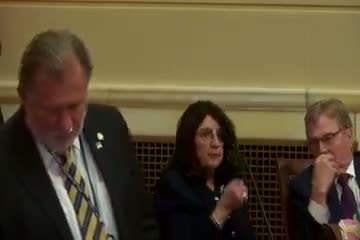
The Utah State Senate on March 4 passed a fourth substitute to House Bill 11, a measure that prohibits transgender females from competing in girls' interscholastic sports unless a court blocks enforcement and a state commission then evaluates eligibility. The vote was 16 in favor and 13 opposed, and the bill will be returned to the House for further consideration.
Why it matters: supporters said the law is designed to protect safety and the integrity of women's competition, while opponents said the change was rushed into the final hours of the session, raises constitutional concerns and risks litigation and harms to students. Sponsors also removed proposed indemnification language and said fiscal exposure is limited by governmental-immunity rules, but questions about litigation costs and process persisted through floor debate.
Sponsor's case and proposed fallback: Senator McKay, sponsor of the fourth substitute, told the Senate the bill adopts a two-part approach: the ban takes immediate effect unless enjoined, and if a court issues a stay the law provides for a commission to set baseline physical ranges and adjudicate eligibility. "If there's an injunction . . . the commission would then kick in and have to address that," McKay said during floor debate. He read a statement from a state-level swimmer who said, "From swimming my first swimming lesson to stepping on a block for my last race . . . it is clear that an advantage exists when comparing the physiology and skeletal anatomy of the biological sexes even after transition." (statement read on the floor by McKay.)
What changed in the bill: sponsors said earlier versions included detailed lists of physical characteristics and indemnity language; the fourth substitute removed enumerated physical markers and left assessment criteria to the commission, and a floor amendment (Amendment 1) struck proposed indemnification for local education agencies and adjusted fiscal-note language. The sponsor said nonpartisan analysts were projecting the fiscal note for the amended fourth substitute would be effectively $0 to the state operations line, with an administrative placeholder of about $4,400 cited in discussion.
Opposition and constitutional concerns: opponents argued the fourth substitute was an entirely new bill introduced late in the day and urged more time for caucus review. "This is an entirely new piece of legislation . . . it's important for us to digest this piece of legislation and the text that it maps out because this impacts people and their lives," said Senator Kitchen. Senators in opposition warned the bill could create unequal treatment among similarly situated students, raise 14th Amendment equal-protection issues, and expose LEAs and the state to litigation and potential federal funding risks.
Process and timing debate: the Senate debated a motion to "circle" the bill (delay so caucuses could confer); the motion failed after a division but highlighted process objections by several members who said the substitute arrived only minutes before final votes. Supporters countered that parliamentary rules allowed the substitute and that the commission fallback would provide additional study if courts blocked enforcement.
Key floor actions: Amendment 1 (sponsored by McKay) was adopted to remove indemnification language and to address fiscal-note timing; senators then moved to adopt the fourth substitute under suspension of rules. Debate included multiple senators asking whether private schools participating in the Utah High School Activities Association would be covered (sponsors said the ban applies to schools participating in the association and that private schools could, in theory, opt out of the association).
Next steps: the bill passed the Senate 16-13 and will be returned to the Utah House of Representatives for concurrence. Sponsor and supporters acknowledged a likely legal challenge; they said the commission's data collection would inform subsequent policy decisions. Opponents signaled they may pursue judicial relief and pledged to continue legislative and public scrutiny.
What supporters said: "We need to act to protect women's sports," Senator Bramble said during debate, arguing physiological differences can create unfair competitive advantages. "That's the physical characteristic we're concerned about," he added.
What opponents said: "This is a highly discriminatory piece of legislation," Senator Davis said on the floor, and Senator Escamilla said the bill "opens the door for people to challenge other children and put them in an awful situation." Senator Kitchen said she opposed the process that brought the substitute forward, calling it the "opposite of the Utah way."
Context: sponsors repeatedly invoked Title IX and harms to female athletes as drivers of the bill; opponents pointed to data collection efforts (other bills on data collection were discussed earlier in the session) and said available Utah data on transgender student participation was small and not sufficient to justify an immediate ban. Several senators urged more comprehensive study and a slower approach.
Provenance: This article is based on the Senate floor debate and roll call recorded between SEG 1547 and SEG 3398 in the official transcript; the motion to substitute and the final roll-call result are recorded in the transcript and the vote tallies stated on the floor were 16 yea to 13 nay. The sponsor's athlete statement was read on the floor (transcript excerpt quoted above).
Why it matters: supporters said the law is designed to protect safety and the integrity of women's competition, while opponents said the change was rushed into the final hours of the session, raises constitutional concerns and risks litigation and harms to students. Sponsors also removed proposed indemnification language and said fiscal exposure is limited by governmental-immunity rules, but questions about litigation costs and process persisted through floor debate.
Sponsor's case and proposed fallback: Senator McKay, sponsor of the fourth substitute, told the Senate the bill adopts a two-part approach: the ban takes immediate effect unless enjoined, and if a court issues a stay the law provides for a commission to set baseline physical ranges and adjudicate eligibility. "If there's an injunction . . . the commission would then kick in and have to address that," McKay said during floor debate. He read a statement from a state-level swimmer who said, "From swimming my first swimming lesson to stepping on a block for my last race . . . it is clear that an advantage exists when comparing the physiology and skeletal anatomy of the biological sexes even after transition." (statement read on the floor by McKay.)
What changed in the bill: sponsors said earlier versions included detailed lists of physical characteristics and indemnity language; the fourth substitute removed enumerated physical markers and left assessment criteria to the commission, and a floor amendment (Amendment 1) struck proposed indemnification for local education agencies and adjusted fiscal-note language. The sponsor said nonpartisan analysts were projecting the fiscal note for the amended fourth substitute would be effectively $0 to the state operations line, with an administrative placeholder of about $4,400 cited in discussion.
Opposition and constitutional concerns: opponents argued the fourth substitute was an entirely new bill introduced late in the day and urged more time for caucus review. "This is an entirely new piece of legislation . . . it's important for us to digest this piece of legislation and the text that it maps out because this impacts people and their lives," said Senator Kitchen. Senators in opposition warned the bill could create unequal treatment among similarly situated students, raise 14th Amendment equal-protection issues, and expose LEAs and the state to litigation and potential federal funding risks.
Process and timing debate: the Senate debated a motion to "circle" the bill (delay so caucuses could confer); the motion failed after a division but highlighted process objections by several members who said the substitute arrived only minutes before final votes. Supporters countered that parliamentary rules allowed the substitute and that the commission fallback would provide additional study if courts blocked enforcement.
Key floor actions: Amendment 1 (sponsored by McKay) was adopted to remove indemnification language and to address fiscal-note timing; senators then moved to adopt the fourth substitute under suspension of rules. Debate included multiple senators asking whether private schools participating in the Utah High School Activities Association would be covered (sponsors said the ban applies to schools participating in the association and that private schools could, in theory, opt out of the association).
Next steps: the bill passed the Senate 16-13 and will be returned to the Utah House of Representatives for concurrence. Sponsor and supporters acknowledged a likely legal challenge; they said the commission's data collection would inform subsequent policy decisions. Opponents signaled they may pursue judicial relief and pledged to continue legislative and public scrutiny.
What supporters said: "We need to act to protect women's sports," Senator Bramble said during debate, arguing physiological differences can create unfair competitive advantages. "That's the physical characteristic we're concerned about," he added.
What opponents said: "This is a highly discriminatory piece of legislation," Senator Davis said on the floor, and Senator Escamilla said the bill "opens the door for people to challenge other children and put them in an awful situation." Senator Kitchen said she opposed the process that brought the substitute forward, calling it the "opposite of the Utah way."
Context: sponsors repeatedly invoked Title IX and harms to female athletes as drivers of the bill; opponents pointed to data collection efforts (other bills on data collection were discussed earlier in the session) and said available Utah data on transgender student participation was small and not sufficient to justify an immediate ban. Several senators urged more comprehensive study and a slower approach.
Provenance: This article is based on the Senate floor debate and roll call recorded between SEG 1547 and SEG 3398 in the official transcript; the motion to substitute and the final roll-call result are recorded in the transcript and the vote tallies stated on the floor were 16 yea to 13 nay. The sponsor's athlete statement was read on the floor (transcript excerpt quoted above).
Don't Miss a Word: See the Full Meeting!
Go beyond summaries. Unlock every video, transcript, and key insight with a Founder Membership.
✓
Get instant access to full meeting videos
✓
Search and clip any phrase from complete transcripts
✓
Receive AI-powered summaries & custom alerts
✓
Enjoy lifetime, unrestricted access to government data
30-day money-back guarantee
