Senate passes revised homeless‑services bill after heated debate over local preemption
March 03, 2022 | 2022 Utah Legislature, Utah Legislature, Utah Legislative Branch, Utah
This article was created by AI summarizing key points discussed. AI makes mistakes, so for full details and context, please refer to the video of the full meeting. Please report any errors so we can fix them. Report an error »
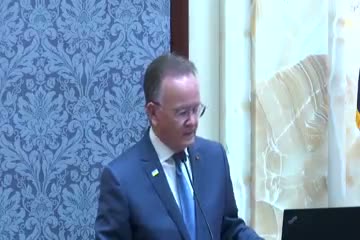
The Utah Senate passed Third Substitute House Bill 440, a statewide package of measures intended to expand emergency shelter capacity and share the financial burden of temporary winter shelters, after a prolonged floor debate over local control and program design.
Sponsor Senator Michael Anderegg outlined three primary elements of the substitute: creation of a Homeless Shelter Cities Mitigation Fund to distribute state and municipal funds to eligible entities; a required planning process by local officials for temporary winter overflow shelters; and structural changes to the Utah Homelessness Council and the Utah Homeless Network Steering Committee. He said the substitute includes $5.8 million to help shelter operations and a $5 million ongoing state appropriation to assist cities that host shelters.
“Part of the issue is education,” Anderegg said in his floor presentation, describing the bill as a compromise designed to get cities to cooperate on winter shelter planning. He told senators the bill creates a tiered funding approach to direct more resources to larger shelter-hosting cities and authorizes short-term, emergency state placement of temporary shelter beds only if local jurisdictions fail to submit adequate plans.
Opponents of the bill warned that the substitute does not solve long-term homelessness and risks returning to a large “warehouse” shelter model. One senator who represents portions of Salt Lake said the substitute’s flex shelters — often “mats on the floor” — will not attract people who refuse shelter and could strain shelter operations. “This isn’t a solution to the problem,” that senator said, adding that neighborhood impacts and the limits of overflow flex facilities remain a concern.
Senator Kitchen proposed an amendment to exempt municipalities with populations of 70,000 or more from the bill’s preemption trigger, arguing it would reassure Salt Lake City that the state would not impose temporary shelter placements there. Senator Anderegg and other supporters opposed the amendment, saying an exemption for the state’s largest city would eliminate the bill’s core backstop and make the statewide plan ineffective if Salt Lake City — where most services are concentrated — were excluded.
Sponsors and several supporters stressed that the substitute is intended to be an emergency, time‑limited response for winter months and contains buffers and distance requirements to limit community impacts. The bill includes restrictions intended to prevent frequent preemption (local governments may be preempted no more than once every four years in the same area) and caps the Office of Homeless Services’ authority to place up to 230 beds in a county under the emergency mechanism.
Senators also questioned the balance between emergency shelter funding and long‑term housing subsidies. Sponsor Anderegg said the package addresses emergency shelter needs while other bills and federal funding target permanent supportive housing and rental assistance; he acknowledged he could provide more precise numbers for state and federal subsidy flows on request.
After extended debate and summations, the Senate voted to pass Third Substitute House Bill 440 under suspension of the rules. The final roll call was 24 yeas, 4 nays and 1 absent. The bill will be returned to the House for further action.
Sponsor Senator Michael Anderegg outlined three primary elements of the substitute: creation of a Homeless Shelter Cities Mitigation Fund to distribute state and municipal funds to eligible entities; a required planning process by local officials for temporary winter overflow shelters; and structural changes to the Utah Homelessness Council and the Utah Homeless Network Steering Committee. He said the substitute includes $5.8 million to help shelter operations and a $5 million ongoing state appropriation to assist cities that host shelters.
“Part of the issue is education,” Anderegg said in his floor presentation, describing the bill as a compromise designed to get cities to cooperate on winter shelter planning. He told senators the bill creates a tiered funding approach to direct more resources to larger shelter-hosting cities and authorizes short-term, emergency state placement of temporary shelter beds only if local jurisdictions fail to submit adequate plans.
Opponents of the bill warned that the substitute does not solve long-term homelessness and risks returning to a large “warehouse” shelter model. One senator who represents portions of Salt Lake said the substitute’s flex shelters — often “mats on the floor” — will not attract people who refuse shelter and could strain shelter operations. “This isn’t a solution to the problem,” that senator said, adding that neighborhood impacts and the limits of overflow flex facilities remain a concern.
Senator Kitchen proposed an amendment to exempt municipalities with populations of 70,000 or more from the bill’s preemption trigger, arguing it would reassure Salt Lake City that the state would not impose temporary shelter placements there. Senator Anderegg and other supporters opposed the amendment, saying an exemption for the state’s largest city would eliminate the bill’s core backstop and make the statewide plan ineffective if Salt Lake City — where most services are concentrated — were excluded.
Sponsors and several supporters stressed that the substitute is intended to be an emergency, time‑limited response for winter months and contains buffers and distance requirements to limit community impacts. The bill includes restrictions intended to prevent frequent preemption (local governments may be preempted no more than once every four years in the same area) and caps the Office of Homeless Services’ authority to place up to 230 beds in a county under the emergency mechanism.
Senators also questioned the balance between emergency shelter funding and long‑term housing subsidies. Sponsor Anderegg said the package addresses emergency shelter needs while other bills and federal funding target permanent supportive housing and rental assistance; he acknowledged he could provide more precise numbers for state and federal subsidy flows on request.
After extended debate and summations, the Senate voted to pass Third Substitute House Bill 440 under suspension of the rules. The final roll call was 24 yeas, 4 nays and 1 absent. The bill will be returned to the House for further action.
Don't Miss a Word: See the Full Meeting!
Go beyond summaries. Unlock every video, transcript, and key insight with a Founder Membership.
✓
Get instant access to full meeting videos
✓
Search and clip any phrase from complete transcripts
✓
Receive AI-powered summaries & custom alerts
✓
Enjoy lifetime, unrestricted access to government data
30-day money-back guarantee
